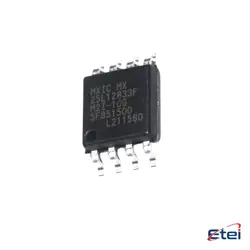
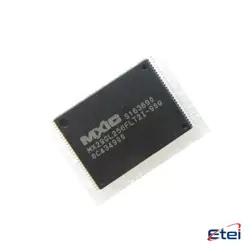
Images are for reference only
24AA024-I/SN
+BOMIC EEPROM 2KBIT I2C 400KHZ 8SOIC
-
ManufacturerMicrochip Technology
-
Mfr. Part #24AA024-I/SN
-
In Stock5240
365 Days Quality Guarantee
7*24 hours service quarantee
90-day after-sales guarantee
Genuine Product Guarantee
Specifications
| Attribute | Value |
| Part Status | Active |
| Digi Key Programmable | Verified |
| Memory Type | Non-Volatile |
| Memory Format | EEPROM |
| Technology | EEPROM |
| Memory Size | 2Kbit |
| Memory Organization | 256 x 8 |
| Memory Interface | I2C |
| Write Cycle Time - Word, Page | 5ms |
| Voltage - Supply | 1.7V ~ 5.5V |
| Operating Temperature | -40°C ~ 85°C (TA) |
| Mounting Type | Surface Mount |
| Package / Case | 8-SOIC (0.154", 3.90mm Width) |
| Supplier Device Package | 8-SOIC |
| Base Product Number | 24AA024 |
| Clock Frequency | 400 kHz |
| Access Time | 900 ns |
Overview
Description
The 24AA024-I/SN is a specific model of Electrically Erasable Programmable Read-Only Memory (EEPROM) produced by Microchip Technology. It is part of the 24AA series, which is known for low-power consumption, reliability, and ease of integration into a variety of electronic circuits. The "24AA" denotes that it uses the I²C serial communication protocol, which allows multiple devices to communicate over a two-wire interface, making it ideal for use in embedded systems.
The "024" indicates the memory capacity, which, in this case, is 24 kilobits. The "I" in the part number signifies an industrial temperature range, and "SN" refers to the specific package type, which is often a small outline package.
These EEPROMs are commonly used for storing small amounts of data that must be saved when power is removed, such as configuration settings or calibration data. They feature high endurance for write/erase cycles and offer data retention for several years, making them suitable for a wide range of applications in consumer electronics, automotive, industrial, and other fields.
The "024" indicates the memory capacity, which, in this case, is 24 kilobits. The "I" in the part number signifies an industrial temperature range, and "SN" refers to the specific package type, which is often a small outline package.
These EEPROMs are commonly used for storing small amounts of data that must be saved when power is removed, such as configuration settings or calibration data. They feature high endurance for write/erase cycles and offer data retention for several years, making them suitable for a wide range of applications in consumer electronics, automotive, industrial, and other fields.
Equivalent
The 24AA024-I/SN is a 2Kb I2C Serial EEPROM by Microchip. Equivalent products include:
1. AT24C02 by Atmel/Microchip
2. ST24C02 by STMicroelectronics
3. CAT24C02 by ON Semiconductor
4. M24C02 by STMicroelectronics
5. FM24C02 by Rohm
These alternatives offer similar memory capacity and functionality, typically compatible with I2C serial communication. Always verify specific electrical and timing specifications for compatibility in your application.
1. AT24C02 by Atmel/Microchip
2. ST24C02 by STMicroelectronics
3. CAT24C02 by ON Semiconductor
4. M24C02 by STMicroelectronics
5. FM24C02 by Rohm
These alternatives offer similar memory capacity and functionality, typically compatible with I2C serial communication. Always verify specific electrical and timing specifications for compatibility in your application.
Features
The 24AA024-I/SN is a serial EEPROM (Electrically Erasable Programmable Read-Only Memory) device, often used in embedded systems for non-volatile storage. Here are its key features:
1. Memory Size: It offers 24 kilobits (3 kilobytes) of storage.
2. Interface: Utilizes an I2C (Inter-Integrated Circuit) bus for communication, which supports multiple devices on the same bus.
3. Voltage: Operates over a wide voltage range, typically between 1.7V to 5.5V, allowing for flexibility in different applications.
4. Endurance: High write endurance with up to 1 million write/erase cycles per memory cell, ensuring long-term reliability.
5. Data Retention: Offers data retention of over 200 years, making it suitable for applications requiring long-term data storage.
6. Page Write Capability: Supports page writes up to 16 bytes at a time, which enhances write efficiency.
7. Low Power Consumption: Designed to consume minimal power, which is ideal for battery-operated devices.
8. Temperature Range: Can operate in a broad temperature range, typically from -40°C to +85°C, suitable for industrial applications.
These features make the 24AA024-I/SN a versatile choice for applications requiring reliable, low-power, non-volatile memory.
1. Memory Size: It offers 24 kilobits (3 kilobytes) of storage.
2. Interface: Utilizes an I2C (Inter-Integrated Circuit) bus for communication, which supports multiple devices on the same bus.
3. Voltage: Operates over a wide voltage range, typically between 1.7V to 5.5V, allowing for flexibility in different applications.
4. Endurance: High write endurance with up to 1 million write/erase cycles per memory cell, ensuring long-term reliability.
5. Data Retention: Offers data retention of over 200 years, making it suitable for applications requiring long-term data storage.
6. Page Write Capability: Supports page writes up to 16 bytes at a time, which enhances write efficiency.
7. Low Power Consumption: Designed to consume minimal power, which is ideal for battery-operated devices.
8. Temperature Range: Can operate in a broad temperature range, typically from -40°C to +85°C, suitable for industrial applications.
These features make the 24AA024-I/SN a versatile choice for applications requiring reliable, low-power, non-volatile memory.
Pinout
The 24AA024-I/SN is a 2Kb I2C Serial EEPROM manufactured by Microchip Technology. It has an 8-pin configuration. The pin functions are as follows:
1. A0, A1, A2 (Pins 1, 2, 3): Device address inputs used for multiple device configurations on the same I2C bus.
2. VSS (Pin 4): Ground pin for the device.
3. SDA (Pin 5): Serial Data line, a bidirectional line used for data transfer.
4. SCL (Pin 6): Serial Clock line, used to synchronize data transfer.
5. WP (Pin 7): Write-Protect input; when connected to VCC, it disables write operations to protect data.
6. VCC (Pin 8): Supply voltage pin, typically 1.7V to 5.5V.
The device's primary function is to provide non-volatile memory storage with a capacity of 2 kilobits, organized as 256 x 8-bits. It communicates via the I2C protocol, allowing for easy integration into various electronic systems needing reliable, small-scale data storage.
1. A0, A1, A2 (Pins 1, 2, 3): Device address inputs used for multiple device configurations on the same I2C bus.
2. VSS (Pin 4): Ground pin for the device.
3. SDA (Pin 5): Serial Data line, a bidirectional line used for data transfer.
4. SCL (Pin 6): Serial Clock line, used to synchronize data transfer.
5. WP (Pin 7): Write-Protect input; when connected to VCC, it disables write operations to protect data.
6. VCC (Pin 8): Supply voltage pin, typically 1.7V to 5.5V.
The device's primary function is to provide non-volatile memory storage with a capacity of 2 kilobits, organized as 256 x 8-bits. It communicates via the I2C protocol, allowing for easy integration into various electronic systems needing reliable, small-scale data storage.
Manufacturer
The 24AA024-I/SN is manufactured by Microchip Technology Inc. Microchip Technology is a publicly traded American company that specializes in designing and manufacturing microcontrollers, memory, and analog semiconductors. The company is a major player in the semiconductor industry, providing a wide range of products for various applications, including automotive, industrial, consumer electronics, and communications. Founded in 1987 and headquartered in Chandler, Arizona, Microchip Technology is known for its focus on embedded control solutions, which are integral to modern electronic systems.
Application
The 24AA024-I/SN is a 2K I2C-compatible serial EEPROM typically used in applications requiring non-volatile memory for data storage. Its application areas include:
1. Consumer Electronics: For storing configuration settings and user preferences.
2. Industrial Automation: Used in storing calibration data and system parameters.
3. Medical Devices: For logging usage data and patient settings.
4. Automotive Systems: Employed in settings storage and event logging.
5. Communication Devices: Used for storing network settings and protocol parameters.
6. Home Appliances: For maintaining user settings and operational data.
It is chosen for its reliability, low power consumption, and ease of integration into a wide range of electronic systems.
1. Consumer Electronics: For storing configuration settings and user preferences.
2. Industrial Automation: Used in storing calibration data and system parameters.
3. Medical Devices: For logging usage data and patient settings.
4. Automotive Systems: Employed in settings storage and event logging.
5. Communication Devices: Used for storing network settings and protocol parameters.
6. Home Appliances: For maintaining user settings and operational data.
It is chosen for its reliability, low power consumption, and ease of integration into a wide range of electronic systems.
Package
The 24AA024-I/SN is a 2Kb I2C EEPROM memory chip produced by Microchip Technology. It comes in an 8-lead SOIC (Small Outline Integrated Circuit) package, which is a surface-mount package type.