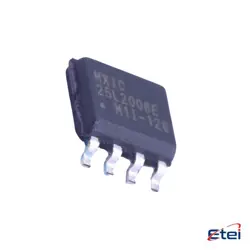
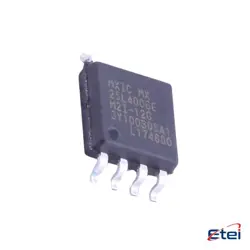
Images are for reference only
24LC02BT-E/SN
+BOMIC EEPROM 2KBIT I2C 400KHZ 8SOIC
-
ManufacturerMicrochip Technology
-
Mfr. Part #24LC02BT-E/SN
-
In Stock3930
365 Days Quality Guarantee
7*24 hours service quarantee
90-day after-sales guarantee
Genuine Product Guarantee
Specifications
| Attribute | Value |
| PartStatus | Active |
| DigiKeyProgrammable | Verified |
| MemoryType | Non-Volatile |
| MemoryFormat | EEPROM |
| Technology | EEPROM |
| MemorySize | 2Kbit |
| MemoryOrganization | 256 x 8 |
| MemoryInterface | I2C |
| ClockFrequency | 400 kHz |
| WriteCycleTime-Word,Page | 5ms |
| AccessTime | 900 ns |
| Voltage-Supply | 2.5V ~ 5.5V |
| OperatingTemperature | -40°C ~ 125°C (TA) |
| MountingType | Surface Mount |
| Package/Case | 8-SOIC (0.154", 3.90mm Width) |
| SupplierDevicePackage | 8-SOIC |
| BaseProductNumber | 24LC02 |
Overview
Description
The 24LC02BT-E/SN is a 2-kilobit (256 x 8) Electrically Erasable Programmable Read-Only Memory (EEPROM) chip produced by Microchip Technology. It operates via an I2C (Inter-Integrated Circuit) interface, allowing multiple devices to be connected on the same bus for easy communication. The device operates at a voltage range of 1.7V to 5.5V and supports data transfer rates up to 400 kHz.
This chip features a 16-byte page write capability, enabling efficient data storage, and supports a maximum write cycle endurance of 1,000,000 write/erase cycles. Its low power consumption makes it suitable for battery-powered applications. The 24LC02BT-E/SN is often used in applications requiring non-volatile memory storage, such as consumer electronics, automotive systems, and industrial devices.
Its built-in capabilities include hardware write protection and an easy-to-use programming model, making it a reliable choice for various embedded systems.
This chip features a 16-byte page write capability, enabling efficient data storage, and supports a maximum write cycle endurance of 1,000,000 write/erase cycles. Its low power consumption makes it suitable for battery-powered applications. The 24LC02BT-E/SN is often used in applications requiring non-volatile memory storage, such as consumer electronics, automotive systems, and industrial devices.
Its built-in capabilities include hardware write protection and an easy-to-use programming model, making it a reliable choice for various embedded systems.
Equivalent
The 24LC02BT-E/SN is an I2C EEPROM with 2 Kbit memory. Equivalent products include the 24LC02B, 24C02, and 24C02B. Other compatible alternatives might be from different manufacturers like Microchip, NXP, or STMicroelectronics, but ensure they match the I2C interface and memory specifications. Always verify pin compatibility and electrical characteristics for specific applications.
Features
The 24LC02BT-E/SN is a 2 Kbit (256 x 8) I2C-compatible EEPROM. Key features include:
1. Memory Organization: 256 x 8 bits, allowing for efficient data storage.
2. I2C Interface: Supports standard and fast modes (up to 400 kHz), enabling easy integration with microcontrollers.
3. Wide Voltage Range: Operates from 1.7V to 5.5V, making it suitable for various applications.
4. Low Power Consumption: Designed for low active and standby currents, ideal for battery-powered devices.
5. EEPROM Technology: Offers non-volatile storage, retaining data without power.
6. Page Write Capability: Supports 8-byte page write operations for efficient data writing.
7. Hardware Write Protection: Features a write-protect pin for added data security.
8. Endurance: Typically rated for over 1 million write cycles and data retention of 100 years.
9. Temperature Range: Suitable for commercial applications with a temperature range of -40°C to +85°C.
These features make the 24LC02BT-E/SN a reliable choice for various embedded applications.
1. Memory Organization: 256 x 8 bits, allowing for efficient data storage.
2. I2C Interface: Supports standard and fast modes (up to 400 kHz), enabling easy integration with microcontrollers.
3. Wide Voltage Range: Operates from 1.7V to 5.5V, making it suitable for various applications.
4. Low Power Consumption: Designed for low active and standby currents, ideal for battery-powered devices.
5. EEPROM Technology: Offers non-volatile storage, retaining data without power.
6. Page Write Capability: Supports 8-byte page write operations for efficient data writing.
7. Hardware Write Protection: Features a write-protect pin for added data security.
8. Endurance: Typically rated for over 1 million write cycles and data retention of 100 years.
9. Temperature Range: Suitable for commercial applications with a temperature range of -40°C to +85°C.
These features make the 24LC02BT-E/SN a reliable choice for various embedded applications.
Pinout
The 24LC02BT-E/SN is a 2 Kbit I2C EEPROM (Electrically Erasable Programmable Read-Only Memory) with a total of 8 pins. Its pin configuration and functions are as follows:
1. VCC: Power supply (typically 2.5V to 5.5V).
2. GND: Ground connection.
3. SDA: Serial Data Line; used for data input and output.
4. SCL: Serial Clock Line; used to synchronize data transmission.
5. WP: Write Protect; when tied to VCC, it prevents write operations.
6. A0: Address pin; used to set the least significant bits of the chip's address for multiple devices on the same bus.
7. A1: Address pin; similar to A0, used for setting additional address bits.
8. NC: Not connected; this pin is reserved and should not be connected to anything.
The device supports a 2-wire I2C interface, facilitating easy integration into various microcontroller applications for data storage.
1. VCC: Power supply (typically 2.5V to 5.5V).
2. GND: Ground connection.
3. SDA: Serial Data Line; used for data input and output.
4. SCL: Serial Clock Line; used to synchronize data transmission.
5. WP: Write Protect; when tied to VCC, it prevents write operations.
6. A0: Address pin; used to set the least significant bits of the chip's address for multiple devices on the same bus.
7. A1: Address pin; similar to A0, used for setting additional address bits.
8. NC: Not connected; this pin is reserved and should not be connected to anything.
The device supports a 2-wire I2C interface, facilitating easy integration into various microcontroller applications for data storage.
Manufacturer
The manufacturer of the 24LC02BT-E/SN is Microchip Technology Inc. Microchip is a leading semiconductor company that specializes in the design and production of microcontrollers, memory, analog, and interface products. Founded in 1989, the company is known for its innovative solutions in embedded control and is widely recognized for its comprehensive range of microcontroller products, including the PIC® microcontroller series.
Microchip serves various markets, including automotive, industrial, consumer, and aerospace sectors, providing essential components and development tools for a wide array of applications. Their products are integral to many electronic devices, enabling functionalities such as data storage, signal processing, and control systems. The 24LC02BT-E/SN is a specific type of EEPROM (Electrically Erasable Programmable Read-Only Memory) designed for low-power applications, typically used in systems requiring non-volatile data storage.
Microchip is also known for its commitment to customer support and an extensive ecosystem of development tools, making it a prominent player in the semiconductor industry.
Microchip serves various markets, including automotive, industrial, consumer, and aerospace sectors, providing essential components and development tools for a wide array of applications. Their products are integral to many electronic devices, enabling functionalities such as data storage, signal processing, and control systems. The 24LC02BT-E/SN is a specific type of EEPROM (Electrically Erasable Programmable Read-Only Memory) designed for low-power applications, typically used in systems requiring non-volatile data storage.
Microchip is also known for its commitment to customer support and an extensive ecosystem of development tools, making it a prominent player in the semiconductor industry.
Application
The 24LC02BT-E/SN is a 2Kb I2C EEPROM used in various applications, including:
1. Consumer Electronics: Storing configuration settings and user preferences.
2. Industrial Equipment: Retaining calibration data and operational parameters.
3. Smart Meters: Logging usage data and maintaining firmware updates.
4. Medical Devices: Keeping patient records and device settings.
5. Automotive: Storing sensor data and vehicle configurations.
6. Telecommunications: Saving network settings and configuration data.
Its low power consumption and I2C interface make it suitable for battery-operated devices and systems needing reliable non-volatile memory.
1. Consumer Electronics: Storing configuration settings and user preferences.
2. Industrial Equipment: Retaining calibration data and operational parameters.
3. Smart Meters: Logging usage data and maintaining firmware updates.
4. Medical Devices: Keeping patient records and device settings.
5. Automotive: Storing sensor data and vehicle configurations.
6. Telecommunications: Saving network settings and configuration data.
Its low power consumption and I2C interface make it suitable for battery-operated devices and systems needing reliable non-volatile memory.
Package
The 24LC02BT-E/SN is offered in an 8-pin SOIC (Small Outline Integrated Circuit) package type. This surface-mount package is designed for easy integration into electronic circuits, providing a compact solution for EEPROM memory applications.