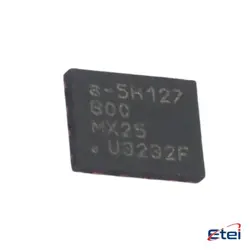
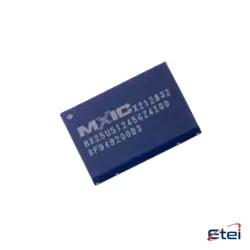
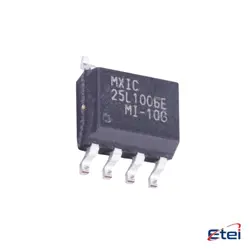
Images are for reference only
24LC16BT-E/OT
+BOMIC EEPROM 16KBIT I2C SOT23-5
-
ManufacturerMicrochip Technology
-
Mfr. Part #24LC16BT-E/OT
-
Datasheet 24LC16BT-E/OT DataSheet
-
Package SOT-23-5
-
In Stock2502
365 Days Quality Guarantee
7*24 hours service quarantee
90-day after-sales guarantee
Genuine Product Guarantee
Specifications
| Attribute | Value |
| Package | Tape & Reel (TR),Cut Tape (CT) |
| ProductStatus | Active |
| MemoryType | Non-Volatile |
| MemoryFormat | EEPROM |
| Technology | EEPROM |
| MemorySize | 16Kb (2K x 8) |
| MemoryInterface | I²C |
| ClockFrequency | 400 kHz |
| WriteCycleTime-WordPage | 5ms |
| AccessTime | 900 ns |
| Voltage-Supply | 2.5V ~ 5.5V |
| OperatingTemperature | -40°C ~ 125°C (TA) |
| MountingType | Surface Mount |
| Package/Case | SC-74A, SOT-753 |
Overview
Description
Key features include low-power consumption and the ability to retain data for over 200 years, with more than 1 million erase/write cycles. The device is housed in a small, 5-lead SOT-23 package, which is suitable for compact and space-constrained designs. It supports standard, fast, and fast-plus I²C bus modes, with data transfer rates up to 1 MHz.
Designed for flexibility, the 24LC16BT-E/OT is used in consumer electronics, automotive, and industrial applications where reliable, non-volatile memory storage is essential. It includes features like write-protection to prevent accidental overwriting and robust data integrity checks to ensure reliable data retrieval.
Equivalent
1. AT24C16 from Atmel (now part of Microchip)
2. M24C16 from STMicroelectronics
3. CAT24C16 from ON Semiconductor
4. BR24C16 from ROHM
5. FM24C16 from Cypress (now part of Infineon)
These alternatives offer similar specifications in terms of memory capacity, interface, and voltage range. Always verify pin compatibility and electrical characteristics before substituting.
Features
1. Memory Interface: It supports an I²C (Inter-Integrated Circuit) serial interface, which allows for simple connectivity with microcontrollers and other devices.
2. Voltage Range: Operates at a wide voltage range from 1.7V to 5.5V, making it suitable for various applications.
3. Temperature Range: It is designed to operate in industrial temperature ranges, suitable for demanding environments.
4. Write Cycle Time: Features a quick write cycle time of about 5 ms max.
5. Page Write Capability: Supports page write operations, with up to 16 bytes per page, increasing efficiency in data writing processes.
6. Data Retention: Offers a data retention period of over 200 years, ensuring long-term reliability of stored information.
7. Endurance: Capable of withstanding 1,000,000 write cycles, ensuring durability over extensive usage.
8. Package Type: The device comes in a compact SOT-23-5 package, which is suitable for space-constrained applications.
These features make the 24LC16BT-E/OT ideal for use in a wide array of applications, including consumer electronics, automotive systems, and industrial controls.
Pinout
1. Pin 1 (A0): Device address input. Used for device address configuration.
2. Pin 2 (VSS): Ground pin. This is the common ground for the device.
3. Pin 3 (SDA): Serial Data. This is the bidirectional data line used for reading and writing data.
4. Pin 4 (SCL): Serial Clock. This is the clock input for the I2C bus interface.
5. Pin 5 (VCC): Power Supply. This pin is connected to the positive power supply.
The device has an I2C interface, making it suitable for serial communications. It is typically used for non-volatile storage applications, providing a storage capacity of 16 Kbit (2048 x 8 bits).
Manufacturer
Application
1. Consumer Electronics: For storing configuration settings and user preferences.
2. Industrial Control: Utilized in systems requiring data logging and parameter storage.
3. Automotive: Used for storing calibration data and error logs.
4. Medical Devices: For storing patient data or device configuration.
5. Communication Systems: Employed in networking equipment for configuration settings.
6. Office Equipment: Used in printers and copiers for storing user settings and maintenance logs.
These applications benefit from the EEPROM's small size, low power consumption, and data retention capabilities.