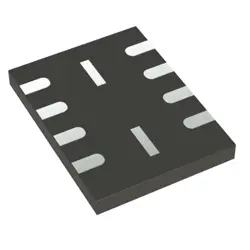
Images are for reference only
6N137S
+BOMOPTOISOLTR 2.5KV OPEN COLL 8-SMD
-
Manufactureronsemi
-
Mfr. Part #6N137S
-
Datasheet 6N137S DataSheet
-
In Stock6765
365 Days Quality Guarantee
7*24 hours service quarantee
90-day after-sales guarantee
Genuine Product Guarantee
Specifications
| Attribute | Value |
| PartStatus | Obsolete |
| BaseProductNumber | 6N137 |
| NumberofChannels | 1 |
| Inputs-Side1/Side2 | 1/0 |
| Voltage-Isolation | 2500Vrms |
| CommonModeTransientImmunity(Min) | 10kV/µs (Typ) |
| InputType | DC |
| OutputType | Open Collector |
| Current-Output/Channel | 50 mA |
| DataRate | 10Mbps |
| PropagationDelaytpLH/tpHL(Max) | 75ns, 75ns |
| Rise/FallTime(Typ) | 50ns, 12ns |
| Voltage-Forward(Vf)(Typ) | 1.4V |
| Current-DCForward(If)(Max) | 50mA |
| Voltage-Supply | 4.5V ~ 5.5V |
| OperatingTemperature | -40°C ~ 85°C |
| MountingType | Surface Mount |
| Package | 8-SMD, Gull Wing |
| SupplierDevicePackage | 8-SMD |
| Packaging | Tube |
Overview
Description
Key features include a low input current requirement, typically around 5 mA, and a high common mode transient immunity, which enhances performance in electrically noisy environments. The 6N137S often comes in an 8-pin dual in-line package (DIP) or surface-mount package, making it versatile for various circuit integration needs. It operates over a wide temperature range, which allows it to be used in various industrial and commercial applications.
Common applications include computer peripheral interfaces, microprocessor system interfaces, and signal isolation in communication systems. It is valued for its ability to provide electrical isolation while maintaining signal integrity and speed.
Equivalent
Features
1. High-Speed Performance: It supports data transfer rates up to 10 Mbps, making it suitable for applications requiring fast data transmission.
2. High Isolation Voltage: Offers an isolation voltage of 5,000 VRMS, providing robust protection against electrical noise and voltage spikes between input and output.
3. Compatibility: Designed to interface with TTL and LSTTL logic families, ensuring easy integration into various digital circuits.
4. Wide Operating Temperature Range: Functions effectively between -40°C and +85°C, making it versatile for different environmental conditions.
5. Low Input Current: Requires a low input current, enhancing energy efficiency and reducing power consumption.
6. Open Collector Output: Features an open collector transistor output, which supports a wide range of supply voltages and facilitates interfacing with different logic levels.
7. Compact Package: Typically available in an 8-pin DIP or surface-mount package, it is convenient for use in space-constrained circuit designs.
These features make the 6N137S ideal for applications in industrial control systems, telecommunications, and other areas requiring reliable electrical isolation and high-speed data transfer.
Pinout
1. Pin 1 (Anode): LED anode, used to provide input signal.
2. Pin 2 (Cathode): LED cathode, connected to ground.
3. Pin 3 (NC): No connection; sometimes used for additional stability.
4. Pin 4 (GND): Ground connection for the output side.
5. Pin 5 (Vout): Output, where the isolated signal appears.
6. Pin 6 (Vcc): Supply voltage for the output side.
7. Pin 7 (VEE): Ground reference for the output side, generally tied to ground.
8. Pin 8 (NC): No connection; not used.
The 6N137S is designed for high-speed data transmission, typically with a data rate up to 10 Mbps. It provides electrical isolation between input and output, protecting sensitive components from high voltages and noise.
Manufacturer
Application
1. Data Communication: Isolation between communication lines and microcontrollers or processors.
2. Switching Power Supplies: Providing feedback in isolated power supply circuits.
3. Industrial Automation: Isolation in control systems and signal processing.
4. Microprocessor Interface: Assuring safe data transfer between microprocessors and peripheral devices.
5. Medical Equipment: Ensuring patient safety by isolating user-accessible parts from high voltages.
6. Motor Control: Isolation and signal transmission in inverter and motor drive circuits.
These applications benefit from its high speed and reliable isolation capabilities.