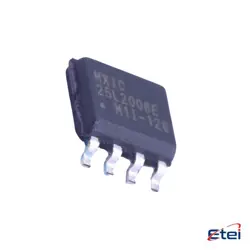
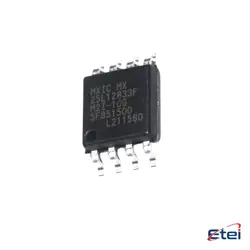
Images are for reference only
74HC4052D
+BOMIC MUX 2 X 4:1 4 OHM 16SOIC
-
ManufacturerToshiba Semiconductor and Storage
-
Mfr. Part #74HC4052D
-
Datasheet 74HC4052D DataSheet
-
Package SOIC-16
-
In Stock5305
365 Days Quality Guarantee
7*24 hours service quarantee
90-day after-sales guarantee
Genuine Product Guarantee
Specifications
| Attribute | Value |
| Package | Tape & Reel (TR),Cut Tape (CT) |
| ProductStatus | Active |
| SwitchCircuit | SP4T |
| Multiplexer/DemultiplexerCircuit | 4:1 |
| NumberofCircuits | 2 |
| On-StateResistance(Max) | 130Ohm |
| Channel-to-ChannelMatching(ΔRon) | 4Ohm |
| Voltage-SupplySingle(V+) | 2V ~ 6V |
| SwitchTime(TonToff)(Max) | 34ns, 32ns |
| ChannelCapacitance(CS(off)CD(off)) | 10pF |
| Current-Leakage(IS(off))(Max) | 1µA |
| Crosstalk | -50dB @ 1MHz |
| OperatingTemperature | -40°C ~ 85°C (TA) |
| MountingType | Surface Mount |
| Package/Case | 16-SOIC (0.154, 3.90mm Width) |
Overview
Description
Key features include low power consumption, high noise immunity, and fast switching speeds, typical of CMOS technology. The control of the input/output paths is achieved via digital address inputs, allowing for efficient channel selection. The 74HC4052D is compatible with TTL logic levels and is often used in analog signal routing, audio and video signal multiplexing, and data acquisition systems.
Its compact SO-16 package makes it suitable for space-constrained applications. Additionally, the device supports bidirectional signal flow, allowing it to be used in both multiplexing and demultiplexing applications.
Equivalent
1. CD4052 from Texas Instruments
2. MC14052 from ON Semiconductor
3. HEF4052 from NXP Semiconductors
4. SN74HC4052 from Texas Instruments
These equivalents are similar in functionality, offering multiplexer/demultiplexer capabilities with variations that might exist in package type or electrical characteristics. Always verify specifications to ensure compatibility for your application.
Features
1. Dual 4-Channel Multiplexer/Demultiplexer: It has two separate multiplexer/demultiplexer sections, allowing selection of four independent inputs each.
2. Low On-Resistance: Offers low on-resistance, typically around 80 ohms, which ensures minimal signal distortion.
3. Wide Supply Voltage Range: Operates over a wide supply voltage range from 3V to 10V.
4. High-Speed Operation: Compatible with high-speed digital applications.
5. Low Power Consumption: Utilizes CMOS technology, resulting in low power consumption even at high frequencies.
6. Standard Logic Level Compatibility: Compatible with TTL and CMOS logic levels.
7. Bidirectional Signal Transmission: Allows signals to pass through in both directions without distortion.
8. Break-Before-Make Switching: Prevents short circuits by ensuring the next switch connects before the current one disconnects.
These features make the 74HC4052D suitable for various applications like signal routing, data acquisition systems, and audio and video signal switching.
Pinout
- VCC (Pin 16): Power supply voltage.
- GND (Pin 8): Ground.
- S0, S1 (Pins 10, 9): Select inputs for channel selection.
- E (Pin 15): Enable input. When low, the device is enabled.
- Y0, Y1, Y2, Y3 (Pins 1, 5, 2, 4): Input/Output for one multiplexer channel.
- Z0, Z1, Z2, Z3 (Pins 12, 14, 11, 13): Input/Output for the second multiplexer channel.
- Y (Pin 3): Common I/O for the first 4-channel multiplexer.
- Z (Pin 6): Common I/O for the second 4-channel multiplexer.
This device is commonly used in applications that require signal routing or expansion, such as data acquisition systems and communication systems.
Manufacturer
Application
1. Signal Routing: Used for switching between multiple analog signals, allowing one device to handle different inputs.
2. Data Acquisition Systems: Facilitates multiplexing of sensor outputs to a single ADC input.
3. Audio and Video Switching: Enables selection between multiple audio or video inputs.
4. Communication Systems: Assists in channel selection and signal routing.
5. Test Equipment: Used in instrumentation to select different test signals or measurement paths.
6. Embedded Systems: Implements flexible input/output configurations in microcontroller projects.
These capabilities make it useful in various electronic systems requiring efficient signal management.