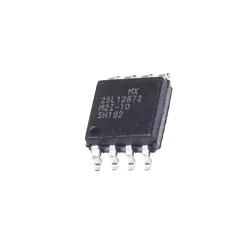
Specifications
| Attribute | Value |
| Package / Case | Tube |
| Part Status | Obsolete |
| Number of Bits | 10 |
| Sampling Rate(Per Second) | 227k |
| Number of Inputs | 8 |
| Input Type | Differential, Pseudo-Differential, Single Ended |
| Data Interface | Parallel |
| Configuration | MUX-S/H-ADC |
| Ratio - S / H: ADC | 1:1 |
| Number of A/D Converters | 1 |
| Architecture | SAR |
| Reference Type | External, Internal |
| Voltage - Supply, Analog | 5V |
| Voltage - Supply, Digital | 5V |
| Operating Temperature | -40°C ~ 85°C |
| Supplier Device Package | 28-SOIC |
Overview
Description
ADC10158CIWM appears to be a specific course code, likely related to an educational or training program, possibly in the field of waste management or a related discipline, given the inclusion of "CIWM" which often stands for Chartered Institution of Wastes Management. However, without specific context or access to the curriculum details, a precise description is challenging.
Generally, an "Introduction to" course would cover foundational concepts related to its subject area. For a course involving "CIWM," it might cover the basics of waste management practices, environmental regulations, sustainability principles, waste reduction strategies, recycling processes, and perhaps an overview of the environmental impacts of waste. Such a course would likely be designed for beginners or professionals seeking to enhance their understanding of waste management.
For precise details, checking the educational institution's course catalog or contacting the course provider directly would be advisable, as course content can vary widely depending on the institution and specific educational objectives.
Generally, an "Introduction to" course would cover foundational concepts related to its subject area. For a course involving "CIWM," it might cover the basics of waste management practices, environmental regulations, sustainability principles, waste reduction strategies, recycling processes, and perhaps an overview of the environmental impacts of waste. Such a course would likely be designed for beginners or professionals seeking to enhance their understanding of waste management.
For precise details, checking the educational institution's course catalog or contacting the course provider directly would be advisable, as course content can vary widely depending on the institution and specific educational objectives.
Equivalent
The ADC10158CIWM is a 10-bit analog-to-digital converter. Equivalent products may include the Texas Instruments ADC10158CIWM/NOPB, the Microchip Technology MCP3008, and the Analog Devices AD7910. When searching for equivalents, ensure compatibility in specifications such as resolution, sampling rate, voltage range, and interface type. Always check the datasheets for detailed specifications to ensure proper fit and functionality in your application.
Features
The ADC10158CIWM is a 10-bit analog-to-digital converter (ADC) with the following key features:
1. Resolution and Performance: It offers a 10-bit resolution, providing precise analog-to-digital conversion. This allows for accurate signal representation in digital form.
2. Input Channels: Typically features multiple input channels, enabling simultaneous conversion of multiple analog signals.
3. Sampling Rate: It supports a fast sampling rate, suitable for high-speed data acquisition applications.
4. Low Power Consumption: Designed for energy efficiency, making it ideal for battery-powered and portable devices.
5. Operating Voltage: Compatible with a range of supply voltages, enhancing versatility in different systems.
6. Package Type: Available in a compact package, facilitating integration into space-constrained designs.
7. Ease of Use: Provides a straightforward interface for easy integration with microcontrollers and other digital systems.
8. Temperature Range: Operates effectively across a wide temperature range, ensuring reliable performance in various environmental conditions.
These features make the ADC10158CIWM suitable for diverse applications such as data acquisition, instrumentation, and embedded systems.
1. Resolution and Performance: It offers a 10-bit resolution, providing precise analog-to-digital conversion. This allows for accurate signal representation in digital form.
2. Input Channels: Typically features multiple input channels, enabling simultaneous conversion of multiple analog signals.
3. Sampling Rate: It supports a fast sampling rate, suitable for high-speed data acquisition applications.
4. Low Power Consumption: Designed for energy efficiency, making it ideal for battery-powered and portable devices.
5. Operating Voltage: Compatible with a range of supply voltages, enhancing versatility in different systems.
6. Package Type: Available in a compact package, facilitating integration into space-constrained designs.
7. Ease of Use: Provides a straightforward interface for easy integration with microcontrollers and other digital systems.
8. Temperature Range: Operates effectively across a wide temperature range, ensuring reliable performance in various environmental conditions.
These features make the ADC10158CIWM suitable for diverse applications such as data acquisition, instrumentation, and embedded systems.
Pinout
The ADC10158CIWM is an analog-to-digital converter (ADC) that typically comes in a 20-pin SOIC (Small Outline Integrated Circuit) package. This ADC features a 10-bit resolution and is often used for converting analog signals to digital form for various applications.
Pin Count:
- 20 pins
Primary Functions of Key Pins:
- Analog Input Pins (AIN): For inputting the analog signal to be converted.
- Reference Pins (VREF+, VREF-): To set the reference voltage range for conversion.
- Digital Output Pins (D0-D9): These pins output the digital representation of the analog input signal.
- Control Pins: Include chip select (CS), clock (CLK), and other control signals to manage data reading and conversion operations.
- Power Supply Pins (VDD, GND): For powering the ADC and providing the necessary ground connection.
This ADC is used in applications where precise digital representation of analog signals is required, such as in data acquisition systems and instrumentation.
Pin Count:
- 20 pins
Primary Functions of Key Pins:
- Analog Input Pins (AIN): For inputting the analog signal to be converted.
- Reference Pins (VREF+, VREF-): To set the reference voltage range for conversion.
- Digital Output Pins (D0-D9): These pins output the digital representation of the analog input signal.
- Control Pins: Include chip select (CS), clock (CLK), and other control signals to manage data reading and conversion operations.
- Power Supply Pins (VDD, GND): For powering the ADC and providing the necessary ground connection.
This ADC is used in applications where precise digital representation of analog signals is required, such as in data acquisition systems and instrumentation.
Manufacturer
The ADC10158CIWM is manufactured by Texas Instruments. Texas Instruments (TI) is an American technology company that designs and manufactures semiconductors and various integrated circuits, which are used in electronic devices worldwide. TI is a leader in the semiconductor industry, with a focus on developing analog chips and embedded processors. The company serves various markets, including industrial, automotive, personal electronics, communications equipment, and enterprise systems. Known for its innovation and extensive product portfolio, Texas Instruments plays a crucial role in advancing technology and supporting the development of new electronic devices and applications.
Application
The ADC10158CIWM is an analog-to-digital converter (ADC) used in various applications that require precise conversion of analog signals to digital data. Key application areas include:
1. Industrial Automation: Used in sensors and control systems for accurate data acquisition.
2. Medical Equipment: Facilitates precise measurement and monitoring in devices like ECGs and imaging tools.
3. Consumer Electronics: Integral in audio and video equipment for high-quality signal processing.
4. Communication Systems: Enhances signal clarity by converting analog signals in data transmission systems.
5. Automotive: Supports advanced driver-assistance systems (ADAS) by ensuring accurate sensor data conversion.
These applications benefit from the ADC's high resolution and fast sampling rates.
1. Industrial Automation: Used in sensors and control systems for accurate data acquisition.
2. Medical Equipment: Facilitates precise measurement and monitoring in devices like ECGs and imaging tools.
3. Consumer Electronics: Integral in audio and video equipment for high-quality signal processing.
4. Communication Systems: Enhances signal clarity by converting analog signals in data transmission systems.
5. Automotive: Supports advanced driver-assistance systems (ADAS) by ensuring accurate sensor data conversion.
These applications benefit from the ADC's high resolution and fast sampling rates.
Package
The ADC10158CIWM is packaged in a 20-pin SOIC (Small Outline Integrated Circuit) form factor. This package type is designed to offer a compact footprint suitable for surface mounting on PCBs.