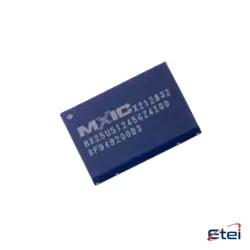
Images are for reference only
AF064GEC5X-2001A2
+BOMIC FLASH 512GBIT EMMC 153BGA
-
ManufacturerATP Electronics, Inc.
-
Mfr. Part #AF064GEC5X-2001A2
-
Datasheet AF064GEC5X-2001A2 DataSheet
-
Package FBGA-153
-
In Stock2454
365 Days Quality Guarantee
7*24 hours service quarantee
90-day after-sales guarantee
Genuine Product Guarantee
Specifications
| Attribute | Value |
| Package / Case | Tray |
| Series | Automotive |
| Part Status | Active |
| Memory Type | Non-Volatile |
| Memory Format | FLASH |
| Technology | FLASH - NAND (MLC) |
| Memory Size | 512Gb (64G x 8) |
| Memory Interface | eMMC |
| Operating Temperature | -40°C ~ 105°C |
| Mounting Type | Surface Mount |
Overview
Description
To introduce it concisely, you'd generally focus on the key aspects related to that item — such as its primary function, specifications, applications, and any distinctive features. For example, if AF064GEC5X-2001A2 is a type of electronic chip or module, you would highlight its purpose within a system, performance characteristics, compatibility with other systems, and unique selling points like efficiency or innovation in design.
A precise introduction would require more context, such as the industry it belongs to (e.g., computing, automotive), as well as insights from product manuals, datasheets, or manufacturer documentation that detail its technical and operational attributes.
Equivalent
Pinout
Generally, NAND flash memory chips like this one might have around 48 to 64 pins, but this can vary. The pins are used for various functions, including power supply, ground, data input/output, command input, address input, and control signals such as write enable, read enable, and chip enable.
For precise details, referring to the official datasheet or technical documentation from Adata is recommended, as it would provide specific pin configurations and functions for the AF064GEC5X-2001A2 model.
Manufacturer
Application
1. Consumer Electronics: Enhancing storage capabilities in smartphones, tablets, and personal computers.
2. Industrial Automation: Providing reliable data storage for industrial control systems and machinery.
3. Automotive Systems: Supporting infotainment systems, navigation units, and advanced driver-assistance systems (ADAS).
4. Embedded Systems: Used in IoT devices and microcontrollers for efficient data management.
5. Networking Equipment: Facilitating data processing and storage in routers, switches, and other networking hardware.
These applications benefit from the component's reliability, speed, and efficiency in data handling.