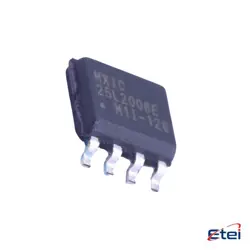
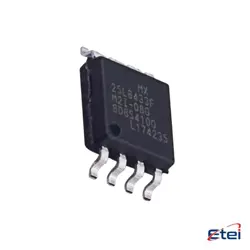
Images are for reference only
AM26C31CDR
+BOMIC DRIVER 4/0 16SOIC
-
ManufacturerTexas Instruments
-
Mfr. Part #AM26C31CDR
-
Package SOIC (D)-16
-
In Stock5213
365 Days Quality Guarantee
7*24 hours service quarantee
90-day after-sales guarantee
Genuine Product Guarantee
Specifications
| Attribute | Value |
| Package | Tape & Reel (TR),Cut Tape (CT) |
| ProductStatus | Active |
| Type | Driver |
| NumberofDrivers/Receivers | 4/0 |
| Voltage-Supply | 4.5V ~ 5.5V |
| OperatingTemperature | 0°C ~ 70°C |
| MountingType | Surface Mount |
| Package/Case | 16-SOIC (0.154, 3.90mm Width) |
Overview
Description
Key features of the AM26C31CDR include:
1. Differential Signaling: Enhances noise immunity and reduces electromagnetic interference (EMI).
2. Quadruple Drivers: Contains four independent line drivers, allowing multiple signals to be driven simultaneously.
3. TTL-Compatible Inputs: Compatible with TTL logic levels, making it easy to interface with a wide range of digital circuits.
4. High-Impedance State: Offers a high-impedance state when disabled, allowing for bus sharing.
5. Wide Supply Voltage Range: Operates over a wide range of voltages, typically from 4.5V to 5.5V.
6. Thermal Protection: Includes thermal shutdown to prevent damage from overheating.
The AM26C31CDR is suitable for use in various applications, including data communications, industrial control systems, and instrumentation.
Equivalent
1. SN75174 by Texas Instruments
2. DS8831 by National Semiconductor (now Texas Instruments)
3. MAX491 by Maxim Integrated (now Analog Devices)
4. MC3487 by ON Semiconductor
5. ISL81387 by Renesas Electronics
These alternatives offer similar functionality, such as driving differential transmission lines, and can be used in similar applications. Always verify specific requirements and compatibility when substituting components.
Features
1. High Speed: It supports data rates up to 10 Mbps, making it suitable for high-speed data transmission applications.
2. Wide Supply Voltage Range: The device operates over a wide range from 4.5V to 5.5V, accommodating various power supply environments.
3. Low Power Consumption: The AM26C31CDR is designed for low power operation with reduced power dissipation.
4. Tri-State Outputs: It includes tri-state output control, allowing the outputs to be placed in a high-impedance state, which is useful for bus-oriented applications.
5. Compatible with TTL and CMOS: The inputs are compatible with both TTL and CMOS logic levels.
6. Short-Circuit Protection: It provides short-circuit protection to prevent damage during fault conditions.
7. Wide Temperature Range: The device can operate over an extended temperature range from -40°C to 85°C, suitable for industrial applications.
8. Small Package: It is available in a compact SOIC-16 package, saving board space.
These features make the AM26C31CDR ideal for data transmission in various communication and networking applications.
Pinout
Pin Count:
The AM26C31CDR comes in a 16-pin SOIC (Small Outline Integrated Circuit) package.
Pin Functions:
1. Inputs (A, B, C, D):
These are the logic inputs for the four differential drivers.
2. Outputs (Y, Z):
Each driver has a pair of differential outputs, Y and Z. For each input (A, B, C, D), there is a corresponding Y and Z output.
3. Enable Inputs (EN, EN-bar):
These pins control the output states. EN is the active-high enable input, and EN-bar is the active-low enable input. They allow or disable the output drivers.
4. Power Supply (VCC):
This pin provides the necessary voltage for the IC to operate.
5. Ground (GND):
This is the reference point for the circuit and completes the electrical circuit.
The AM26C31CDR is popular for its robustness in communication networks, especially where high-speed data exchange is crucial.
Manufacturer
Application
1. Data Communication: Used in RS-422 and RS-485 communication standards for balanced data transmission.
2. Industrial Automation: Facilitates robust and noise-resistant signal transmission in industrial environments.
3. Telecommunications: Ensures reliable data transfer over long distances in telecom equipment.
4. Instrumentation: Utilized in signal transmission for measurement and control devices.
5. Computer Peripherals: Supports high-speed data interfaces in various peripherals.
These applications benefit from the device's high-speed operation, low power consumption, and ability to drive long cable lengths.