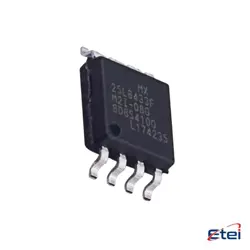
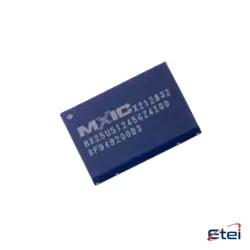
Images are for reference only
AOTF409
+BOMMOSFET P-CH 60V 5.4A/24A TO220FL
-
ManufacturerAlpha & Omega Semiconductor Inc.
-
Mfr. Part #AOTF409
-
In Stock3964
365 Days Quality Guarantee
7*24 hours service quarantee
90-day after-sales guarantee
Genuine Product Guarantee
Specifications
| Attribute | Value |
| Supplier | Alpha & Omega Semiconductor Inc. |
| Package / Case | Tube |
| Part Status | Active |
| FET Type | P-Channel |
| Technology | MOSFET (Metal Oxide) |
| Drain to Source Voltage (Vdss) | 60 V |
| Current - Continuous Drain(Id) @ 25°C | 5.4A (Ta), 24A (Tc) |
| Drive Voltage(Max Rds On Min Rds On) | 4.5V, 10V |
| Rds On(Max) @ Id Vgs | 40mOhm @ 20A, 10V |
| Vgs(th)(Max) @ Id | 2.4V @ 250µA |
| Gate Charge(Qg)(Max) @ Vgs | 52 nC @ 10 V |
| Vgs(Max) | ±20V |
| Input Capacitance(Ciss)(Max) @ Vds | 2953 pF @ 30 V |
| Power Dissipation (Max) | 2.16W (Ta), 43W (Tc) |
| Operating Temperature | -55°C ~ 175°C (TJ) |
| Mounting Type | Through Hole |
| Supplier Device Package | TO-220FL |
Overview
Description
Introduction to AOTF409 (Acousto-Optic Tunable Filters) is a core course on the physics, design, and applications of AOTFs. Students learn how a radio-frequency acoustic wave in a birefringent crystal creates a moving optical grating that diffracts light at a wavelength set by the acoustic frequency (Bragg condition). Key topics include coupled-wave theory in anisotropic media, diffraction efficiency, angular and polarization selectivity, and how RF drive, material, and geometry control tunability and bandwidth. Material options such as TeO2, GaP, and fused silica; device geometries; and practical design issues—insertion loss, thermal effects, damage thresholds, and polarization management. System-level perspectives cover spectroscopic filtering, real-time imaging, and integration into imaging chains. Labs and simulations involve measuring spectral response versus RF, characterizing transducers, and implementing AOTF-based filtering in simple hyperspectral or imaging setups. By the end, students can select appropriate AOTF configurations for given spectral requirements, perform alignments, and analyze performance.
Features
AOTF409 is an Acousto-Optic Tunable Filter. Typical features (vendor variations apply):
- Tunable wavelength via RF drive (acousto-optic diffraction)
- RF frequency range roughly 20–150 MHz (model dependent)
- Fast switching: on the order of microseconds to tens of microseconds
- Programmable passband: selectable bandwidth from sub-nm to a few nm
- High diffraction efficiency (peak) with low insertion loss
- Polarization dependent (TE/TM) performance; input polarization matters
- Narrowband filtering with optical throughput suitable for spectroscopy
- Temperature stability and/or active thermal control
- Control interfaces: USB, RS-232, GPIB/Ethernet; software APIs
- Available formats: free-space, fiber-coupled, or OEM/module configurations
- Applications: spectroscopy, Raman, fluorescence, imaging, hyperspectral systems
Note: exact wavelength range, bandwidth, efficiency, and packaging depend on the specific AOTF409 vendor/model.
- Tunable wavelength via RF drive (acousto-optic diffraction)
- RF frequency range roughly 20–150 MHz (model dependent)
- Fast switching: on the order of microseconds to tens of microseconds
- Programmable passband: selectable bandwidth from sub-nm to a few nm
- High diffraction efficiency (peak) with low insertion loss
- Polarization dependent (TE/TM) performance; input polarization matters
- Narrowband filtering with optical throughput suitable for spectroscopy
- Temperature stability and/or active thermal control
- Control interfaces: USB, RS-232, GPIB/Ethernet; software APIs
- Available formats: free-space, fiber-coupled, or OEM/module configurations
- Applications: spectroscopy, Raman, fluorescence, imaging, hyperspectral systems
Note: exact wavelength range, bandwidth, efficiency, and packaging depend on the specific AOTF409 vendor/model.
Manufacturer
Manufacturer: Gooch & Housego (G&H).
What kind of company: A global photonics company that designs and manufactures optical components and systems, including acousto-optic tunable filters (AOTFs), laser optics, fiber optics, and related instrumentation.
What kind of company: A global photonics company that designs and manufactures optical components and systems, including acousto-optic tunable filters (AOTFs), laser optics, fiber optics, and related instrumentation.
Application
AOTF409 is an acousto‑optic tunable filter. Common application areas include:
- Real-time hyperspectral imaging and spectroscopy (VIS/NIR) for remote sensing, agriculture, minerals, and food quality
- Biomedical imaging and fluorescence detection (endoscopy, histology)
- Industrial machine-vision and process control (spectral filtering, defect detection)
- Scientific instrumentation (astronomy, atmospheric spectroscopy, Raman/IR)
- Optical lab systems (laser line selection and wavelength tuning for spectroscopy, LIDAR receivers)
These reflect its fast, electronically tunable spectral selection capabilities.
- Real-time hyperspectral imaging and spectroscopy (VIS/NIR) for remote sensing, agriculture, minerals, and food quality
- Biomedical imaging and fluorescence detection (endoscopy, histology)
- Industrial machine-vision and process control (spectral filtering, defect detection)
- Scientific instrumentation (astronomy, atmospheric spectroscopy, Raman/IR)
- Optical lab systems (laser line selection and wavelength tuning for spectroscopy, LIDAR receivers)
These reflect its fast, electronically tunable spectral selection capabilities.
Package
Cannot determine the package type for AOTF409 without the manufacturer or a datasheet. Please provide the manufacturer or a link to the datasheet. Once you share it, I can identify the exact package (e.g., SOIC-8, QFN-16, SOT-23, etc.).