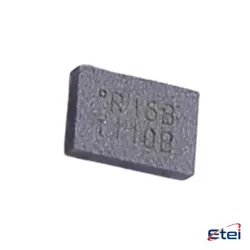
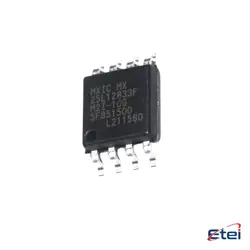
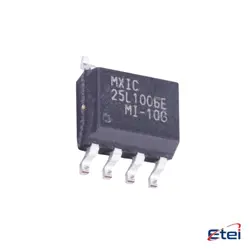
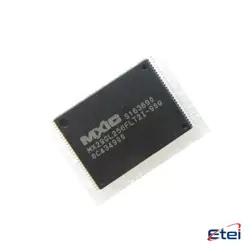
Images are for reference only
ATMEGA128A-AU
+BOMATMEGA128A - AVR RISC MICROCONTR
-
ManufacturerAtmel
-
Mfr. Part #ATMEGA128A-AU
-
Datasheet ATMEGA128A-AU DataSheet
-
Package TQFP-64
-
In Stock7700
365 Days Quality Guarantee
7*24 hours service quarantee
90-day after-sales guarantee
Genuine Product Guarantee
Specifications
| Attribute | Value |
| Package | Bulk |
| ProductStatus | Active |
Overview
Description
It includes a rich set of peripherals, such as two 8-bit and two 16-bit timers, a Real-Time Counter (RTC), a Watchdog Timer, multiple USARTs, an SPI interface, a two-wire serial interface (I2C), and an ADC with 8 or 10-bit resolution. The device supports various power-saving modes, making it suitable for battery-powered applications.
The microcontroller is housed in a 64-pin TQFP package and is widely used in embedded systems for applications such as consumer electronics, industrial automation, and robotics. Its compatibility with the AVR programming environment and broad community support makes it a popular choice among developers and hobbyists.
Equivalent
Features
The device supports multiple communication protocols, including USART, SPI, and I2C, enhancing connectivity options. It also includes timers/counters, both 8-bit and 16-bit, which assist in precise timing operations. With a built-in analog comparator and a 10-bit ADC (Analog to Digital Converter) with up to 8 channels, the ATMEGA128A-AU is suitable for applications requiring analog signal processing.
Additional features include power-saving modes, a JTAG interface for debugging, and a watchdog timer to enhance reliability. The microcontroller operates over a voltage range of 2.7V to 5.5V, making it compatible with various power supply configurations, and is available in a TQFP-64 package. These features make it ideal for embedded systems requiring robust performance and flexibility.
Pinout
1. Pin Count: 64 pins.
2. Memory: 128KB of Flash memory, 4KB of EEPROM, and 4KB of SRAM.
3. I/O Ports: 53 programmable I/O lines, providing flexibility in connecting to other devices or components.
4. Timers: Six PWM channels, four 16-bit timers/counters, and two 8-bit timers/counters.
5. Communication Interfaces: Two USARTs, an SPI port, and a TWI (compatible with I2C) interface for serial communication.
6. ADC: An 8-channel, 10-bit analog-to-digital converter.
7. Interrupts: External and pin change interrupts.
8. Operating Voltage: 2.7V to 5.5V.
9. Operating Frequency: Up to 16 MHz.
These features make the ATmega128A-AU suitable for a variety of applications, including industrial control systems, consumer electronics, and data logging systems.
Manufacturer
Application
1. Embedded Systems: Utilized in consumer electronics and industrial controls for managing tasks efficiently.
2. Automotive: Used for engine controls, infotainment systems, and other automotive electronics.
3. IoT Devices: Powers smart devices and sensors for data acquisition and processing.
4. Robotics: Serves as the brain for robotic applications requiring real-time processing.
5. Home Automation: Controls and automates appliances and lighting systems.
6. Medical Devices: Used in portable medical equipment for monitoring and diagnostics.
7. Educational Projects: Popular in academic settings for teaching microcontroller programming.
The ATMEGA128A-AU's flexibility and performance make it suitable for a wide range of applications.