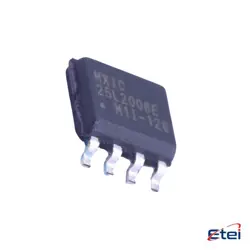
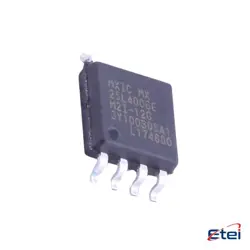
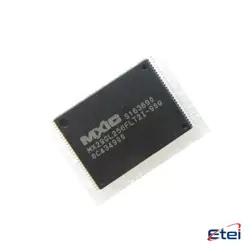
Images are for reference only
ATMEGA2561-16AU
+BOMIC MCU 8BIT 256KB FLASH 64TQFP
-
ManufacturerAtmel
-
Mfr. Part #ATMEGA2561-16AU
-
Datasheet ATMEGA2561-16AU DataSheet
-
Package TQFP-64
-
In Stock6334
365 Days Quality Guarantee
7*24 hours service quarantee
90-day after-sales guarantee
Genuine Product Guarantee
Specifications
| Attribute | Value |
| Package / Case | Bulk |
| Series | AVR® ATmega |
| Part Status | Active |
| Core Processor | AVR |
| Core Size | 8-Bit |
| Speed | 16MHz |
| Connectivity | EBI/EMI, I²C, SPI, UART/USART |
| Peripherals | Brown-out Detect/Reset, POR, PWM, WDT |
| Number of I/O | 54 |
| Program Memory Size | 256KB (128K x 16) |
| Program Memory Type | FLASH |
| EEPROM Size | 4K x 8 |
| RAM Size | 8K x 8 |
| Voltage - Supply (Vcc/Vdd) | 4.5V ~ 5.5V |
| Data Converters | A/D 8x10b |
| Oscillator Type | Internal |
| Operating Temperature | -40°C ~ 85°C (TA) |
| Mounting Type | Surface Mount |
Overview
Description
The microcontroller includes 86 general-purpose I/O pins, making it suitable for interfacing with various peripherals. It supports several communication interfaces, such as USART, SPI, and I2C, facilitating connectivity with other devices. The ATMEGA2561-16AU also features 16 10-bit ADC channels, timers/counters, PWM outputs, and a JTAG interface for debugging.
Designed for easy integration in a wide range of applications, it is commonly used in industrial automation, consumer electronics, and home automation projects. Its compact TQFP package ensures compatibility with space-constrained designs. Additionally, the Atmel Studio IDE and extensive documentation support development, making it a popular choice among hobbyists and professionals alike.
Equivalent
1. Microchip ATmega2560 - Offers similar functionality with more I/O pins.
2. Microchip ATmega1281 - A scaled-down version with less memory.
3. Microchip ATmega640 - Part of the same family, with fewer resources.
4. STMicroelectronics STM32F103 - ARM Cortex-M3-based alternative with different architecture.
5. NXP LPC1768 - Another ARM Cortex-M3-based microcontroller with comparable features.
Each offers unique advantages depending on project requirements.
Features
1. Core: 8-bit AVR RISC architecture.
2. Performance: Up to 16 MIPS at 16 MHz.
3. Memory:
- 256 KB Flash
- 8 KB SRAM
- 4 KB EEPROM
4. I/O Ports: 86 general-purpose I/O lines.
5. Timers:
- Four 8-bit timers
- Two 16-bit timers
6. ADC: 10-bit, up to 16-channel ADC.
7. Communication Interfaces:
- Two USARTs
- SPI
- TWI (compatible with I2C)
8. PWM: 8 PWM channels.
9. Interrupts: 66 interrupt sources.
10. Operating Voltage: 4.5V to 5.5V.
11. Enhanced Features:
- JTAG interface
- Programmable Watchdog Timer
- On-chip analog comparator
12. Package: Available in TQFP and MLF packages.
This microcontroller is suitable for a range of applications, providing a good balance of performance, power efficiency, and functional features.
Pinout
1. CPU: It is based on an 8-bit AVR RISC architecture with a performance of up to 16 MIPS.
2. Flash Memory: 256 KB for program storage.
3. SRAM: 8 KB for data storage.
4. EEPROM: 4 KB for non-volatile data storage.
5. Timers/Counters: Six 8-bit and 16-bit timers.
6. PWM Channels: 16 for various PWM operations.
7. I/O Ports: 86 general-purpose I/O pins for interfacing.
8. USARTs: Four for serial communication.
9. SPI: Two interfaces for high-speed serial communication.
10. I2C: Two TWI interfaces.
11. ADC: Up to 16 channels of 10-bit resolution.
12. Other Peripherals: Supports JTAG for on-chip debugging, a programmable watchdog timer, and various power-saving modes.
This microcontroller is suitable for complex embedded system designs, offering a rich set of interfaces and capabilities for diverse applications.
Manufacturer
Application
1. Industrial Automation: For controlling machinery and processes.
2. Consumer Electronics: In devices like remote controls and home automation systems.
3. Automotive Systems: For in-car entertainment and engine control units.
4. Robotics: In robot controllers for movement and sensor integration.
5. IoT Devices: Used in smart sensors and connectivity applications.
6. Medical Devices: For portable diagnostic tools and monitoring equipment.
7. Communication Systems: In wireless and wired communication interfaces.
Its versatility and robust performance make it ideal for projects requiring moderate processing power and flexibility.