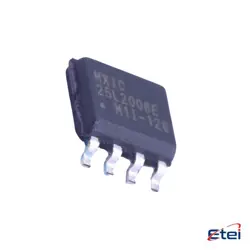
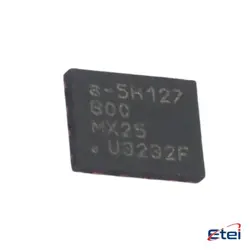
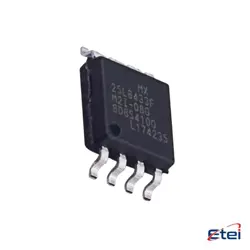
Images are for reference only
ATMEGA328-AU
+BOMIC MCU 8BIT 32KB FLASH 32TQFP
-
ManufacturerAtmel
-
Mfr. Part #ATMEGA328-AU
-
Datasheet ATMEGA328-AU DataSheet
-
Package TQFP-32
-
In Stock3143
365 Days Quality Guarantee
7*24 hours service quarantee
90-day after-sales guarantee
Genuine Product Guarantee
Specifications
| Attribute | Value |
| Package | Bulk |
| Series | AVR® ATmega |
| ProductStatus | Active |
| CoreProcessor | AVR |
| CoreSize | 8-Bit |
| Speed | 20MHz |
| Connectivity | I²C, SPI, UART/USART |
| Peripherals | Brown-out Detect/Reset, POR, PWM, WDT |
| NumberofI/O | 23 |
| ProgramMemorySize | 32KB (16K x 16) |
| ProgramMemoryType | FLASH |
| EEPROMSize | 1K x 8 |
| RAMSize | 2K x 8 |
| Voltage-Supply(Vcc/Vdd) | 1.8V ~ 5.5V |
| DataConverters | A/D 8x10b |
| OscillatorType | Internal |
| OperatingTemperature | -40°C ~ 85°C (TA) |
| MountingType | Surface Mount |
| Package/Case | 32-TQFP |
Overview
Description
The microcontroller has 23 general-purpose I/O pins, facilitating connection with various peripherals and sensors. It supports multiple communication protocols, including USART, SPI, and I2C, enabling versatile interfacing options. Furthermore, it offers six PWM channels for precise control over motors and other devices requiring pulse-width modulation.
The ATMEGA328-AU operates at a voltage range of 1.8V to 5.5V, making it suitable for a wide array of applications. Its low power consumption, combined with various power-saving modes, enhances battery-operated project efficiency. Overall, the ATMEGA328-AU provides a robust, flexible platform for developing a wide range of electronic applications.
Equivalent
1. ATmega328P-PU: Pin-compatible DIP version with similar features.
2. ATmega168: Offers less memory but similar functionality.
3. ATmega32U4: Includes USB support with similar processing power.
4. ATtiny1634: Smaller and less I/O, but comparable for simpler applications.
5. PIC16F877A: From Microchip, similar in performance but different architecture.
These equivalents may vary slightly in features and pin configurations.
Features
1. Architecture: 8-bit AVR RISC architecture.
2. Speed: Operates up to 20 MHz.
3. Flash Memory: 32 KB of in-system programmable flash memory.
4. SRAM: 2 KB.
5. EEPROM: 1 KB.
6. I/O Pins: 23 general-purpose I/O lines.
7. Timers: Three timer/counters (two 8-bit and one 16-bit).
8. ADC: 10-bit, 6-channel analog-to-digital converter.
9. Interfaces: Supports serial communication interfaces like USART, SPI, and I2C (TWI).
10. PWM: 6 PWM channels.
11. Operating Voltage: 1.8V to 5.5V.
12. Power-Saving Modes: Various power-saving modes for low-power operation.
13. Package: Available in TQFP-32 package.
These features make the ATMEGA328-AU ideal for a wide range of applications, including consumer electronics, robotics, and other projects requiring efficient control and processing capabilities.
Pinout
- Power Supply: VCC (Digital supply voltage) and GND (Ground).
- Port B (PB0-PB7): Digital I/O pins that can be used for general-purpose input/output and also serve as SPI interface (MOSI, MISO, SCK).
- Port C (PC0-PC5): Analog input pins for the ADC and general-purpose I/O.
- Port D (PD0-PD7): Additional digital I/O pins, also used for UART (RXD, TXD) and other functions.
- Reset: Active low reset pin to restart the microcontroller.
- XTAL1, XTAL2: Pins for external clock oscillator connection.
- AVCC: Analog supply voltage, typically connected to VCC for ADC.
- AREF: Analog reference pin for the ADC.
- ADC Pins: Multiplexed with Port C for analog-to-digital conversion.
The ATmega328-AU supports various interfaces like SPI, I2C, and UART, making it versatile for embedded applications.
Manufacturer
Application
1. Embedded Systems: Used in compact and efficient embedded projects.
2. IoT Devices: Facilitates connectivity and control in Internet of Things applications.
3. Consumer Electronics: Powers small gadgets and home automation systems.
4. Robotics: Controls sensors and actuators in robotic systems.
5. Prototyping Platforms: Popular in Arduino boards for rapid prototyping.
6. Industrial Automation: Manages processes and control systems.
7. Educational Tools: Used in learning environments for teaching programming and electronics.
Its low power consumption and rich feature set make it suitable for a wide range of applications.