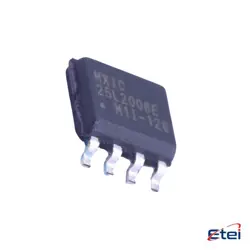
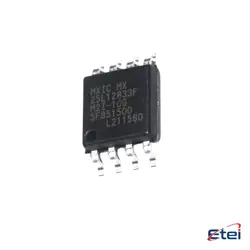
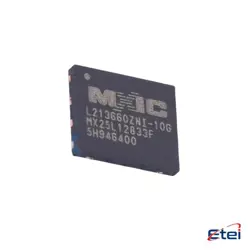
Images are for reference only
ATMEGA328-AUR
+BOMIC MCU 8BIT 32KB FLASH 32TQFP
-
ManufacturerMicrochip Technology
-
Mfr. Part #ATMEGA328-AUR
-
Datasheet ATMEGA328-AUR DataSheet
-
In Stock7927
365 Days Quality Guarantee
7*24 hours service quarantee
90-day after-sales guarantee
Genuine Product Guarantee
Specifications
| Attribute | Value |
| Series | AVR® ATmega |
| Part Status | Active |
| DigiKey Programmable | Verified |
| Core Processor | AVR |
| Core Size | 8-Bit |
| Speed | 20MHz |
| Connectivity | I2C, SPI, UART/USART |
| Peripherals | Brown-out Detect/Reset, POR, PWM, WDT |
| Number of I/O | 23 |
| Program Memory Size | 32KB (16K x 16) |
| Program Memory Type | FLASH |
| EEPROM Size | 1K x 8 |
| RAM Size | 2K x 8 |
| Voltage - Supply (Vcc/Vdd) | 1.8V ~ 5.5V |
| Data Converters | A/D 8x10b |
| Oscillator Type | Internal |
| Operating Temperature | -40°C ~ 85°C (TA) |
| Mounting Type | Surface Mount |
| Supplier Device Package | 32-TQFP (7x7) |
| Package / Case | 32-TQFP |
| Base Product Number | ATMEGA328 |
Overview
Description
The microcontroller includes 23 general-purpose I/O pins, allowing for versatile interfacing with various peripherals and sensors. It supports several communication protocols, such as SPI, I2C, and UART, making it suitable for diverse applications. The ATmega328-AUR also has built-in timers, a watchdog timer, PWM channels, and an analog-to-digital converter (ADC) with up to 10-bit resolution, enabling precise control and measurement capabilities.
Commonly found in Arduino boards, such as the Arduino Uno, it is favored by enthusiasts and professionals alike for prototyping and educational purposes. Its low power consumption and RISC architecture further enhance its appeal for battery-powered and energy-efficient designs.
Equivalent
1. ATmega328P - Another variant in the same family with similar features.
2. Microchip ATmega328PB - Offers additional features and peripherals.
3. Microchip ATmega32U4 - Includes built-in USB interface.
4. Texas Instruments MSP430G2553 - Low-power microcontroller with similar performance.
5. NXP LPC11U24 - ARM Cortex-M0 microcontroller with USB capabilities.
These alternatives typically vary in terms of power consumption, peripherals, and package options.
Features
1. CPU: 8-bit AVR RISC architecture.
2. Operating Voltage: 1.8V to 5.5V.
3. Flash Memory: 32KB for program storage.
4. SRAM: 2KB for data storage.
5. EEPROM: 1KB for additional data storage.
6. Clock Speed: Up to 20 MHz.
7. I/O Pins: 23 general-purpose.
8. Timers: Three timers (two 8-bit and one 16-bit).
9. Communication Interfaces:
- USART for serial communication.
- SPI for synchronous serial data communication.
- I2C/TWI for interfacing with other devices.
10. ADC: 10-bit with 6 channels.
11. PWM: Pulse Width Modulation support on multiple pins.
12. Power-Saving Modes: Idle, ADC Noise Reduction, Power-down, Power-save, Standby, and Extended Standby.
13. Package: TQFP-32 (Thin Quad Flat Package).
These features make it suitable for applications in embedded systems, IoT devices, and hobbyist electronics projects.
Pinout
Pin Count and Function:
1. Power Supply:
- VCC: Digital supply voltage.
- GND: Ground.
- AVCC: Supply voltage for analog functions.
- AREF: Analog reference pin for ADC.
2. Oscillator:
- XTAL1 and XTAL2: External clock inputs.
3. Digital I/O:
- 23 general-purpose I/O pins.
- Configurable as input or output.
4. Analog Inputs:
- 6 ADC channels (ADC0 to ADC5).
5. Serial Communication:
- UART: TXD and RXD for asynchronous serial communication.
- SPI: MOSI, MISO, SCK, SS.
- I2C: SDA, SCL.
6. Timers/Counters:
- 3 timers (Timer0, Timer1, Timer2).
7. Interrupts:
- External interrupts on INT0 and INT1.
8. Other Features:
- Supports PWM, EEPROM, and Watchdog timer.
These functionalities make the ATmega328-AUR versatile for various applications in electronics and robotics.