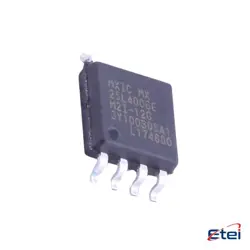
Images are for reference only
ATMEGA8515-16AUR
+BOMIC MCU 8BIT 8KB FLASH 44TQFP
-
ManufacturerAtmel
-
Mfr. Part #ATMEGA8515-16AUR
-
Datasheet ATMEGA8515-16AUR DataSheet
-
Package TQFP-44
-
In Stock4856
365 Days Quality Guarantee
7*24 hours service quarantee
90-day after-sales guarantee
Genuine Product Guarantee
Specifications
| Attribute | Value |
| Package | Bulk |
| Series | AVR® ATmega |
| ProductStatus | Active |
| CoreProcessor | AVR |
| CoreSize | 8-Bit |
| Speed | 16MHz |
| Connectivity | EBI/EMI, SPI, UART/USART |
| Peripherals | Brown-out Detect/Reset, POR, PWM, WDT |
| NumberofI/O | 35 |
| ProgramMemorySize | 8KB (4K x 16) |
| ProgramMemoryType | FLASH |
| EEPROMSize | 512 x 8 |
| RAMSize | 512 x 8 |
| Voltage-Supply(Vcc/Vdd) | 4.5V ~ 5.5V |
| OscillatorType | Internal |
| OperatingTemperature | -40°C ~ 85°C (TA) |
| MountingType | Surface Mount |
| Package/Case | 44-TQFP |
Overview
Description
Key features include a rich instruction set and 32 general-purpose working registers. It also supports external memory expansion up to 64 KB and provides flexible timer/counters, a watchdog timer, and an internal oscillator. For communication, it includes USART, SPI, and I2C interfaces.
The microcontroller operates between 4.5V to 5.5V and is available in a 44-lead TQFP package, making it ideal for compact designs. It supports self-programming, making software updates efficient and convenient. The ATMEGA8515 also features interrupt handling, ensuring quick response in real-time applications.
Overall, this microcontroller is a versatile solution for applications requiring robust features and reliable performance, such as industrial automation, consumer electronics, and automotive systems.
Equivalent
1. ATmega8535 - similar architecture with added features.
2. ATmega16 - offers more memory and additional peripherals.
3. ATmega32 - double the flash memory and SRAM.
4. PIC16F877A - from Microchip, offers comparable features.
5. MSP430G2553 - from Texas Instruments, low-power consumption.
These alternatives may have variations in memory, peripherals, or architecture, so ensure compatibility with your specific application requirements.
Features
- Core: AVR CPU with RISC architecture.
- Operating Frequency: Up to 16 MHz.
- Flash Memory: 8 KB of in-system programmable flash.
- SRAM: 512 bytes.
- EEPROM: 512 bytes.
- I/O Ports: 32 general-purpose I/O lines.
- Timers/Counters: Two 8-bit and one 16-bit timer/counter.
- Serial Interfaces: USART, SPI, and TWI (I2C compatible).
- Interrupts: External and internal interrupt sources.
- PWM: Pulse Width Modulation capability.
- ADC: None; does not include an analog-to-digital converter.
- Watchdog Timer: Programmable with separate on-chip oscillator.
- Operating Voltage: 2.7V to 5.5V.
- Power Consumption: Low power consumption with various sleep modes.
- Package: Available in TQFP and QFN/MLF.
The ATMEGA8515-16AUR is suitable for embedded applications requiring moderate processing power, flexible I/O options, and efficient energy usage.
Pinout
Key functions of the ATmega8515 include:
1. I/O Ports: It has 32 programmable I/O lines divided into four 8-bit ports (PORTA, PORTB, PORTC, and PORTD) for interfacing with external devices.
2. Memory: It includes 8KB of in-system programmable flash memory, 512 bytes of EEPROM, and 512 bytes of SRAM.
3. Timers/Counters: It features two 8-bit Timer/Counters and one 16-bit Timer/Counter for various timing and counting operations.
4. Serial Communication: The microcontroller supports USART for asynchronous and synchronous serial communication.
5. Interrupts: It includes an internal and external interrupt system for responsive operations.
6. Analog Comparator: It has an on-chip analog comparator for comparing voltages.
7. Clock Options: It supports various clock options, including external crystal or resonator, internal RC oscillator, and external clock source.
These features make the ATmega8515 versatile for a variety of embedded applications.
Manufacturer
Application
1. Embedded Systems: Acts as a core controller for small devices.
2. Consumer Electronics: Utilized in appliances for processing and control.
3. Industrial Automation: Controls machinery and processes.
4. Robotics: Manages sensors and actuators.
5. Automotive: Used in vehicle control systems.
6. Communication Systems: Supports protocols and data handling.
7. Medical Devices: Powers portable diagnostic and monitoring tools.
8. Home Automation: Central to smart home gadgets.
Its compatibility with standard interfaces and peripherals makes it ideal for a wide range of applications.