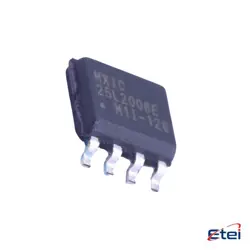
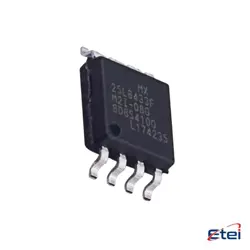
Images are for reference only
ATXMEGA64D4-AUR
+BOMIC MCU 8/16BIT 64KB FLASH 44TQFP
-
ManufacturerMicrochip Technology
-
Mfr. Part #ATXMEGA64D4-AUR
-
Datasheet ATXMEGA64D4-AUR DataSheet
-
In Stock5390
365 Days Quality Guarantee
7*24 hours service quarantee
90-day after-sales guarantee
Genuine Product Guarantee
Specifications
| Attribute | Value |
| Series | AVR® XMEGA® D4 |
| Part Status | Active |
| DigiKey Programmable | Not Verified |
| Core Processor | AVR |
| Core Size | 8/16-Bit |
| Speed | 32MHz |
| Connectivity | I2C, IrDA, SPI, UART/USART |
| Peripherals | Brown-out Detect/Reset, POR, PWM, WDT |
| Number of I/O | 34 |
| Program Memory Size | 64KB (32K x 16) |
| Program Memory Type | FLASH |
| EEPROM Size | 2K x 8 |
| RAM Size | 4K x 8 |
| Voltage - Supply (Vcc/Vdd) | 1.6V ~ 3.6V |
| Data Converters | A/D 12x12b |
| Oscillator Type | Internal |
| Operating Temperature | -40°C ~ 85°C (TA) |
| Mounting Type | Surface Mount |
| Supplier Device Package | 44-TQFP (10x10) |
| Package / Case | 44-TQFP |
| Base Product Number | ATXMEGA64 |
Overview
Description
It operates at a maximum frequency of 32 MHz and provides a rich set of peripherals, including a 12-channel 12-bit Analog-to-Digital Converter (ADC), two-channel 8-bit Digital-to-Analog Converter (DAC), multiple USARTs, SPIs, I2C interfaces, and a Real-Time Counter (RTC). The device supports multiple power-saving modes, enhancing energy efficiency crucial for battery-operated devices.
Available in a 44-pin TQFP or QFN package, the ATXMEGA64D4-AUR's robust feature set and efficient architecture make it suitable for complex, real-time applications. Its development ecosystem includes comprehensive compiler support and development tools, making it accessible for both beginners and experienced engineers.
Equivalent
Features
1. Core: AVR 8-bit RISC architecture, delivering efficient performance and low power consumption.
2. Flash Memory: 64KB of in-system programmable Flash memory, allowing for versatile application developments.
3. SRAM: 4KB of SRAM for dynamic data storage.
4. EEPROM: 2KB for non-volatile data storage.
5. Operating Frequency: Up to 32 MHz, providing fast processing capability.
6. Peripherals:
- USART, SPI, and TWI interfaces for robust communication options.
- 16-bit Timer/Counter modules for precise timing operations.
- 12-channel, 12-bit Analog-to-Digital Converter (ADC) for accurate analog signal processing.
- Digital-to-Analog Converter (DAC) available.
7. Power Management: Multiple sleep modes for power efficiency, with active and idle modes.
8. Operating Voltage: 1.6V to 3.6V, suitable for low power applications.
9. Package: Available in a 44-pin TQFP package, facilitating compact designs.
10. Advanced Features: Event system, programmable logic, and CRC module for enhanced applications.
These features make the ATXMEGA64D4-AUR suitable for a wide range of embedded applications requiring low power and high performance.
Pinout
The ATXMEGA64D4-AUR microcontroller includes the following functions:
1. CPU: 8/16-bit AVR XMEGA core.
2. Memory: 64KB of Flash, 2KB of EEPROM, and 4KB of SRAM.
3. I/O Ports: Multiple configurable I/O ports for digital and analog interfacing.
4. Timers/Counters: Includes several 16-bit timers/counters.
5. Communication Interfaces: Features USART, SPI, and I²C (TWI) interfaces.
6. ADC/DAC: 12-bit ADC and optionally a DAC are available.
7. PWM: Pulse Width Modulation capability.
8. Interrupts: A rich interrupt system for various events.
9. Clock Management: Flexible clock options, including internal and external sources.
The ATXMEGA64D4-AUR is suitable for embedded applications requiring moderate computational power, multiple I/O operations, and flexibility in communication protocols.
Manufacturer
Application
1. Industrial Automation: For controlling machinery and processes.
2. Consumer Electronics: Utilized in smart devices and home appliances.
3. Automotive Systems: For in-vehicle infotainment and body electronics.
4. Healthcare Devices: In medical monitoring and diagnostic equipment.
5. Communication Systems: Used in protocols and network devices.
6. Instrumentation: For precision measurement and control applications.
Its features, such as low power consumption, high performance, and integrated peripherals, make it versatile for these applications.