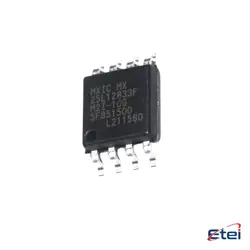
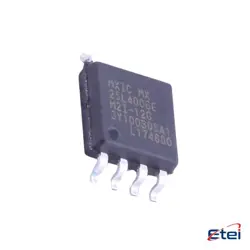
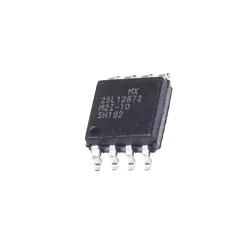
Images are for reference only
BL24C08F-PARC
+BOM-
ManufacturerBL(Shanghai Belling)
-
Mfr. Part #BL24C08F-PARC
-
Datasheet BL24C08F-PARC DataSheet
-
In Stock15662
365 Days Quality Guarantee
7*24 hours service quarantee
90-day after-sales guarantee
Genuine Product Guarantee
Specifications
| Attribute | Value |
| Manufacturer | BL(Shanghai Belling) |
| Package / Case | SOP-8 |
Overview
Description
Key features of the BL24C08F-PARC include a low power consumption, a wide operating voltage range (typically around 1.7V to 5.5V), and compatibility with standard I²C interfaces, allowing for easy integration into a variety of systems. It also offers features such as byte-level write protection, which enhances data security by preventing accidental writes to memory. The chip's small form factor makes it suitable for compact applications, and its robust design ensures reliable performance across a range of environmental conditions. These characteristics make the BL24C08F-PARC a versatile choice for embedded systems requiring reliable and persistent data storage.
Equivalent
Pinout
1. A0, A1, A2: These are address pins used for device addressing. They allow up to 8 devices on the same I²C bus.
2. VCC: Power supply pin, typically requires 2.5V to 5.5V.
3. GND: Ground pin.
4. SDA: Serial Data Line, used for bi-directional data transfer.
5. SCL: Serial Clock Line, used to synchronize data transfer.
6. WP: Write Protect pin, used to enable or disable write operations to the EEPROM.
These pins enable communication and power supply to the device, facilitating the storage and retrieval of data in non-volatile memory.
Manufacturer
Application
1. Consumer Electronics: Used in devices for storing configuration settings and user preferences.
2. Automotive: Provides data storage for settings, fault codes, and system calibrations.
3. Industrial Equipment: Stores firmware and calibration data in machines and control systems.
4. Computing: Utilized in computers for BIOS storage and other system information.
5. Telecommunications: Holds configuration and identification data in networking equipment.
In essence, it serves applications needing reliable, small-scale data retention without power.