Specifications
| Attribute | Value |
| Package | Tape & Reel (TR),Cut Tape (CT) |
| ProductStatus | Active |
| NumberofBits | 16 |
| NumberofD/AConverters | 8 |
| SettlingTime | 5µs (Typ) |
| OutputType | Voltage - Buffered |
| DifferentialOutput | No |
| DataInterface | SPI |
| ReferenceType | External, Internal |
| Voltage-SupplyAnalog | 2.7V ~ 5.5V |
| Voltage-SupplyDigital | 1.7V ~ 5.5V |
| INL/DNL(LSB) | ±0.5, ±0.5 |
| Architecture | R-2R |
| OperatingTemperature | -40°C ~ 125°C |
| Package/Case | 16-WFQFN Exposed Pad |
| SupplierDevicePackage | 16-WQFN (3x3) |
Overview
Description
The DAC80508MRTER is an 8-channel, 16-bit digital-to-analog converter (DAC) from Texas Instruments. It is designed for applications requiring high precision and low power consumption. This DAC features a maximum output rate of 2.1 MSPS (million samples per second) and incorporates an internal reference voltage for enhanced accuracy and stability.
Key features include a low power consumption of 1.5 mW per channel, ensuring energy efficiency, and a power-on reset function that ensures the DAC outputs reset to a known state. The device operates from a single 2.7 V to 5.5 V supply voltage, offering flexibility for various applications. It also supports a standard I²C interface, which facilitates easy integration with microcontrollers and processors.
The DAC80508MRTER is commonly used in precision measurement, data acquisition systems, industrial automation, and other applications that demand high-resolution and reliable analog signal generation. Its compact design and robust performance make it suitable for both portable and stationary electronic systems.
Key features include a low power consumption of 1.5 mW per channel, ensuring energy efficiency, and a power-on reset function that ensures the DAC outputs reset to a known state. The device operates from a single 2.7 V to 5.5 V supply voltage, offering flexibility for various applications. It also supports a standard I²C interface, which facilitates easy integration with microcontrollers and processors.
The DAC80508MRTER is commonly used in precision measurement, data acquisition systems, industrial automation, and other applications that demand high-resolution and reliable analog signal generation. Its compact design and robust performance make it suitable for both portable and stationary electronic systems.
Equivalent
The DAC80508MRTER is a precision 16-bit, 8-channel digital-to-analog converter. Equivalent products include:
1. Analog Devices AD5689R (dual-channel)
2. Maxim Integrated MAX5216 (single-channel)
3. Microchip MCP4728 (quad-channel)
4. ADI AD5676 (8-channel)
5. Maxim Integrated MAX5715 (quad-channel)
When choosing an equivalent, consider specific features like channel count, resolution, power supply, and interface compatibility. Always check the datasheet for detailed specifications and pin compatibility.
1. Analog Devices AD5689R (dual-channel)
2. Maxim Integrated MAX5216 (single-channel)
3. Microchip MCP4728 (quad-channel)
4. ADI AD5676 (8-channel)
5. Maxim Integrated MAX5715 (quad-channel)
When choosing an equivalent, consider specific features like channel count, resolution, power supply, and interface compatibility. Always check the datasheet for detailed specifications and pin compatibility.
Features
The DAC80508MRTER is an 8-channel, 16-bit digital-to-analog converter (DAC) noted for its high performance and versatility. Key features include:
1. Resolution and Channels: Offers 16-bit resolution across 8 independent DAC channels.
2. Output Voltage Range: Provides an output voltage range from 0 V to 5 V.
3. Interface: Utilizes I2C and SPI interfaces for easy integration with microcontrollers and processors.
4. High Precision: Features low drift and high precision with a typical INL (Integral Non-Linearity) of ±1 LSB.
5. Low Power Consumption: Designed for low power use, making it suitable for battery-powered applications.
6. Small Package: Comes in a compact VQFN package, which is advantageous for space-constrained applications.
7. Flexible Reference: Offers an internal reference or the option to use an external reference, providing flexibility for various applications.
8. Temperature Range: Operates across an industrial temperature range, ensuring reliability in diverse environments.
9. Integrated Features: Includes power-on reset and clear functions for improved system reliability.
These features make the DAC80508MRTER suitable for industrial, instrumentation, and data acquisition applications where precision and efficiency are critical.
1. Resolution and Channels: Offers 16-bit resolution across 8 independent DAC channels.
2. Output Voltage Range: Provides an output voltage range from 0 V to 5 V.
3. Interface: Utilizes I2C and SPI interfaces for easy integration with microcontrollers and processors.
4. High Precision: Features low drift and high precision with a typical INL (Integral Non-Linearity) of ±1 LSB.
5. Low Power Consumption: Designed for low power use, making it suitable for battery-powered applications.
6. Small Package: Comes in a compact VQFN package, which is advantageous for space-constrained applications.
7. Flexible Reference: Offers an internal reference or the option to use an external reference, providing flexibility for various applications.
8. Temperature Range: Operates across an industrial temperature range, ensuring reliability in diverse environments.
9. Integrated Features: Includes power-on reset and clear functions for improved system reliability.
These features make the DAC80508MRTER suitable for industrial, instrumentation, and data acquisition applications where precision and efficiency are critical.
Pinout
The DAC80508MRTER is an 8-channel, 16-bit digital-to-analog converter (DAC) from Texas Instruments. It is designed for precision applications and features a SPI-compatible interface. The device is housed in a 16-pin VQFN (Very Thin Quad Flat No-Lead) package.
Here's a brief overview of the pin functions:
1. VDD: Supply voltage for the DAC.
2. GND: Ground reference for the DAC.
3. SYNC: SPI frame synchronization signal.
4. SCLK: SPI clock input.
5. SDI: SPI data input.
6. SDO: SPI data output (optional, for daisy chaining).
7. LDAC: Load DAC signal, allows updating all channels simultaneously.
8. CLR: Clear input, sets DAC outputs to zero or mid-scale.
9. VREF: Reference voltage input for the DAC.
10. A0 - A7: Analog output channels (DAC output pins).
The device supports high precision and low power consumption, making it suitable for applications like process control, instrumentation, and communication systems.
Here's a brief overview of the pin functions:
1. VDD: Supply voltage for the DAC.
2. GND: Ground reference for the DAC.
3. SYNC: SPI frame synchronization signal.
4. SCLK: SPI clock input.
5. SDI: SPI data input.
6. SDO: SPI data output (optional, for daisy chaining).
7. LDAC: Load DAC signal, allows updating all channels simultaneously.
8. CLR: Clear input, sets DAC outputs to zero or mid-scale.
9. VREF: Reference voltage input for the DAC.
10. A0 - A7: Analog output channels (DAC output pins).
The device supports high precision and low power consumption, making it suitable for applications like process control, instrumentation, and communication systems.
Manufacturer
The DAC80508MRTER is manufactured by Texas Instruments Incorporated (TI). Texas Instruments is a global semiconductor company that designs and produces a wide array of electronic components, including integrated circuits and embedded processors. TI is well-known for its innovation and development in the electronics industry, providing solutions for various applications such as industrial, automotive, personal electronics, and communications equipment. The company focuses on creating technology that facilitates more efficient and effective electronics, contributing broadly to advancements in both consumer and industrial sectors.
Application
The DAC80508MRTER is an 8-channel, 16-bit digital-to-analog converter (DAC) commonly used in various applications. Key application areas include:
1. Industrial Automation: Facilitates precise control in manufacturing processes.
2. Data Acquisition Systems: Converts digital data into analog signals for analysis.
3. Instrumentation: Provides accurate signal generation for testing and measurement equipment.
4. Process Control: Enhances control systems in chemical, pharmaceutical, and other process industries.
5. Automotive: Used in control systems and sensor interfacing.
6. Communication Systems: Assists in signal modulation and processing.
7. Medical Devices: Supports precise control and monitoring in medical instrumentation.
These applications benefit from its high precision, multiple channels, and low power consumption.
1. Industrial Automation: Facilitates precise control in manufacturing processes.
2. Data Acquisition Systems: Converts digital data into analog signals for analysis.
3. Instrumentation: Provides accurate signal generation for testing and measurement equipment.
4. Process Control: Enhances control systems in chemical, pharmaceutical, and other process industries.
5. Automotive: Used in control systems and sensor interfacing.
6. Communication Systems: Assists in signal modulation and processing.
7. Medical Devices: Supports precise control and monitoring in medical instrumentation.
These applications benefit from its high precision, multiple channels, and low power consumption.
Package
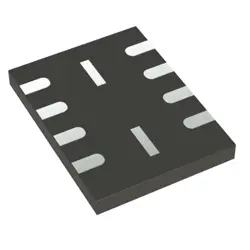
The DAC80508MRTER is a digital-to-analog converter from Texas Instruments, coming in a VQFN (Very Thin Quad Flat No-Lead) package type, specifically a 16-pin VQFN measuring 3mm x 3mm. This compact packaging is optimal for space-constrained applications.