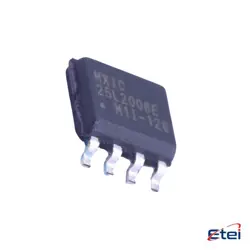
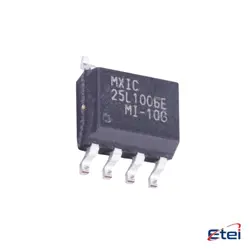
Images are for reference only
HEF4015BT
+BOMCounter Shift Registers
-
ManufacturerNexperia
-
Mfr. Part #HEF4015BT
-
In Stock16089
365 Days Quality Guarantee
7*24 hours service quarantee
90-day after-sales guarantee
Genuine Product Guarantee
Specifications
| Attribute | Value |
Overview
Description
The HEF4015BT is a dual 4-bit static shift register IC from the 4000 series CMOS logic family. It features two independent shift registers, each with 4 stages, allowing serial-to-parallel data conversion.
### Key Features:
- Dual 4-bit shift registers (two independent registers in one package)
- Serial input & parallel outputs for each register
- Wide supply voltage range (3V to 15V)
- Low power consumption (typical of CMOS)
- High noise immunity
### Applications:
- Data storage & transfer
- Serial-to-parallel conversion
- Time-delay circuits
- LED driving & display control
The HEF4015BT is available in a SOIC-16 package and is commonly used in digital logic designs requiring simple shift register functionality.
Would you like pinout or timing details?
### Key Features:
- Dual 4-bit shift registers (two independent registers in one package)
- Serial input & parallel outputs for each register
- Wide supply voltage range (3V to 15V)
- Low power consumption (typical of CMOS)
- High noise immunity
### Applications:
- Data storage & transfer
- Serial-to-parallel conversion
- Time-delay circuits
- LED driving & display control
The HEF4015BT is available in a SOIC-16 package and is commonly used in digital logic designs requiring simple shift register functionality.
Would you like pinout or timing details?
Equivalent
The HEF4015BT (dual 4-bit static shift register) has several equivalents, including:
- CD4015BE (Texas Instruments)
- MC14015B (ON Semiconductor)
- TC4015BP (Toshiba)
- HCF4015BE (STMicroelectronics)
These are pin-compatible and functionally identical, though minor differences in electrical characteristics may exist. Always check datasheets for exact specifications.
- CD4015BE (Texas Instruments)
- MC14015B (ON Semiconductor)
- TC4015BP (Toshiba)
- HCF4015BE (STMicroelectronics)
These are pin-compatible and functionally identical, though minor differences in electrical characteristics may exist. Always check datasheets for exact specifications.
Features
The HEF4015BT is a dual 4-bit static shift register IC with the following key features:
- Dual Shift Registers: Contains two independent 4-bit serial-in, parallel-out shift registers.
- Wide Voltage Range: Operates from 3V to 15V, making it compatible with TTL and CMOS logic.
- Low Power Consumption: CMOS technology ensures minimal power usage.
- High Noise Immunity: Robust against electrical interference.
- Serial Input & Parallel Output: Data shifts in serially and outputs in parallel via four stages per register.
- Clock & Reset Control: Each register has a clock (CP) and reset (MR) pin for synchronization and clearing.
- Package: Available in a 14-pin DIP or SOIC package.
Ideal for data storage, delay circuits, and serial-to-parallel conversion in digital systems.
- Dual Shift Registers: Contains two independent 4-bit serial-in, parallel-out shift registers.
- Wide Voltage Range: Operates from 3V to 15V, making it compatible with TTL and CMOS logic.
- Low Power Consumption: CMOS technology ensures minimal power usage.
- High Noise Immunity: Robust against electrical interference.
- Serial Input & Parallel Output: Data shifts in serially and outputs in parallel via four stages per register.
- Clock & Reset Control: Each register has a clock (CP) and reset (MR) pin for synchronization and clearing.
- Package: Available in a 14-pin DIP or SOIC package.
Ideal for data storage, delay circuits, and serial-to-parallel conversion in digital systems.
Manufacturer
The HEF4015BT is manufactured by NXP Semiconductors, a leading global semiconductor company headquartered in the Netherlands. NXP specializes in high-performance mixed-signal and standard product solutions, including microcontrollers, analog, and logic ICs. The company serves industries like automotive, industrial, IoT, and mobile, known for innovation and reliability. The HEF4015BT is a dual 4-bit static shift register from their 4000 series logic family.
Application
The HEF4015BT, a dual 4-bit static shift register, is commonly used in:
1. Data Storage & Transfer – Serial-to-parallel conversion in digital systems.
2. Time Delay Circuits – Creating precise delays in signal processing.
3. LED Displays – Driving multiplexed displays or shift register-based LED matrices.
4. Control Systems – Sequential logic applications in automation.
5. Communication Interfaces – Buffering and data handling in serial communication.
Its CMOS technology ensures low power consumption, making it suitable for battery-operated devices.
1. Data Storage & Transfer – Serial-to-parallel conversion in digital systems.
2. Time Delay Circuits – Creating precise delays in signal processing.
3. LED Displays – Driving multiplexed displays or shift register-based LED matrices.
4. Control Systems – Sequential logic applications in automation.
5. Communication Interfaces – Buffering and data handling in serial communication.
Its CMOS technology ensures low power consumption, making it suitable for battery-operated devices.
Package
The HEF4015BT is a dual 4-bit static shift register IC. It comes in a SO16 (SOIC-16) package, which is a small outline integrated circuit with 16 pins. This surface-mount package is compact and widely used in modern electronics. The "T" in the part number typically indicates the tape-and-reel packaging option for automated assembly.