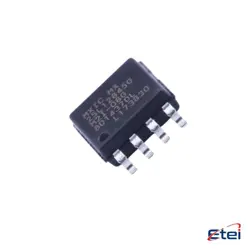
Images are for reference only
HMC221BE
+BOMIC RF SWITCH SPDT 3GHZ SOT23-6
-
ManufacturerAnalog Devices Inc.
-
Mfr. Part #HMC221BE
-
Datasheet HMC221BE DataSheet
-
In Stock20651
365 Days Quality Guarantee
7*24 hours service quarantee
90-day after-sales guarantee
Genuine Product Guarantee
Specifications
| Attribute | Value |
| Part Status | Active |
| RF Type | General Purpose |
| Circuit | SPDT |
| Frequency Range | 10kHz ~ 3GHz |
| Isolation | 18dB |
| Insertion Loss | 0.8dB |
| Test Frequency | 3GHz |
| P1dB | 29dBm |
| IIP3 | 54dBm |
| Impedance | 50Ohm |
| Voltage - Supply | 5V |
| Operating Temperature | -40°C ~ 85°C |
| Mounting Type | Surface Mount |
| Package / Case | SOT-23-6 |
| Supplier Device Package | SOT-23-6 |
| Base Product Number | HMC221 |
Overview
Description
Key features of the HMC221BE include low insertion loss, high isolation, and fast switching speed, making it an ideal choice for complex RF system designs. It is packaged in a compact, surface-mount format, which facilitates easy integration into a variety of circuit boards. The switch operates with a single positive control voltage, which simplifies the control circuitry and enhances overall reliability.
Overall, the HMC221BE is valued for its robust performance characteristics, providing designers with the flexibility and dependability required for cutting-edge RF and microwave applications. Its advanced construction ensures minimal signal degradation, making it a preferred choice in high-frequency, high-performance environments.
Equivalent
1. Analog Devices HMC221B - Direct replacement for HMC221BE.
2. Mini-Circuits JSW2-63DR+ - Offers similar functionality.
3. Skyworks SKY13351-378LF - Another SPDT switch option.
4. Peregrine Semiconductor PE4259 - Provides similar switching characteristics.
Always verify specifications like frequency range, insertion loss, and power handling to ensure compatibility.
Features
1. Wide Bandwidth: It operates from DC to 4 GHz, making it suitable for a variety of RF and microwave applications.
2. Low Insertion Loss: Typically around 0.5 dB, ensuring minimal signal degradation.
3. High Isolation: Offers isolation levels of approximately 45 dB, reducing potential interference between ports.
4. Fast Switching Speed: Provides fast switching times, typically about 6 nanoseconds, which is beneficial for applications requiring quick signal routing.
5. Non-Reflective Design: Ensures low VSWR, improving performance by minimizing signal reflections.
6. Compact Package: Available in a small, industry-standard SOT26 package, facilitating easy integration into various systems.
7. High Power Handling: Capable of handling input power levels up to +27 dBm.
8. Control Voltage Compatibility: Operates with a control voltage of 0/+5V, providing compatibility with standard digital logic levels.
These features make the HMC221BE suitable for use in cellular, PCS, and wireless LAN applications, among others.
Pinout
In terms of pin functions, here is a brief overview:
1. RF1 - This is the RF port that connects to one of the two possible output or input paths.
2. RFC - This is the common RF port.
3. RF2 - This is the other RF port that connects to the alternate output or input path.
4. V1 and V2 - These are control voltage pins that determine the position of the switch (which RF path is connected).
5. GND - This pin is connected to ground.
The device is known for low insertion loss and high isolation between the ports, making it suitable for high-frequency applications up to 6 GHz. Always refer to the manufacturer's datasheet for precise pin configurations and functional details.
Manufacturer
Application
1. Cellular Infrastructure: Used in base stations for signal routing and switching.
2. Test Equipment: Utilized in RF testing and measurement setups.
3. Wireless Communications: Supports systems like Wi-Fi and Bluetooth for signal management.
4. Satellite Communications: Assists in signal routing for satellite transceivers.
5. Military and Defense: Incorporated in radar and communication systems for its reliability and high performance.
6. Instrumentation: Used in precision RF instrumentation for its low insertion loss and high isolation.
These applications leverage its capabilities like wide bandwidth, low insertion loss, and robust isolation.