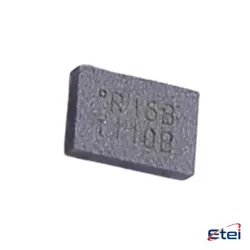
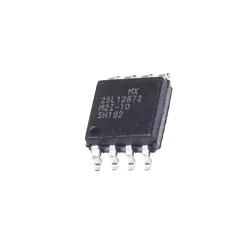
Images are for reference only
HMC433ETR
+BOMIC FREQ DIVIDER DC-8GHZ SOT26
-
ManufacturerAnalog Devices Inc.
-
Mfr. Part #HMC433ETR
-
Datasheet HMC433ETR DataSheet
-
Package SOT23-6
-
In Stock3195
365 Days Quality Guarantee
7*24 hours service quarantee
90-day after-sales guarantee
Genuine Product Guarantee
Specifications
| Attribute | Value |
| Package | Tape & Reel (TR),Cut Tape (CT) |
| ProductStatus | Active |
| Function | Prescaler |
| Frequency | 0Hz ~ 8GHz |
| RFType | General Purpose |
| SecondaryAttributes | Divide by 4 |
| MountingType | Surface Mount |
| Package/Case | SOT-23-6 |
Overview
Description
Key features of the HMC433ETR include excellent frequency stability and a compact footprint, which makes it suitable for space-constrained applications. Its output power is typically around +3 dBm, making it a good choice for driving mixers, or as a local oscillator in transceivers. The VCO's design supports a wide array of applications such as point-to-point radios, satellite communication, and radar systems.
The HMC433ETR is housed in a surface-mount package, enhancing its ease of integration into various systems while ensuring reliable performance across different operating conditions.
Equivalent
Features
1. Frequency Range: It operates over a wide frequency range, typically from around 4.0 GHz to 8.0 GHz, making it versatile for various applications.
2. Output Power: The device delivers a consistent output power level, usually around +10 dBm, ensuring a strong signal for downstream components.
3. Low Phase Noise: It offers excellent phase noise performance, which is crucial for maintaining signal integrity in communication systems.
4. Single Supply Voltage: The HMC433ETR requires a single supply voltage, simplifying power management and integration into existing systems.
5. Compact Package: It is available in a compact SMT package, facilitating easy integration into space-constrained designs.
6. Wide Tuning Voltage Range: The VCO has a broad tuning voltage range, providing flexibility in frequency selection and control.
These features make the HMC433ETR suitable for use in applications such as satellite communication, radar systems, and wireless infrastructure.
Pinout
As for the pin functions, the typical pin configuration might include:
1. Vcc: Power supply pin for the device.
2. GND: Ground connection.
3. RF IN: Radio Frequency input.
4. RF OUT/LO: Radio Frequency output or Local Oscillator output.
5. VTUNE: Voltage tune input, typically used for frequency control in a PLL.
6. Enable/Disable or Logic Control Pins: Used for enabling or controlling the device operation.
Be sure to consult the specific datasheet for detailed pin descriptions and layout for the HMC433ETR, as this information can provide insights specific to the version or packaging of this frequency synthesizer.