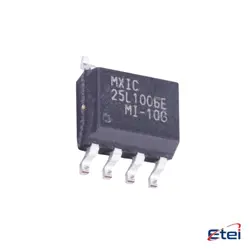
Images are for reference only
HMC460
+BOMIC RF AMP VSAT 0HZ-20GHZ DIE
-
ManufacturerAnalog Devices Inc.
-
Mfr. Part #HMC460
-
Datasheet HMC460 DataSheet
-
Package Die
-
In Stock5156
365 Days Quality Guarantee
7*24 hours service quarantee
90-day after-sales guarantee
Genuine Product Guarantee
Specifications
| Attribute | Value |
| Package | Bulk |
| ProductStatus | Active |
| Frequency | 0Hz ~ 20GHz |
| P1dB | 17dBm |
| Gain | 14dB |
| NoiseFigure | 4dB |
| RFType | VSAT |
| Voltage-Supply | 8V |
| Current-Supply | 60mA |
| TestFrequency | 6GHz ~ 18GHz |
| MountingType | Surface Mount |
| Package/Case | Die |
Overview
Description
Key features of the HMC460 include a typical gain of 14 dB, a noise figure of around 2 dB, and an output power of approximately +17 dBm. The amplifier is compact and typically housed in a small surface-mount package, which is ideal for space-constrained applications.
The device's design ensures excellent thermal properties and reliability. Due to its broadband capabilities, the HMC460 can replace several narrowband amplifiers, simplifying designs and reducing component count. Overall, the HMC460 is favored for its performance in high-frequency, low-noise environments and its ease of integration into microwave circuits.
Equivalent
1. Analog Devices HMC519
2. Mini-Circuits PHA-1+
3. Qorvo TGA2509
4. NXP BGA2866
These alternatives are similar in function but may have different specifications, so it's important to compare key parameters like frequency range, gain, noise figure, and power supply requirements to ensure compatibility with your application.
Features
- Frequency Range: Operates typically from DC to 20 GHz, making it suitable for a variety of RF and microwave applications.
- Gain: Provides a typical gain of around 14 dB, which ensures signal amplification across its operating range.
- Output Power: Offers a typical output power of +27 dBm at 1 dB compression point, delivering substantial amplification capabilities.
- Supply Voltage: Typically operates at +8V supply voltage, ensuring compatibility with standard power supplies.
- Low Noise Figure: Features a low noise figure, generally around 2.5 dB, which is beneficial for maintaining signal integrity.
- Input/Output Return Loss: Exhibits good input and output return loss for effective power transfer and minimized reflection.
- Package: Available in a leadless 4 x 4 mm surface-mount package, facilitating easy integration into various systems.
- Applications: Ideal for use in test equipment, military, and space communication systems due to its robust performance and wide frequency range.
These features make the HMC460 a versatile choice for high-frequency amplification needs.
Pinout
1. Pin 1: RF Input - This is the RF input port of the amplifier.
2. Pin 2: Ground - Ground connection for the circuit.
3. Pin 3: Ground - Another ground connection.
4. Pin 4: Ground - Additional ground connection.
5. Pin 5: Ground - Further ground connection.
6. Pin 6: RF Output/VD - This pin serves as the RF output as well as the drain voltage (VD) supply for the amplifier.
7. Pin 7: Ground - Another ground connection.
8. Pin 8: Gate Voltage (VG) - This pin is used for applying gate control voltage.
The additional ground pins ensure proper grounding to maintain amplifier performance and stability. The HMC460 is designed to operate over a wide frequency range with high gain and low noise, making it suitable for various communication systems.
Manufacturer
Application
1. Wireless Infrastructure: Used in base stations for cellular networks due to its wide frequency range and high power efficiency.
2. Radar Systems: Employed in both military and civilian radar systems for signal amplification.
3. Satellite Communications: Enhances signal strength in transponders and ground stations.
4. Test and Measurement Equipment: Used in RF testing devices due to its linearity and reliability.
5. Point-to-Point Radios: Facilitates long-range communication by amplifying microwave signals.
6. Broadband Applications: Suitable for wideband applications due to its broad frequency coverage.
These applications benefit from its high gain, linearity, and efficiency.