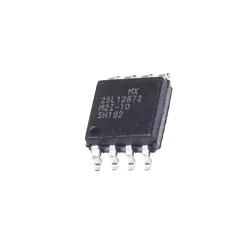
Images are for reference only
HMC752LC4TR
+BOMIC RF AMP GP 24GHZ-28GHZ 24CSMT
-
ManufacturerAnalog Devices Inc.
-
Mfr. Part #HMC752LC4TR
-
Datasheet HMC752LC4TR DataSheet
-
Package TFCQFN-24
-
In Stock100
365 Days Quality Guarantee
7*24 hours service quarantee
90-day after-sales guarantee
Genuine Product Guarantee
Specifications
| Attribute | Value |
| Supplier | Analog Devices Inc. |
| Package | Tape & Reel (TR),Cut Tape (CT) |
| ProductStatus | Active |
| Frequency | 24GHz ~ 28GHz |
| P1dB | 13dBm |
| Gain | 25dB |
| NoiseFigure | 2.5dB |
| RFType | General Purpose |
| Voltage-Supply | 3V |
| Current-Supply | 70mA |
| MountingType | Surface Mount |
| Package/Case | 24-TFCQFN Exposed Pad |
Overview
Description
Packaged in a leadless 4x4 mm surface-mount package, the HMC752LC4TR is designed for ease of integration into RF systems. The amplifier typically requires a single positive supply voltage and features internal 50-ohm matching, which simplifies its integration into existing systems without the need for external matching components.
With its combination of wide bandwidth, low noise, and robust performance, the HMC752LC4TR is ideal for use in RF front-end modules, test equipment, and other high-frequency applications where signal integrity is paramount.
Equivalent
Features
Pinout
The main function of the HMC752LC4TR is to serve as a fixed divide-by-2 frequency divider. It accepts input frequencies up to 18 GHz and produces an output with half the frequency of the input signal. This device is often used in signal processing applications where frequency scaling is required.
Key features include high input frequency capability, low phase noise, and robust performance over a wide temperature range. It is suitable for use in a variety of RF and microwave applications, including communication systems, radar, and test equipment.
For specific pin configurations, functionality, and detailed electrical specifications, referring to the manufacturer's datasheet is recommended.
Manufacturer
Application
1. Radar Systems: Used in the RF front-end for downconverting high-frequency radar signals to intermediate frequencies.
2. Test Equipment: Employed in measurement and testing equipment for signal analysis and frequency conversion.
3. Telecommunications: Integrated into cellular and satellite communications systems to facilitate frequency conversion in receivers.
4. Electronic Warfare: Utilized in defense systems for signal interception and processing.
Its high linearity, wide bandwidth, and efficient frequency conversion capabilities make it suitable for these advanced RF and microwave applications.