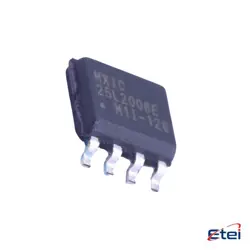
Images are for reference only
INA849DR
+BOM-
ManufacturerTexas Instruments
-
Mfr. Part #INA849DR
-
In Stock6529
365 Days Quality Guarantee
7*24 hours service quarantee
90-day after-sales guarantee
Genuine Product Guarantee
Specifications
| Attribute | Value |
| Package | Tape & Reel (TR),Cut Tape (CT) |
| ProductStatus | Active |
| AmplifierType | Instrumentation |
| NumberofCircuits | 1 |
| SlewRate | 35V/µs |
| -3dbBandwidth | 28 MHz |
| Current-InputBias | 20 pA |
| Voltage-InputOffset | 10 µV |
| Current-Supply | 6.2mA |
| Current-Output/Channel | 34 mA |
| Voltage-SupplySpan(Min) | 8 V |
| Voltage-SupplySpan(Max) | 36 V |
| OperatingTemperature | -40°C ~ 125°C (TA) |
| MountingType | Surface Mount |
| Package/Case | 8-SOIC (0.154, 3.90mm Width) |
Overview
Description
The INA849DR is a precision instrumentation amplifier designed for high-performance signal conditioning applications. It features a low offset voltage, low bias current, and rail-to-rail output, making it suitable for precise measurements in various environments. The device offers a wide gain range, allowing for easy customization to specific application needs. Its robust design ensures high common-mode rejection and low noise, which are critical for maintaining signal integrity in challenging conditions.
The INA849DR operates over a wide supply voltage range and is ideal for use in industrial, medical, and data acquisition systems. It integrates well into systems requiring precise amplification of low-level differential signals, such as sensor interfaces and bridge transducers. The amplifier's small footprint and ease of use make it a versatile choice for compact and efficient circuit designs. With its combination of high precision, reliability, and flexibility, the INA849DR is a valuable component for engineers and designers looking to implement accurate and stable measurement solutions.
The INA849DR operates over a wide supply voltage range and is ideal for use in industrial, medical, and data acquisition systems. It integrates well into systems requiring precise amplification of low-level differential signals, such as sensor interfaces and bridge transducers. The amplifier's small footprint and ease of use make it a versatile choice for compact and efficient circuit designs. With its combination of high precision, reliability, and flexibility, the INA849DR is a valuable component for engineers and designers looking to implement accurate and stable measurement solutions.
Equivalent
The INA849DR is a precision instrumentation amplifier manufactured by Texas Instruments. Equivalent products include:
1. AD8421 by Analog Devices
2. MAX4466 by Maxim Integrated
3. LT1167 by Analog Devices (formerly Linear Technology)
4. MCP6N11 by Microchip Technology
These alternatives vary in specific features and performance, so it's important to compare their datasheets to ensure compatibility with your application.
1. AD8421 by Analog Devices
2. MAX4466 by Maxim Integrated
3. LT1167 by Analog Devices (formerly Linear Technology)
4. MCP6N11 by Microchip Technology
These alternatives vary in specific features and performance, so it's important to compare their datasheets to ensure compatibility with your application.
Features
The INA849DR is a precision instrumentation amplifier designed for accurate and low-noise signal amplification. It offers the following key features:
1. High Precision: It provides exceptional precision with low offset voltage and drift, ensuring reliable performance over a range of conditions.
2. Low Noise: The amplifier is equipped to minimize noise, making it suitable for applications requiring clean signal amplification.
3. Wide Gain Range: It supports a broad range of gain settings, allowing for flexibility in various applications.
4. Excellent Common-Mode Rejection: This feature enhances the amplifier's ability to reject common-mode signals, improving overall measurement accuracy.
5. High Bandwidth: The INA849DR offers high bandwidth, ensuring fast and accurate signal processing.
6. Low Power Consumption: It is designed to consume minimal power, making it suitable for battery-operated devices.
7. Robust Design: The device is built to withstand harsh conditions, ensuring durability and reliability.
These features make the INA849DR ideal for precision measurement applications in fields like medical instrumentation, data acquisition, and industrial sensors.
1. High Precision: It provides exceptional precision with low offset voltage and drift, ensuring reliable performance over a range of conditions.
2. Low Noise: The amplifier is equipped to minimize noise, making it suitable for applications requiring clean signal amplification.
3. Wide Gain Range: It supports a broad range of gain settings, allowing for flexibility in various applications.
4. Excellent Common-Mode Rejection: This feature enhances the amplifier's ability to reject common-mode signals, improving overall measurement accuracy.
5. High Bandwidth: The INA849DR offers high bandwidth, ensuring fast and accurate signal processing.
6. Low Power Consumption: It is designed to consume minimal power, making it suitable for battery-operated devices.
7. Robust Design: The device is built to withstand harsh conditions, ensuring durability and reliability.
These features make the INA849DR ideal for precision measurement applications in fields like medical instrumentation, data acquisition, and industrial sensors.
Pinout
The INA849DR is a precision instrumentation amplifier by Texas Instruments. It comes in an 8-pin SOIC (Small Outline Integrated Circuit) package. Here is a brief overview of its pin functions:
1. V+ (Pin 7): Positive power supply voltage.
2. V- (Pin 4): Negative power supply voltage or ground.
3. VIN+ (Pin 3): Non-inverting input.
4. VIN- (Pin 2): Inverting input.
5. REF (Pin 5): Reference voltage input. This pin allows the output to be level-shifted.
6. OUT (Pin 6): Output voltage.
7. RG1 (Pin 1) & RG2 (Pin 8): Gain setting pins. External resistors connected to these pins determine the gain of the amplifier.
This device is designed for high precision, low offset, and low drift applications, making it suitable for sensor signal conditioning, data acquisition, and other applications that require precise amplification of differential signals.
1. V+ (Pin 7): Positive power supply voltage.
2. V- (Pin 4): Negative power supply voltage or ground.
3. VIN+ (Pin 3): Non-inverting input.
4. VIN- (Pin 2): Inverting input.
5. REF (Pin 5): Reference voltage input. This pin allows the output to be level-shifted.
6. OUT (Pin 6): Output voltage.
7. RG1 (Pin 1) & RG2 (Pin 8): Gain setting pins. External resistors connected to these pins determine the gain of the amplifier.
This device is designed for high precision, low offset, and low drift applications, making it suitable for sensor signal conditioning, data acquisition, and other applications that require precise amplification of differential signals.
Manufacturer
The INA849DR is manufactured by Texas Instruments (TI). Texas Instruments is a global semiconductor company known for designing and manufacturing a wide range of electronic components and integrated circuits. TI is a leader in the electronics industry, providing products and solutions for various sectors, including consumer electronics, automotive, industrial, and communications. The company specializes in analog chips and embedded processors, which are integral to modern electronic devices. Texas Instruments is renowned for its innovation and has a significant impact on the development of technology worldwide.
Application
The INA849DR is a precision instrumentation amplifier commonly used in applications requiring accurate sensor signal conditioning. Its primary areas of application include:
1. Medical Instrumentation: For amplifying low-level physiological signals.
2. Industrial Process Control: In sensors and transducers for precise measurement.
3. Test and Measurement Equipment: Offering accurate signal amplification.
4. Data Acquisition Systems: Enhancing signal quality from various sensors.
5. Weigh Scales: For precise weight measurement by amplifying strain gauge signals.
6. Automotive Sensors: Used in applications requiring precise signal conditioning from automotive sensors.
7. Energy Monitoring: For accurate current and voltage measurements.
These applications benefit from the INA849DR's high precision, low power consumption, and excellent linearity.
1. Medical Instrumentation: For amplifying low-level physiological signals.
2. Industrial Process Control: In sensors and transducers for precise measurement.
3. Test and Measurement Equipment: Offering accurate signal amplification.
4. Data Acquisition Systems: Enhancing signal quality from various sensors.
5. Weigh Scales: For precise weight measurement by amplifying strain gauge signals.
6. Automotive Sensors: Used in applications requiring precise signal conditioning from automotive sensors.
7. Energy Monitoring: For accurate current and voltage measurements.
These applications benefit from the INA849DR's high precision, low power consumption, and excellent linearity.
Package
The INA849DR is an instrumentation amplifier from Texas Instruments, and it comes in a SOIC-8 package type, which stands for Small Outline Integrated Circuit with 8 pins.