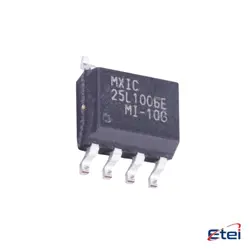
Images are for reference only
LM324DR
+BOM-
ManufacturerRohm Semiconductor
-
Mfr. Part #LM324DR
-
In Stock7749
365 Days Quality Guarantee
7*24 hours service quarantee
90-day after-sales guarantee
Genuine Product Guarantee
Specifications
| Attribute | Value |
| Package | Tape & Reel (TR) |
| ProductStatus | Obsolete |
| AmplifierType | General Purpose |
| NumberofCircuits | 4 |
| SlewRate | 0.3V/µs |
| GainBandwidthProduct | 1.2 MHz |
| Current-InputBias | 20 nA |
| Voltage-InputOffset | 1 mV |
| Current-Supply | 1mA |
| Current-Output/Channel | 30 mA |
| Voltage-SupplySpan(Min) | 3 V |
| Voltage-SupplySpan(Max) | 32 V |
| OperatingTemperature | -40°C ~ 85°C |
| MountingType | Surface Mount |
| Package/Case | 14-SOIC (0.154, 3.90mm Width) |
Overview
Description
The LM324DR is a quad operational amplifier (op-amp) integrated circuit, widely used in various electronic applications. It contains four independent, high-gain, internally frequency-compensated op-amps, designed to operate from a single power supply over a wide voltage range. It can also accommodate dual supplies.
Key features of the LM324DR include low power consumption, wide bandwidth, and a large output voltage swing. It is particularly suitable for battery-operated devices, as it can function at a low current drain. The input common-mode voltage range includes ground, making the LM324DR ideal for single-supply applications.
The device is housed in a 14-pin SOIC (Small Outline Integrated Circuit) package, which is denoted by the "DR" in its name. It is suitable for applications like signal conditioning, filters, and amplifiers in consumer electronics, automotive, and industrial equipment. The LM324DR is valued for its versatility, cost-effectiveness, and reliable performance in both analog and mixed-signal circuits.
Key features of the LM324DR include low power consumption, wide bandwidth, and a large output voltage swing. It is particularly suitable for battery-operated devices, as it can function at a low current drain. The input common-mode voltage range includes ground, making the LM324DR ideal for single-supply applications.
The device is housed in a 14-pin SOIC (Small Outline Integrated Circuit) package, which is denoted by the "DR" in its name. It is suitable for applications like signal conditioning, filters, and amplifiers in consumer electronics, automotive, and industrial equipment. The LM324DR is valued for its versatility, cost-effectiveness, and reliable performance in both analog and mixed-signal circuits.
Equivalent
The LM324DR is a quad operational amplifier. Equivalent products include:
1. TL084 from Texas Instruments
2. MC33074 from ON Semiconductor
3. LM2902 from various manufacturers
4. UA741 (single op-amp with similar characteristics)
5. LM358 (dual version of LM324)
These alternatives have similar characteristics and can often be used as substitutes depending on specific circuit requirements. Always check the datasheet for compatibility with your application.
1. TL084 from Texas Instruments
2. MC33074 from ON Semiconductor
3. LM2902 from various manufacturers
4. UA741 (single op-amp with similar characteristics)
5. LM358 (dual version of LM324)
These alternatives have similar characteristics and can often be used as substitutes depending on specific circuit requirements. Always check the datasheet for compatibility with your application.
Features
The LM324DR is a type of operational amplifier with the following features:
1. Quad Op-Amp: It includes four independent, high-gain, internally frequency-compensated operational amplifiers.
2. Wide Supply Range: Operates on a wide range of supply voltages, typically from 3V to 32V for single supply and ±1.5V to ±16V for dual supplies.
3. Low Power Consumption: Designed for low power consumption, which makes it suitable for battery-operated devices.
4. Low Input Bias Current: Exhibits a low input bias current, enhancing performance in signal processing applications.
5. Wide Bandwidth: Has a wide bandwidth of approximately 1 MHz, which is suitable for various amplification tasks.
6. Internal Frequency Compensation: Ensures stability without the need for external compensation components.
7. Short-Circuit Protection: Provides protection against short circuits to enhance reliability.
8. Temperature Range: Operates over a wide temperature range, often from 0°C to +70°C, suitable for various environmental conditions.
The LM324DR is commonly used in applications involving general-purpose amplification, signal conditioning, and analog circuit design.
1. Quad Op-Amp: It includes four independent, high-gain, internally frequency-compensated operational amplifiers.
2. Wide Supply Range: Operates on a wide range of supply voltages, typically from 3V to 32V for single supply and ±1.5V to ±16V for dual supplies.
3. Low Power Consumption: Designed for low power consumption, which makes it suitable for battery-operated devices.
4. Low Input Bias Current: Exhibits a low input bias current, enhancing performance in signal processing applications.
5. Wide Bandwidth: Has a wide bandwidth of approximately 1 MHz, which is suitable for various amplification tasks.
6. Internal Frequency Compensation: Ensures stability without the need for external compensation components.
7. Short-Circuit Protection: Provides protection against short circuits to enhance reliability.
8. Temperature Range: Operates over a wide temperature range, often from 0°C to +70°C, suitable for various environmental conditions.
The LM324DR is commonly used in applications involving general-purpose amplification, signal conditioning, and analog circuit design.
Pinout
The LM324DR is a quad operational amplifier, meaning it contains four independent op-amps in a single package. It typically comes in a 14-pin Dual In-line Package (DIP) or a Small Outline Integrated Circuit (SOIC) package. Here is a brief description of its pin functions:
1. V+ (Pin 4): Positive supply voltage.
2. V- or GND (Pin 11): Negative supply voltage or ground.
3. Output 1 (Pin 1): Output of the first op-amp.
4. Inverting Input 1 (Pin 2): Inverting input of the first op-amp.
5. Non-inverting Input 1 (Pin 3): Non-inverting input of the first op-amp.
6. Output 2 (Pin 7): Output of the second op-amp.
7. Inverting Input 2 (Pin 6): Inverting input of the second op-amp.
8. Non-inverting Input 2 (Pin 5): Non-inverting input of the second op-amp.
9. Output 3 (Pin 8): Output of the third op-amp.
10. Inverting Input 3 (Pin 9): Inverting input of the third op-amp.
11. Non-inverting Input 3 (Pin 10): Non-inverting input of the third op-amp.
12. Output 4 (Pin 14): Output of the fourth op-amp.
13. Inverting Input 4 (Pin 13): Inverting input of the fourth op-amp.
14. Non-inverting Input 4 (Pin 12): Non-inverting input of the fourth op-amp.
The LM324 is widely used for signal amplification, filtering, and other analog processing tasks.
1. V+ (Pin 4): Positive supply voltage.
2. V- or GND (Pin 11): Negative supply voltage or ground.
3. Output 1 (Pin 1): Output of the first op-amp.
4. Inverting Input 1 (Pin 2): Inverting input of the first op-amp.
5. Non-inverting Input 1 (Pin 3): Non-inverting input of the first op-amp.
6. Output 2 (Pin 7): Output of the second op-amp.
7. Inverting Input 2 (Pin 6): Inverting input of the second op-amp.
8. Non-inverting Input 2 (Pin 5): Non-inverting input of the second op-amp.
9. Output 3 (Pin 8): Output of the third op-amp.
10. Inverting Input 3 (Pin 9): Inverting input of the third op-amp.
11. Non-inverting Input 3 (Pin 10): Non-inverting input of the third op-amp.
12. Output 4 (Pin 14): Output of the fourth op-amp.
13. Inverting Input 4 (Pin 13): Inverting input of the fourth op-amp.
14. Non-inverting Input 4 (Pin 12): Non-inverting input of the fourth op-amp.
The LM324 is widely used for signal amplification, filtering, and other analog processing tasks.
Manufacturer
The LM324DR is manufactured by Texas Instruments (TI). Texas Instruments is an American technology company that designs and manufactures semiconductors and various integrated circuits, which it sells to electronics designers and manufacturers globally. TI is particularly known for its analog chips and embedded processors, which are used in a wide variety of applications, including industrial, automotive, personal electronics, and communications equipment. The LM324DR is an operational amplifier, part of the broader LM324 series, commonly used in electronic circuits for amplifying voltage signals.
Application
The LM324DR is a quad operational amplifier commonly used in various applications due to its versatility and low power consumption. Key application areas include:
1. Signal Conditioning: Amplifying sensor outputs in temperature, pressure, and light sensors.
2. Active Filters: Used in audio and communication systems for signal filtering.
3. Voltage Followers: Providing buffering and impedance matching.
4. Oscillators: Generating waveforms in function generators and timers.
5. Comparators: Employed in zero-crossing detectors and window comparators.
6. Analog Calculations: Implementing summing, integration, and differentiation circuits.
Its ability to operate on a single power supply makes it ideal for battery-operated devices.
1. Signal Conditioning: Amplifying sensor outputs in temperature, pressure, and light sensors.
2. Active Filters: Used in audio and communication systems for signal filtering.
3. Voltage Followers: Providing buffering and impedance matching.
4. Oscillators: Generating waveforms in function generators and timers.
5. Comparators: Employed in zero-crossing detectors and window comparators.
6. Analog Calculations: Implementing summing, integration, and differentiation circuits.
Its ability to operate on a single power supply makes it ideal for battery-operated devices.
Package
The LM324DR is a quad operational amplifier available in a SOIC-14 (Small Outline Integrated Circuit) package. It is commonly used in various electronic circuits for amplification and signal processing tasks.