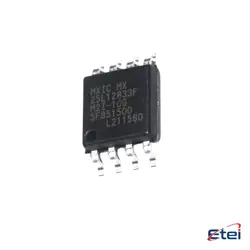
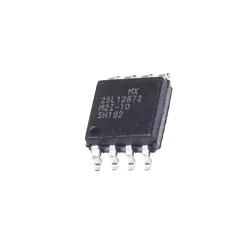
Images are for reference only
LM393
+BOM0.8MV 4.2NA DUAL CHANNEL SOP-8
-
ManufacturerShenzhen Slkormicro Semicon Co., Ltd.
-
Mfr. Part #LM393
-
In Stock6533
365 Days Quality Guarantee
7*24 hours service quarantee
90-day after-sales guarantee
Genuine Product Guarantee
Specifications
| Attribute | Value |
| Part Status | Active |
| Type | Standard (General Purpose) |
| Number of Elements | 2 |
| Output Type | Open-Collector, CMOS, MOS, TTL |
| Voltage - Supply, Single / Dual (±) | 2V ~ 36V, ±1V ~ 18V |
| Voltage - Input Offset (Max) | 5mV |
| Current - Input Bias (Max) | 250nA |
| Current - Output (Typ) | 43.7mA |
| Current - Quiescent (Max) | 2.5mA |
| Operating Temperature | 0°C ~ 70°C |
| Package / Case | 8-SOIC (0.154", 3.90mm Width) |
| Mounting Type | Surface Mount |
| Supplier Device Package | 8-SOP |
Overview
Description
The LM393 is a dual comparator integrated circuit widely used in various electronic applications. It features two independent, high-gain, frequency-compensated voltage comparators with an output that can drive TTL logic. Its primary function is to compare two voltage levels and output a high or low signal based on which input is greater.
Key specifications include a supply voltage range of 2V to 36V, low power consumption, and a wide temperature range. The LM393 is often utilized in applications such as voltage level detection, zero-crossing detectors, and simple oscillators.
The outputs are open-collector, allowing for multiple comparators to be wired to the same output line, which is useful for wired-AND logic configurations. As a versatile and reliable component, the LM393 is popular in both hobbyist and professional projects, enabling effective signal processing and control in various circuits.
Key specifications include a supply voltage range of 2V to 36V, low power consumption, and a wide temperature range. The LM393 is often utilized in applications such as voltage level detection, zero-crossing detectors, and simple oscillators.
The outputs are open-collector, allowing for multiple comparators to be wired to the same output line, which is useful for wired-AND logic configurations. As a versatile and reliable component, the LM393 is popular in both hobbyist and professional projects, enabling effective signal processing and control in various circuits.
Equivalent
Equivalent products to the LM393 comparator include the LM258, LM2901, and TLV3701. Other alternatives are the MCP602 and LMV7219, which offer similar functionality. The specific choice depends on parameters like voltage range, supply current, and package type. Always verify datasheets for compatibility.
Features
The LM393 is a dual comparator IC widely used in various applications. Key features include:
1. Dual Comparators: Contains two independent, high-gain comparators.
2. Wide Voltage Range: Operates from a single supply of 2V to 36V or dual supplies of ±1V to ±18V.
3. Low Power Consumption: Typically consumes only a few milliwatts, making it suitable for battery-powered devices.
4. Input Voltage Range: Can accept input voltages as low as 0V to near the supply voltage.
5. High Speed: Fast response times with a typical propagation delay of around 1.3µs.
6. Open-Collector Outputs: Outputs can be connected to various voltage levels, allowing for versatile interfacing.
7. Temperature Range: Operates over a wide temperature range from -40°C to +125°C.
8. Low Offset Voltage: Offers good precision with a maximum input offset voltage of around 2mV.
These features make the LM393 suitable for applications like voltage level detection, zero-crossing detectors, and analog-to-digital converters.
1. Dual Comparators: Contains two independent, high-gain comparators.
2. Wide Voltage Range: Operates from a single supply of 2V to 36V or dual supplies of ±1V to ±18V.
3. Low Power Consumption: Typically consumes only a few milliwatts, making it suitable for battery-powered devices.
4. Input Voltage Range: Can accept input voltages as low as 0V to near the supply voltage.
5. High Speed: Fast response times with a typical propagation delay of around 1.3µs.
6. Open-Collector Outputs: Outputs can be connected to various voltage levels, allowing for versatile interfacing.
7. Temperature Range: Operates over a wide temperature range from -40°C to +125°C.
8. Low Offset Voltage: Offers good precision with a maximum input offset voltage of around 2mV.
These features make the LM393 suitable for applications like voltage level detection, zero-crossing detectors, and analog-to-digital converters.
Pinout
The LM393 is a dual comparator IC with a total of 8 pins. Here’s a concise breakdown of its pin configuration and functions:
1. Pin 1 (Output A): Output from the first comparator.
2. Pin 2 (Inverting Input A): Inverting input of the first comparator.
3. Pin 3 (Non-Inverting Input A): Non-inverting input of the first comparator.
4. Pin 4 (V- or Ground): Connects to the negative power supply or ground.
5. Pin 5 (Non-Inverting Input B): Non-inverting input of the second comparator.
6. Pin 6 (Inverting Input B): Inverting input of the second comparator.
7. Pin 7 (Output B): Output from the second comparator.
8. Pin 8 (V+ or Positive Supply): Connects to the positive power supply.
The LM393 operates as a voltage comparator, comparing two input voltages and outputting a high or low signal based on which input is greater. It can be used in various applications, including signal level detection and analog-to-digital conversion.
1. Pin 1 (Output A): Output from the first comparator.
2. Pin 2 (Inverting Input A): Inverting input of the first comparator.
3. Pin 3 (Non-Inverting Input A): Non-inverting input of the first comparator.
4. Pin 4 (V- or Ground): Connects to the negative power supply or ground.
5. Pin 5 (Non-Inverting Input B): Non-inverting input of the second comparator.
6. Pin 6 (Inverting Input B): Inverting input of the second comparator.
7. Pin 7 (Output B): Output from the second comparator.
8. Pin 8 (V+ or Positive Supply): Connects to the positive power supply.
The LM393 operates as a voltage comparator, comparing two input voltages and outputting a high or low signal based on which input is greater. It can be used in various applications, including signal level detection and analog-to-digital conversion.
Manufacturer
The LM393 is a dual comparator integrated circuit primarily manufactured by Texas Instruments, although it is also produced by other companies such as ON Semiconductor, STMicroelectronics, and Nexperia.
Texas Instruments (TI) is a semiconductor design and manufacturing company based in Dallas, Texas. Founded in 1930, TI is one of the largest manufacturers of semiconductors in the world, specializing in analog and embedded processing technologies. The company focuses on high-performance analog, digital signal processing (DSP), and microcontroller solutions for various applications, including automotive, industrial, consumer electronics, and communications.
TI is known for its commitment to innovation and quality, providing a wide range of products that support a variety of electronic designs. The LM393, as a versatile and reliable component, is widely used in various circuits for signal comparison, including voltage level detection and zero-crossing detection applications.
Texas Instruments (TI) is a semiconductor design and manufacturing company based in Dallas, Texas. Founded in 1930, TI is one of the largest manufacturers of semiconductors in the world, specializing in analog and embedded processing technologies. The company focuses on high-performance analog, digital signal processing (DSP), and microcontroller solutions for various applications, including automotive, industrial, consumer electronics, and communications.
TI is known for its commitment to innovation and quality, providing a wide range of products that support a variety of electronic designs. The LM393, as a versatile and reliable component, is widely used in various circuits for signal comparison, including voltage level detection and zero-crossing detection applications.
Application
The LM393 is a dual comparator widely used in various applications, including:
1. Voltage Level Detection: Monitoring and comparing voltage levels for thresholds.
2. Zero Crossing Detection: Identifying when an AC signal crosses zero volts for phase control.
3. Temperature Sensing: Interfacing with thermistors or temperature sensors for thermal regulation.
4. Signal Conditioning: Amplifying and processing analog signals in sensor applications.
5. Pulse Width Modulation (PWM): Generating PWM signals for motor control and LED dimming.
6. Oscillators: Creating oscillating signals in timer circuits.
7. Comparator Circuits: Used in circuit designs for comparing two voltages.
1. Voltage Level Detection: Monitoring and comparing voltage levels for thresholds.
2. Zero Crossing Detection: Identifying when an AC signal crosses zero volts for phase control.
3. Temperature Sensing: Interfacing with thermistors or temperature sensors for thermal regulation.
4. Signal Conditioning: Amplifying and processing analog signals in sensor applications.
5. Pulse Width Modulation (PWM): Generating PWM signals for motor control and LED dimming.
6. Oscillators: Creating oscillating signals in timer circuits.
7. Comparator Circuits: Used in circuit designs for comparing two voltages.
Package
The LM393 is commonly available in several package types, including an 8-pin DIP (Dual In-line Package), SOIC (Small Outline Integrated Circuit), and TSSOP (Thin Shrink Small Outline Package). These packages facilitate integration into various electronic circuits while providing flexibility in design and layout.