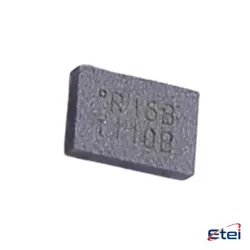
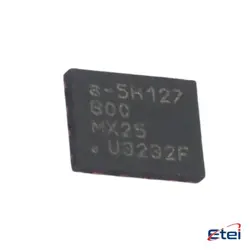
Images are for reference only
MAX2666EYT+
+BOMIC AMP HSPA 2.11-2.17GHZ 6UTLGA
-
ManufacturerAnalog Devices Inc./Maxim Integrated
-
Mfr. Part #MAX2666EYT+
-
Datasheet MAX2666EYT+ DataSheet
-
Package 6-UFLGA
-
In Stock2909
365 Days Quality Guarantee
7*24 hours service quarantee
90-day after-sales guarantee
Genuine Product Guarantee
Specifications
| Attribute | Value |
| Supplier | Rochester Electronics, LLC,Analog Devices Inc./Maxim Integrated |
| Package | Tube,Tube |
| ProductStatus | Obsolete |
| Frequency | 2.11GHz ~ 2.17GHz |
| Gain | 14.5dB |
| NoiseFigure | 1.1dB |
| RFType | HSPA, LTE |
| Voltage-Supply | 2.7V ~ 3.3V |
| Current-Supply | 3.8mA |
| TestFrequency | 2.14GHz |
| MountingType | Surface Mount |
| Package/Case | 6-UFLGA |
Overview
Description
Key features include a low noise figure, high isolation, and high linearity, which enhance the performance and reliability of communication systems. The device integrates a double-balanced mixer and a local oscillator (LO) buffer, reducing the need for external components and simplifying design. It requires a single, low-power supply and is housed in a compact, 10-pin TDFN package, which aids in space-constrained applications.
The MAX2666EYT+ is designed to operate efficiently over a wide temperature range, ensuring consistent performance in diverse environmental conditions. Its high-performance specifications make it suitable for modern wireless communication needs, providing high-quality signal conversion while maintaining power efficiency.
Equivalent
1. Analog Devices ADL5536 - A broadband RF/IF gain block.
2. NXP Semiconductor BGA2866 - A general-purpose wideband amplifier.
3. Qorvo RFSA2113 - A digital step attenuator.
4. Skyworks SKY65050-372LF - A wideband amplifier ideal for cellular, GPS, and ISM applications.
Each of these alternatives may have different specifications, so verify compatibility with your specific requirements.
Features
- Frequency Range: Operates typically within a specific frequency band suitable for wireless communication systems.
- Low Noise Figure: Designed to enhance signal quality by minimizing noise, improving receiver sensitivity.
- High Gain: Provides significant signal amplification, which is essential for improving weak signal reception.
- Low Power Consumption: Efficient power usage is ideal for battery-powered devices.
- Supply Voltage: Typically operates on a low supply voltage, making it compatible with various battery architectures.
- Compact Package: Available in a small footprint, such as a SOT package, suitable for space-constrained applications.
- Input and Output Matching Networks: Integrated features to simplify design and improve performance.
- Applications: Ideal for use in mobile phones, GPS devices, and other RF communication systems.
These features make the MAX2666EYT+ suitable for enhancing performance in RF front-end designs.
Pinout
1. RF IN (Pin 1): This is the RF input pin where the weak signal enters the amplifier.
2. GND (Pin 2): Ground pin for the amplifier, providing a return path for current.
3. VCC (Pin 3): Supply voltage pin, where the operating voltage is applied to power the device.
4. GND (Pin 4): Another ground pin to ensure stable operation.
5. RF OUT (Pin 5): The RF output pin where the amplified signal is output.
6. VBIAS (Pin 6): This pin is used to set the bias current of the amplifier.
The MAX2666EYT+ is typically used in applications such as GPS, satellite radio, and other wireless communication systems. Its small form factor and efficient design make it suitable for compact and portable devices.
Manufacturer
Application
1. Wireless Infrastructure: Used in base stations and repeaters to amplify signal strength and improve connectivity.
2. Mobile Devices: Enhancing signal reception and transmission in smartphones and tablets.
3. IoT Devices: Supports connectivity in Internet of Things applications by improving RF signal performance.
4. Satellite Communication: Used in satellite receivers and transceivers for efficient signal amplification.
5. RFID Systems: Enhances the reading range and reliability of RFID readers.
These applications benefit from the amplifier's high linearity, low noise figure, and wide frequency range capabilities.