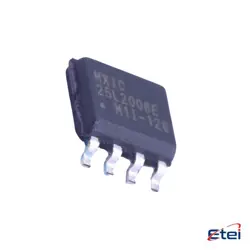
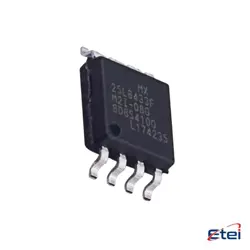
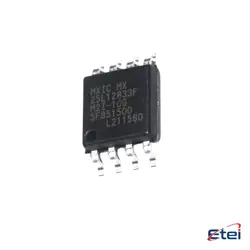
Images are for reference only
MC74AC574DW
+BOMIC FF D-TYPE SNGL 8BIT 20SOIC
-
Manufactureronsemi
-
Mfr. Part #MC74AC574DW
-
Datasheet MC74AC574DW DataSheet
-
In Stock7055
365 Days Quality Guarantee
7*24 hours service quarantee
90-day after-sales guarantee
Genuine Product Guarantee
Specifications
| Attribute | Value |
| Supplier | Rochester Electronics, LLC,onsemi |
| Package | Tube,Tube |
| Series | 74AC |
| ProductStatus | Obsolete |
| Function | Standard |
| Type | D-Type |
| OutputType | Tri-State, Non-Inverted |
| NumberofElements | 1 |
| NumberofBitsperElement | 8 |
| ClockFrequency | 95 MHz |
| MaxPropagationDelay@VMaxCL | 9.5ns @ 5V, 50pF |
| TriggerType | Positive Edge |
| Current-OutputHighLow | 24mA, 24mA |
| Voltage-Supply | 2V ~ 6V |
| Current-Quiescent(Iq) | 8 µA |
| InputCapacitance | 4.5 pF |
| OperatingTemperature | -40°C ~ 85°C (TA) |
| MountingType | Surface Mount |
| SupplierDevicePackage | 20-SOIC |
Overview
Description
Equivalent
Features
- 8-bit D-type, edge-triggered register (flip-flop)
- Positive-edge clock (CP) data capture
- 8 D inputs (D0–D7) and 8 Q outputs (Q0–Q7)
- 3-state outputs with an active-low output enable (G)
- Output enable allows tri-state bus sharing
- 4.5–5.5 V supply (CMOS compatible with 5V logic)
- High-speed AC family; low static power
- 20-pin DW package
- Industrial temperature range (-40°C to 125°C) designation commonly supported
Uses: buffering and latching data on a bus, interfacing microprocessors with peripheral devices.
Pinout
- Function: Octal (8-bit) edge-triggered D-type register with tri-state outputs. D0–D7 are loaded into Q0–Q7 on the rising edge of the clock; outputs are enabled by /OE (active low) and can go to high impedance when /OE is inactive.
Manufacturer
- What kind of company: An American multinational corporation that designs, manufactures, and markets semiconductor components and energy‑efficient integrated circuits.
Application
- 8-bit data storage/registers in digital paths
- Latch/buffer for multiplexed CPU address/data buses (bus interfacing)
- Bus isolation/ buffering between microprocessors and peripherals
- Temporary storage in pipelines and other digital circuits
- Display/data buffering where a shared bus is used
The tri-state outputs enable safe sharing of a common bus without contention, making it suitable for fast, high-density bus architectures in microprocessors and digital systems.