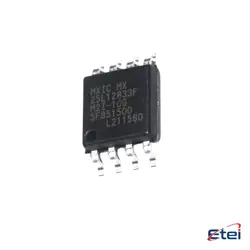
MOC207M

Images are for reference only

MOC207M

+BOM

OPTOISO 2.5KV TRANS W/BASE 8SOIC

365 Days Quality Guarantee

7*24 hours service quarantee

90-day after-sales guarantee

Genuine Product Guarantee

Specifications

Attribute Value
Part Status Active
Number of Channels 1
Voltage - Isolation 2500Vrms
Current Transfer Ratio (Min) 100% @ 10mA
Current Transfer Ratio (Max) 200% @ 10mA
Turn On / Turn Off Time (Typ) 7.5µs, 5.7µs
Rise / Fall Time (Typ) 3.2µs, 4.7µs
Input Type DC
Output Type Transistor with Base
Voltage - Output (Max) 30V
Current - Output / Channel 150mA
Voltage - Forward (Vf) (Typ) 1.15V
Current - DC Forward (If) (Max) 60 mA
Vce Saturation (Max) 400mV
Operating Temperature -40°C ~ 100°C
Mounting Type Surface Mount
Package / Case 8-SOIC (0.154", 3.90mm Width)
Supplier Device Package 8-SOIC
Base Product Number MOC207

Overview

Description

The "Introduction to MOC207M" likely refers to a course or module related to Microsoft Official Curriculum (MOC), specifically focusing on advanced topics in Microsoft technologies. MOC207M could involve modules on Microsoft SQL Server, system administration, cloud computing, or other Microsoft solutions, designed for IT professionals seeking to enhance their technical skills. This course typically covers in-depth technical content, practical exercises, and best practices to prepare participants for real-world application and certification exams. It is suitable for IT administrators, developers, and those interested in mastering Microsoft technologies for career advancement. The course may include hands-on labs, assessments, and interactive discussions to solidify understanding. For specific details, such as course content and prerequisites, it's recommended to refer to the official course documentation or provider's syllabus.

Equivalent

The MOC207M is an optoisolator with a phototransistor output. Equivalent products include the PC817, 4N25, and LTV-817, which are also optoisolators with similar functionality. When selecting an equivalent, ensure the voltage, current, and isolation ratings meet your specific application requirements. Always verify compatibility by consulting the datasheets to ensure that pin configurations and electrical specifications are closely matched.

Features

The MOC207M is a type of optical isolator, commonly used in electronic circuits for signal isolation purposes. Key features include:
1. Optoisolator Design: It typically consists of an infrared LED and a photodetector, providing electrical isolation between input and output.
2. Isolation Voltage: Offers a high isolation voltage, often around 5,000 Vrms, ensuring separation between different parts of a circuit.
3. Data Transfer: Suitable for applications requiring digital signal transmission with electrical isolation.
4. Compact Package: Comes in a small, standard DIP package, making it easy to integrate into various circuit boards.
5. Wide Operating Range: Supports a broad range of input currents and operating temperatures, enhancing versatility.
6. Low Input Current: Efficient operation even at low input currents, which helps in reducing power consumption.
7. Noise Immunity: Provides excellent immunity to electrical noise, protecting sensitive components from interference.
These features make the MOC207M ideal for applications in power supply circuits, microcontroller interfaces, and other areas requiring electrical isolation.

Pinout

The MOC207M is an optocoupler device. It typically has a 6-pin dual inline package (DIP). The main function of the MOC207M is to transfer electrical signals between two isolated circuits using light, providing protection against high voltages. This is accomplished through an LED and a photodetector, which are optically coupled but electrically isolated.
Key pin functions include:
1. Anode (Pin 1): This is where the positive voltage is applied to the internal LED.
2. Cathode (Pin 2): This is the return path for the current flowing through the LED.
3. NC (Pin 3): No internal connection, typically not used in circuit functionality.
4. Collector (Pin 4): Part of the phototransistor output, connected to the load or output circuit.
5. Emitter (Pin 5): The second terminal of the phototransistor, commonly connected to the ground reference of the output circuit.
6. NC (Pin 6): Another pin with no internal connection.
This configuration ensures electrical isolation between the input (control) and the output (load) sides.
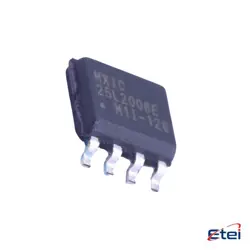
Manufacturer

The MOC207M is manufactured by ON Semiconductor, a company that specializes in semiconductor solutions. ON Semiconductor, now known as onsemi, provides a broad range of products including power management, analog, sensors, logic, timing, connectivity, discrete, SoC, and custom devices. The company is known for its focus on energy-efficient innovations and is a key supplier to automotive, communications, computing, consumer, industrial, medical, and military/aerospace markets.

Application

MOC207M, a micro-opto-electro-mechanical system (MOEMS), is typically used in several advanced application areas. These include optical communication for high-speed data transmission, adaptive optics for improving image quality in telescopes and cameras, and bio-medical devices for precise optical sensing and diagnostics. Additionally, MOC207M is employed in environmental monitoring systems for detecting pollutants and analyzing air quality, and in consumer electronics for miniaturized display technologies and motion sensing. Its versatility in manipulating light at micro scales makes it integral to innovations in optical signal processing and photonic computing.

Package

The MOC207M is a type of optocoupler, typically packaged in a dual inline package (DIP). Optocouplers like the MOC207M commonly come in a 6-pin or 8-pin DIP format, which provides electrical isolation between input and output. This packaging is designed for easy integration into electronic circuits.