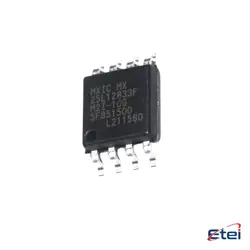
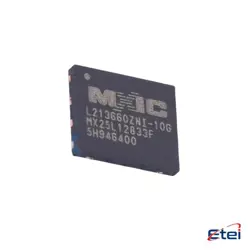
Images are for reference only
NCT7802Y
+BOMIC H/W MONITOR 20QFN
-
ManufacturerNuvoton Technology Corporation
-
Mfr. Part #NCT7802Y
-
Package 20-QFN (4x4)
-
In Stock7103
365 Days Quality Guarantee
7*24 hours service quarantee
90-day after-sales guarantee
Genuine Product Guarantee
Specifications
| Attribute | Value |
| Package | Tube |
| ProductStatus | Active |
| Function | Hardware Monitor |
| Topology | ADC, Fan Control, Register Bank |
| OutputType | I²C/SMBus |
| OutputAlarm | Yes |
| OutputFan | Yes |
| Voltage-Supply | 3.135V ~ 3.465V |
| OperatingTemperature | -40°C ~ 85°C |
| MountingType | Surface Mount |
| Package/Case | 20-WFQFN Exposed Pad |
Overview
Description
The NCT7802Y includes PWM (Pulse Width Modulation) outputs to control fan speeds dynamically, balancing performance and noise levels according to the system's thermal conditions. It communicates via an SMBus/I2C interface, making it compatible with various microcontrollers and processors for seamless integration into system designs.
This IC is commonly implemented in motherboards, servers, and industrial PCs where efficient thermal management is crucial. Its ability to provide real-time data enables system designers to implement intelligent cooling strategies, thereby enhancing the longevity and reliability of electronic systems.
Equivalent
1. LM75 - from Texas Instruments, used for temperature monitoring.
2. LTC2990 - from Analog Devices, providing temperature and voltage monitoring.
3. MAX6653 - from Maxim Integrated, also for temperature sensing and fan control.
These equivalents may vary slightly in features, so it’s important to compare datasheets to ensure compatibility with your specific application requirements.
Features
1. Temperature Sensing: It supports multiple temperature inputs, accommodating both remote and local temperature sensors, enabling effective thermal management.
2. Voltage Monitoring: The IC can monitor a variety of voltage inputs, allowing for real-time tracking of system voltages to ensure stability.
3. Fan Control: The NCT7802Y offers fan speed monitoring and control capabilities, including PWM (Pulse Width Modulation) output for dynamic fan speed adjustment based on system temperature.
4. GPIO: It includes General Purpose Input/Output (GPIO) pins for additional control and monitoring flexibility.
5. I2C/SMBus Interface: The device communicates through the I2C/SMBus interface, ensuring easy integration with other system components.
6. Low Power Consumption: Designed for efficient operation, the NCT7802Y consumes low power, making it suitable for a range of applications.
These features make the NCT7802Y suitable for use in PCs, servers, and other electronic systems requiring reliable thermal and voltage monitoring.
Pinout
1. VCC: Power supply pin.
2. GND: Ground pin.
3. SCL: Serial clock line for I2C communication.
4. SDA: Serial data line for I2C communication.
5. ADDR/THERM: Address selection for I2C / Thermal event output.
6. VTT1: Voltage monitoring input.
7. VTT2: Voltage monitoring input.
8. VSEN1: Voltage sensor input.
9. VSEN2: Voltage sensor input.
10. TACH1: Fan speed input.
11. TACH2: Fan speed input.
12. VID5~VID0: Voltage identification pins (VID).
13. TSENS1: Temperature sensor input.
14. TSENS2: Temperature sensor input.
These pins, along with the I2C interface, allow the NCT7802Y to monitor multiple parameters, providing critical thermal and voltage information to the host system.
Manufacturer
Application
1. Personal Computers and Servers: Monitoring CPU and system temperatures, fan speeds, and voltage levels to ensure efficient thermal management and prevent overheating.
2. Industrial Equipment: Ensuring safe operating conditions by monitoring critical temperatures and voltages in various industrial systems.
3. Consumer Electronics: Used in devices like gaming consoles and smart appliances to maintain optimal performance and reliability.
4. Networking Equipment: Ensuring network devices like routers and switches operate within safe thermal parameters.
Its integration helps enhance system stability and extend the lifespan of electronic components.