Specifications
| Attribute | Value |
| Package | Tray |
| ProductStatus | Active |
| Type | TxRx Only |
| RFFamily/Standard | General ISM > 1GHz |
| Modulation | GFSK |
| Frequency | 2.4GHz |
| DataRate(Max) | 2Mbps |
| Power-Output | 0dBm |
| Sensitivity | -85dBm |
| SerialInterfaces | SPI |
| Voltage-Supply | 1.9V ~ 3.6V |
| Current-Receiving | 11.1mA ~ 12.3mA |
| Current-Transmitting | 7mA ~ 11.3mA |
| OperatingTemperature | -40°C ~ 85°C |
| MountingType | Surface Mount |
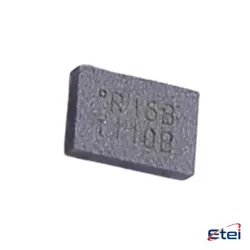
| Package/Case | 20-VFQFN Exposed Pad |
Overview
Description
The NRF24L01 is a low-cost, highly integrated RF transceiver chip designed for wireless communication in the 2.4 GHz ISM band. Manufactured by Nordic Semiconductor, it supports multiple communication channels and data rates up to 2 Mbps. The chip operates on a low supply voltage and uses the SPI protocol for communication with a microcontroller, making it suitable for battery-powered and embedded systems.
Its features include support for up to 6 data pipes, a range of up to 100 meters (328 feet) in open areas, and auto-acknowledgment and retransmission functionalities. The NRF24L01 is widely used in wireless sensor networks, remote controls, and IoT applications due to its robustness, low power consumption, and affordability.
The module typically comes with an integrated PCB antenna or an SMA connector for an external antenna, enhancing flexibility in different applications. Its popularity in hobbyist and professional projects is bolstered by extensive community support and available libraries for easy integration with platforms like Arduino, Raspberry Pi, and others.
Its features include support for up to 6 data pipes, a range of up to 100 meters (328 feet) in open areas, and auto-acknowledgment and retransmission functionalities. The NRF24L01 is widely used in wireless sensor networks, remote controls, and IoT applications due to its robustness, low power consumption, and affordability.
The module typically comes with an integrated PCB antenna or an SMA connector for an external antenna, enhancing flexibility in different applications. Its popularity in hobbyist and professional projects is bolstered by extensive community support and available libraries for easy integration with platforms like Arduino, Raspberry Pi, and others.
Equivalent
Equivalent products to the NRF24L01 chip include the CC2500 by Texas Instruments, RFM70 by HopeRF, and the MRF24J40 by Microchip Technology. These alternatives also support low-power, short-range wireless communication in the 2.4 GHz ISM band and are used for RF applications. It's essential to check specific features and compatibility for your application when selecting an alternative.
Features
The NRF24L01 is a low-power, single-chip radio transceiver designed for the 2.4 GHz ISM band. Key features include:
1. Operating Frequency: 2.4 GHz to 2.5 GHz ISM band, allowing global usage.
2. Data Rate: Supports 250 kbps, 1 Mbps, and 2 Mbps data rates.
3. Power Consumption: Ultra-low power consumption with standby and power-down modes.
4. Range: Up to 100 meters (line of sight) with proper antennas.
5. Interface: SPI interface for communication with microcontrollers.
6. Channels: 126 selectable channels, facilitating multichannel operation and frequency hopping.
7. Output Power: Programmable output power levels.
8. On-chip Features: DDS, GFSK modulation, and hardware CRC calculation for error detection.
9. Payload: Dynamic payload length and up to 32 bytes per packet.
10. Pipes: Supports up to 6 data pipes for multiple device communication.
11. Size: Compact design, suitable for integration in size-constrained applications.
12. Enhanced ShockBurst™: Provides automatic packet handling and automatic packet acknowledgment.
These features make the NRF24L01 ideal for wireless sensor networks, home automation, and remote-control applications.
1. Operating Frequency: 2.4 GHz to 2.5 GHz ISM band, allowing global usage.
2. Data Rate: Supports 250 kbps, 1 Mbps, and 2 Mbps data rates.
3. Power Consumption: Ultra-low power consumption with standby and power-down modes.
4. Range: Up to 100 meters (line of sight) with proper antennas.
5. Interface: SPI interface for communication with microcontrollers.
6. Channels: 126 selectable channels, facilitating multichannel operation and frequency hopping.
7. Output Power: Programmable output power levels.
8. On-chip Features: DDS, GFSK modulation, and hardware CRC calculation for error detection.
9. Payload: Dynamic payload length and up to 32 bytes per packet.
10. Pipes: Supports up to 6 data pipes for multiple device communication.
11. Size: Compact design, suitable for integration in size-constrained applications.
12. Enhanced ShockBurst™: Provides automatic packet handling and automatic packet acknowledgment.
These features make the NRF24L01 ideal for wireless sensor networks, home automation, and remote-control applications.
Pinout
The NRF24L01 is a popular 2.4GHz wireless transceiver module used for short-range communication. It has a total of 8 pins with specific functions:
1. VCC: Power supply pin (1.9V to 3.6V).
2. GND: Ground pin.
3. CE (Chip Enable): Activates the chip in transmit or receive mode when set high.
4. CSN (Chip Select Not): Active-low pin used to select the NRF24L01 for SPI communication.
5. SCK (Serial Clock): SPI clock input for synchronizing data transfers.
6. MOSI (Master Out Slave In): SPI input to receive data from the microcontroller.
7. MISO (Master In Slave Out): SPI output to send data to the microcontroller.
8. IRQ (Interrupt Request): Active-low interrupt output pin to indicate data transmission or reception.
These pins are used to interface the NRF24L01 with a microcontroller, allowing for wireless communication in various applications such as remote controls, sensors, and IoT devices. The module uses the SPI protocol for communication and operates in the 2.4GHz ISM band, supporting multiple data rates and channels for versatile connectivity options.
1. VCC: Power supply pin (1.9V to 3.6V).
2. GND: Ground pin.
3. CE (Chip Enable): Activates the chip in transmit or receive mode when set high.
4. CSN (Chip Select Not): Active-low pin used to select the NRF24L01 for SPI communication.
5. SCK (Serial Clock): SPI clock input for synchronizing data transfers.
6. MOSI (Master Out Slave In): SPI input to receive data from the microcontroller.
7. MISO (Master In Slave Out): SPI output to send data to the microcontroller.
8. IRQ (Interrupt Request): Active-low interrupt output pin to indicate data transmission or reception.
These pins are used to interface the NRF24L01 with a microcontroller, allowing for wireless communication in various applications such as remote controls, sensors, and IoT devices. The module uses the SPI protocol for communication and operates in the 2.4GHz ISM band, supporting multiple data rates and channels for versatile connectivity options.
Manufacturer
The NRF24L01 is manufactured by Nordic Semiconductor, a company known for specializing in the design and production of semiconductor devices, particularly those used in wireless communication technologies. Nordic Semiconductor is a fabless company, meaning it focuses on designing and marketing hardware and software solutions while outsourcing the physical manufacturing of its semiconductor devices. The company is headquartered in Trondheim, Norway, and has established itself as a leader in the development of low-power, high-performance wireless communication solutions.
Nordic Semiconductor's product range includes a variety of wireless systems-on-chip (SoCs), transceivers, and related development tools. These products are widely used in applications such as Internet of Things (IoT) devices, wearable technology, smart home products, and other devices requiring wireless connectivity. The NRF24L01, in particular, is a popular 2.4GHz RF transceiver widely used in short-range wireless communication for its low power consumption and ease of integration into various projects.
Nordic Semiconductor's product range includes a variety of wireless systems-on-chip (SoCs), transceivers, and related development tools. These products are widely used in applications such as Internet of Things (IoT) devices, wearable technology, smart home products, and other devices requiring wireless connectivity. The NRF24L01, in particular, is a popular 2.4GHz RF transceiver widely used in short-range wireless communication for its low power consumption and ease of integration into various projects.
Application
The NRF24L01 is a popular 2.4GHz wireless transceiver module used in various applications due to its low power consumption and cost-effectiveness. Key application areas include:
1. Remote Controls: Utilized in wireless remote control systems for consumer electronics.
2. Home Automation: Enables communication between smart home devices.
3. Wireless Sensors Networks: Used in IoT applications for transmitting sensor data.
4. Toys and Gaming Controllers: Provides wireless connectivity for interactive devices.
5. Industrial Automation: Facilitates wireless communication in process control systems.
6. Telecommunication: Helps in building simple, short-range wireless communication setups.
7. Healthcare Devices: Used in wireless monitoring systems for medical applications.
These modules are suitable for any project requiring short-range, reliable wireless communication.
1. Remote Controls: Utilized in wireless remote control systems for consumer electronics.
2. Home Automation: Enables communication between smart home devices.
3. Wireless Sensors Networks: Used in IoT applications for transmitting sensor data.
4. Toys and Gaming Controllers: Provides wireless connectivity for interactive devices.
5. Industrial Automation: Facilitates wireless communication in process control systems.
6. Telecommunication: Helps in building simple, short-range wireless communication setups.
7. Healthcare Devices: Used in wireless monitoring systems for medical applications.
These modules are suitable for any project requiring short-range, reliable wireless communication.
Package
The NRF24L01 is typically available in a QFN (Quad Flat No-leads) package, specifically a 20-pin QFN. This package type is compact and suitable for surface mount technology, allowing for efficient high-frequency performance and minimal space usage in electronic projects.