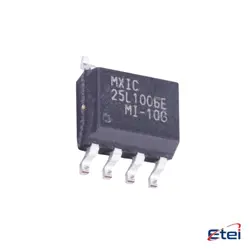
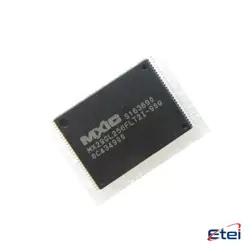
Images are for reference only
OP296GS
+BOM-
ManufacturerAnalog Devices Inc.
-
Mfr. Part #OP296GS
-
Datasheet OP296GS DataSheet
-
In Stock2219
365 Days Quality Guarantee
7*24 hours service quarantee
90-day after-sales guarantee
Genuine Product Guarantee
Specifications
| Attribute | Value |
| Package / Case | Tube |
| Part Status | Obsolete |
| Amplifier Type | CMOS |
| Number of Circuits | 2 |
| Output Type | Rail-to-Rail |
| Slew Rate | 0.3V/µs |
| Gain Bandwidth Product | 450 kHz |
| Current - Input Bias | 10 nA |
| Voltage - Input Offset | 35 µV |
| Current - Output / Channel | 4 mA |
| Voltage - Supply Span(Min) | 3 V |
| Voltage - Supply Span(Max) | 12 V |
| Operating Temperature | -40°C ~ 125°C |
| Mounting Type | Surface Mount |
Overview
Description
Equivalent
1. LM358- A widely used dual op-amp suitable for similar applications.
2. TL072 - A dual op-amp with low noise and low distortion.
3. MCP6022 - A low-power, dual op-amp with rail-to-rail output.
4. AD822 - Another dual op-amp with similar characteristics.
Always check the datasheets for pin configuration and specifications to ensure compatibility.
Features
1. Design: Compact and modern aesthetics suitable for various decor.
2. Audio/Visual Quality: High-definition sound or display capabilities.
3. Connectivity: Multiple input/output options, possibly including Bluetooth, Wi-Fi, or Ethernet for seamless integration with other devices.
4. User Interface: Intuitive controls, possibly with a touch-screen or remote control functionality.
5. Energy Efficiency: Features that promote low energy consumption for sustainability.
6. Smart Features: Integration with smart home systems, voice control compatibility, or app connectivity for enhanced control and customization.
7. Durability: Built with high-quality materials to ensure longevity.
8. Portability: Lightweight and easy to move, if applicable.
9. Warranty: Often accompanied by a manufacturer's warranty for peace of mind.
For specific details, consulting the user manual or product listing is recommended.
Pinout
1. Pin 1: Output A - This is the output for the first operational amplifier.
2. Pin 2: Inverting Input A - This is the inverting input for the first operational amplifier.
3. Pin 3: Non-Inverting Input A - This is the non-inverting input for the first operational amplifier.
4. Pin 4: V- (Negative Supply) - This is the negative power supply pin.
5. Pin 5: Non-Inverting Input B - This is the non-inverting input for the second operational amplifier.
6. Pin 6: Inverting Input B - This is the inverting input for the second operational amplifier.
7. Pin 7: Output B - This is the output for the second operational amplifier.
8. Pin 8: V+ (Positive Supply) - This is the positive power supply pin.
The OP296GS is known for its low power consumption and is used in applications requiring precision and low voltage operation.
Manufacturer
Application
1. Sensor Signal Conditioning: Enhances signals from sensors by amplifying low-level signals.
2. Data Acquisition Systems: Plays a critical role in converting analog signals to digital.
3. Medical Instrumentation: Used in devices that require precise and reliable signal processing.
4. Battery-Powered Devices: Ideal for applications where power efficiency is crucial.
5. Industrial Control Systems: Provides accurate control and monitoring.
6. Portable Instruments: Supports lightweight, mobile devices with limited power resources.
These applications leverage the OP296GS's precision and power efficiency.