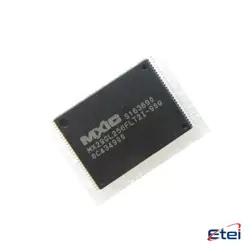
Images are for reference only
OPA2330AIDR
+BOM-
ManufacturerTexas Instruments
-
Mfr. Part #OPA2330AIDR
-
Datasheet OPA2330AIDR DataSheet
-
In Stock2215
365 Days Quality Guarantee
7*24 hours service quarantee
90-day after-sales guarantee
Genuine Product Guarantee
Specifications
| Attribute | Value |
| Package | Tape & Reel (TR),Cut Tape (CT),Bulk |
| ProductStatus | Active |
| AmplifierType | CMOS, Zero-Drift |
| NumberofCircuits | 2 |
| OutputType | Rail-to-Rail |
| SlewRate | 0.16V/µs |
| GainBandwidthProduct | 350 kHz |
| Current-InputBias | 200 pA |
| Voltage-InputOffset | 8 µV |
| Current-Supply | 21µA (x2 Channels) |
| Current-Output/Channel | 5 mA |
| Voltage-SupplySpan(Min) | 1.8 V |
| Voltage-SupplySpan(Max) | 5.5 V |
| OperatingTemperature | -40°C ~ 125°C |
| MountingType | Surface Mount |
| Package/Case | 8-SOIC (0.154, 3.90mm Width) |
Overview
Description
Key features include a typical offset voltage of 20 μV, low offset drift of 0.05 μV/°C, and a quiescent current of 35 μA per amplifier, which is energy-efficient. The OPA2330AIDR is available in an 8-pin SOIC package and is ideal for use in battery-operated devices, medical instrumentation, and sensor signal conditioning. Its rail-to-rail input and output capability further enhance its versatility in various analog signal processing applications. The device's robust performance and reliability make it a go-to choice for engineers designing precision analog circuits.
Equivalent
1. OPA2333AIDR - Similar low offset voltage and drift.
2. MAX4238/MAX4239 - Low-drift operational amplifiers from Maxim Integrated.
3. LT1677 - Low noise, precision op-amp from Analog Devices (formerly Linear Technology).
4. AD8628/AD8629 - Precision op-amps from Analog Devices, known for low input bias current.
Specifications such as supply voltage, bandwidth, and packaging may vary, so it’s important to verify based on your specific application needs.
Features
1. Low Offset Voltage: It has an ultra-low offset voltage of around 20 µV, which enhances precision in measurement applications.
2. Low Noise: The amplifier exhibits low flicker noise of 0.1 µVpp, which is important for high-accuracy applications.
3. Low Input Bias Current: It has an input bias current of only 70 pA, making it suitable for high-impedance sensor interfaces.
4. Low Power Consumption: With a typical quiescent current of 325 µA per channel, it's ideal for battery-powered devices.
5. Rail-to-Rail Input and Output: This feature allows for maximum dynamic range in low-voltage systems.
6. Wide Supply Voltage Range: It can operate with a supply voltage ranging from 1.8 V to 5.5 V.
7. High Gain Bandwidth Product: The amplifier offers a gain bandwidth product of 350 kHz, supporting a variety of applications.
8. Temperature Range: It is designed for operation over an extended temperature range from -40°C to +125°C.
These features make the OPA2330AIDR suitable for precision instrumentation, medical devices, and sensor signal conditioning.
Pinout
1. Pin 1 (OUT1): Output of the first operational amplifier.
2. Pin 2 (-IN1): Inverting input of the first operational amplifier.
3. Pin 3 (+IN1): Non-inverting input of the first operational amplifier.
4. Pin 4 (V- or GND): Negative power supply or ground.
5. Pin 5 (+IN2): Non-inverting input of the second operational amplifier.
6. Pin 6 (-IN2): Inverting input of the second operational amplifier.
7. Pin 7 (OUT2): Output of the second operational amplifier.
8. Pin 8 (V+ or VCC): Positive power supply.
The OPA2330AIDR is designed for low offset voltage and low quiescent current, making it ideal for precision low-power applications. The dual op-amp configuration allows it to be used for various signal processing tasks.
Manufacturer
Application
1. Sensor Signal Conditioning: Enhancing the accuracy of sensor outputs in industries like medical instrumentation and environmental monitoring.
2. Instrumentation Amplifiers: Used in systems requiring precise measurement and amplification, such as test equipment and laboratory instruments.
3. Data Acquisition Systems: Improving the performance of ADCs by providing clean and accurate signal conditioning.
4. Portable Devices: Utilized in battery-powered devices due to its low power consumption.
5. Industrial Process Controls: Ensures precise control and automation in industrial environments.
These applications benefit from its precision, low noise, and stability.