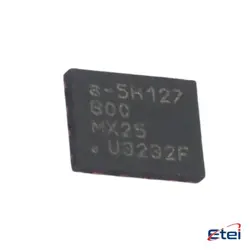
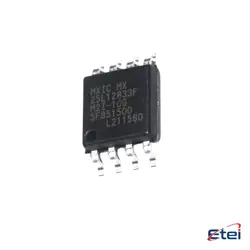
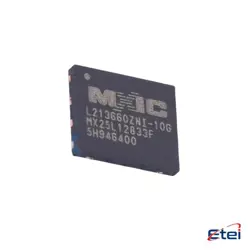
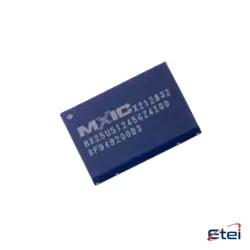
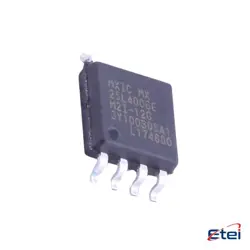
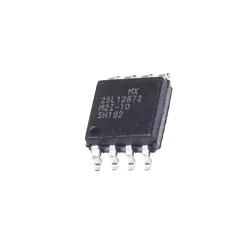
Images are for reference only
PCA9673PW
+BOM-
ManufacturerMicron
-
Mfr. Part #PCA9673PW
-
In Stock7433
365 Days Quality Guarantee
7*24 hours service quarantee
90-day after-sales guarantee
Genuine Product Guarantee
Specifications
| Attribute | Value |
| Brand | Micron |
| ProductType | NOR Flash |
| Subcategory | Memory & Data Storage |
| Series | M29W |
| MountingStyle | SMD/SMT |
| InterfaceType | Parallel |
| MinimumOperatingTemperature | - 40 C |
| MaximumOperatingTemperature | + 85 C |
| SupplyVoltage-Min | 2.7 V |
| SupplyVoltage-Max | 3.6 V |
| MemorySize | 16 Mbit |
| Package/Case | TFBGA-48 |
| Organization | 2 M x 8/1 M x 16 |
| Packaging | Reel |
| ActiveReadCurrent-Max | 10 mA |
| FactoryPackQuantity:FactoryPackQuantity | 2500 |
| ShippingRestrictions | Mouser does not presently sell this product in your region. |
| DataBusWidth | 8 bit/16 bit |
| Speed | 70 ns |
| TimingType | Asynchronous |
| MemoryType | NOR |
| Standard | Common Flash Interface (CFI) |
| Type | Boot Block |
Overview
Description
The PCA9673PW is a 16-bit I²C-bus I/O port expander designed by NXP Semiconductors. It provides additional GPIO pins for microcontrollers, enabling users to increase the number of inputs and outputs without requiring additional pins on the main device. The PCA9673PW features programmable interrupt capability, allowing it to notify the host device of changes in input states.
With a voltage supply range of 1.8V to 5.5V, it is versatile for use in various applications, from consumer electronics to industrial devices. The device includes a built-in pull-up resistors and supports multiple I²C addresses, facilitating connection to multiple expander chips on the same bus.
It operates in two modes: input mode, which can read the state of external signals, and output mode, which can drive external devices. The PCA9673PW is ideal for applications requiring additional GPIO flexibility, such as LED control, sensor interfaces, and control buttons, making it valuable in compact embedded systems.
With a voltage supply range of 1.8V to 5.5V, it is versatile for use in various applications, from consumer electronics to industrial devices. The device includes a built-in pull-up resistors and supports multiple I²C addresses, facilitating connection to multiple expander chips on the same bus.
It operates in two modes: input mode, which can read the state of external signals, and output mode, which can drive external devices. The PCA9673PW is ideal for applications requiring additional GPIO flexibility, such as LED control, sensor interfaces, and control buttons, making it valuable in compact embedded systems.
Equivalent
The PCA9673PW is a 16-channel I2C I/O port expander. Equivalent products include:
1. MCP23017 - 16-bit I/O expander with I2C interface.
2. PCF8575 - 16-bit I/O expander, also I2C-based.
3. TCA9555 - 16-channel port expander with I2C.
4. MCP23008 - 8-bit I/O expander, I2C-based, for smaller applications.
Check specifications to ensure compatibility with your specific requirements.
1. MCP23017 - 16-bit I/O expander with I2C interface.
2. PCF8575 - 16-bit I/O expander, also I2C-based.
3. TCA9555 - 16-channel port expander with I2C.
4. MCP23008 - 8-bit I/O expander, I2C-based, for smaller applications.
Check specifications to ensure compatibility with your specific requirements.
Features
The PCA9673PW is a 16-bit I²C-bus I/O port with interrupt capabilities. Key features include:
1. 16 Bits of I/O: Configurable as input or output, allowing for versatile application.
2. I²C Interface: Operates on standard I²C protocol, supporting multiple devices on the same bus.
3. Interrupt Functionality: Can generate interrupts for input changes, simplifying microcontroller management.
4. Programmable Pull-up Resistors: Internal pull-ups can be enabled for open-drain outputs.
5. Wide Operating Voltage Range: Supports 1.65V to 5.5V, making it suitable for various digital systems.
6. Fast Data Rates: Capable of I²C data rates up to 1 Mbps.
7. Address Configurability: Multiple devices can be connected using adjustable I²C addresses.
8. Low Power Consumption: Designed for energy-efficient applications.
9. Package Options: Available in various surface-mount packages for flexible design choices.
These features make the PCA9673PW ideal for applications requiring expanded I/O capability in microcontroller systems.
1. 16 Bits of I/O: Configurable as input or output, allowing for versatile application.
2. I²C Interface: Operates on standard I²C protocol, supporting multiple devices on the same bus.
3. Interrupt Functionality: Can generate interrupts for input changes, simplifying microcontroller management.
4. Programmable Pull-up Resistors: Internal pull-ups can be enabled for open-drain outputs.
5. Wide Operating Voltage Range: Supports 1.65V to 5.5V, making it suitable for various digital systems.
6. Fast Data Rates: Capable of I²C data rates up to 1 Mbps.
7. Address Configurability: Multiple devices can be connected using adjustable I²C addresses.
8. Low Power Consumption: Designed for energy-efficient applications.
9. Package Options: Available in various surface-mount packages for flexible design choices.
These features make the PCA9673PW ideal for applications requiring expanded I/O capability in microcontroller systems.
Pinout
The PCA9673PW is a 16-channel I²C I/O port expander with a pin count of 28. It features two I²C-bus interfaces allowing multiple devices to be connected on the same bus.
### Key Pins:
1. VDD (Pin 1): Power supply input.
2. GND (Pin 14): Ground.
3. SDA (Pin 3): Serial Data Line for I²C communication.
4. SCL (Pin 4): Serial Clock Line for I²C communication.
5. A0, A1, A2 (Pins 5-7): Address selection pins for I²C addressing.
6. P0-P15 (Pins 8-13, 15-20): Configurable input/output pins (16 channels).
7. RESET (Pin 2): Active-low reset input.
8. INT (Pin 21): Interrupt output indicating changes on the GPIOs.
This device allows for extended I/O capabilities in microcontroller applications, facilitating greater flexibility in hardware design.
### Key Pins:
1. VDD (Pin 1): Power supply input.
2. GND (Pin 14): Ground.
3. SDA (Pin 3): Serial Data Line for I²C communication.
4. SCL (Pin 4): Serial Clock Line for I²C communication.
5. A0, A1, A2 (Pins 5-7): Address selection pins for I²C addressing.
6. P0-P15 (Pins 8-13, 15-20): Configurable input/output pins (16 channels).
7. RESET (Pin 2): Active-low reset input.
8. INT (Pin 21): Interrupt output indicating changes on the GPIOs.
This device allows for extended I/O capabilities in microcontroller applications, facilitating greater flexibility in hardware design.
Manufacturer
The PCA9673PW is manufactured by NXP Semiconductors. NXP is a global semiconductor company that specializes in designing and manufacturing a wide range of integrated circuits and system solutions. The company focuses on various applications, including automotive, industrial, IoT (Internet of Things), mobile, and communication infrastructure. NXP is known for its innovations in microcontrollers, processors, and secure connectivity solutions, contributing to advancements in smart technologies and embedded systems.
Founded as part of Philips in 2006 and later becoming a standalone company, NXP has established itself as a key player in the semiconductor market, often recognized for its commitment to quality, reliability, and sustainability. The PCA9673PW is a GPIO (General Purpose Input/Output) expander, enabling designers to easily increase the number of available I/O pins in electronic systems, making it valuable in various applications, particularly in consumer electronics and industrial automation.
Founded as part of Philips in 2006 and later becoming a standalone company, NXP has established itself as a key player in the semiconductor market, often recognized for its commitment to quality, reliability, and sustainability. The PCA9673PW is a GPIO (General Purpose Input/Output) expander, enabling designers to easily increase the number of available I/O pins in electronic systems, making it valuable in various applications, particularly in consumer electronics and industrial automation.
Application
The PCA9673PW is a 16-channel I/O port expander that operates over I2C or SMBus interfaces. It is commonly used in applications requiring additional GPIO pins for microcontrollers or processors, such as:
1. Consumer Electronics: Remote controls, multimedia devices.
2. Industrial Automation: Sensor interfacing, control panels.
3. Automotive Systems: Vehicle control units, dashboard interfaces.
4. IoT Devices: Smart home applications, connected sensors.
5. Robotics: Control systems for motors and sensors.
6. LED Displays: Controlling multiple LED inputs or outputs.
Its versatility and ease of integration make it suitable for diverse embedded system projects.
1. Consumer Electronics: Remote controls, multimedia devices.
2. Industrial Automation: Sensor interfacing, control panels.
3. Automotive Systems: Vehicle control units, dashboard interfaces.
4. IoT Devices: Smart home applications, connected sensors.
5. Robotics: Control systems for motors and sensors.
6. LED Displays: Controlling multiple LED inputs or outputs.
Its versatility and ease of integration make it suitable for diverse embedded system projects.
Package
The PCA9673PW is packaged in a 20-pin TSSOP (Thin Shrink Small Outline Package), which is a surface-mount package designed for compact applications.