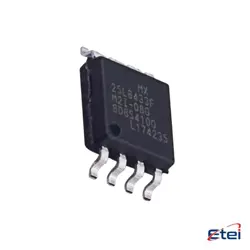
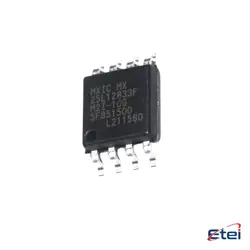
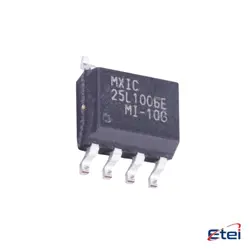
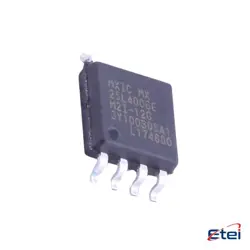
Images are for reference only
PCF8584T
+BOM-
ManufacturerNXP Semicon
-
Mfr. Part #PCF8584T
-
Datasheet PCF8584T DataSheet
-
In Stock28624
365 Days Quality Guarantee
7*24 hours service quarantee
90-day after-sales guarantee
Genuine Product Guarantee
Specifications
| Attribute | Value |
| Manufacturer | NXP Semicon |
| Package | SOIC-20-300mil |
Overview
Description
### Key Features:
- Supports standard (100 kHz) and fast (400 kHz) I²C modes.
- 8-bit parallel interface for easy connection to microcontrollers.
- Interrupt-driven operation for efficient data handling.
- Built-in address recognition for slave mode.
- Low standby current, making it suitable for power-sensitive applications.
### Applications:
- Used in systems requiring I²C communication where the host lacks native I²C support.
- Common in industrial control, automotive, and consumer electronics.
The PCF8584T simplifies I²C integration, reducing software overhead for non-I²C-enabled hosts. For detailed specs, refer to the NXP datasheet.
Equivalent
- PCA8584: Direct equivalent from NXP.
- SCL2000: Older alternative.
- TCA8418: Modern I²C expander (some functional overlap).
- MAX7300: GPIO expander with I²C interface.
For exact replacements, check NXP's PCA8584 or consult datasheets for compatibility.
Features
- I²C Bus Master/Slave: Supports both master and slave modes.
- Clock Generation: Internal oscillator or external clock input (up to 100 kHz).
- Interrupt Output: Signals bus events (e.g., arbitration loss, data transfer).
- Parallel Interface: 8-bit bidirectional data bus for host communication.
- Address Recognition: Handles 7-bit and 10-bit I²C addressing.
- Low Power: CMOS technology for reduced power consumption.
- Wide Voltage Range: Operates at 2.5V–6V.
- Package: 20-pin DIP/SO for easy integration.
Ideal for bridging microcontrollers to I²C peripherals.
Application
1. Industrial Control – Interfaces sensors, actuators, and displays.
2. Consumer Electronics – Connects peripherals in TVs, audio systems, and smart devices.
3. Automotive Systems – Links control modules and sensors.
4. Medical Devices – Facilitates communication in diagnostic equipment.
5. Embedded Systems – Bridges microcontrollers with I²C EEPROMs, ADCs, and DACs.
Its role is critical in simplifying I²C bus management in multi-device environments.