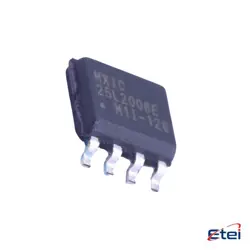
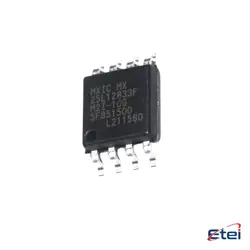
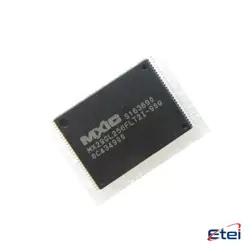
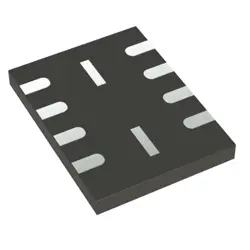
Images are for reference only
PS2801-1
+BOMTransistor Output Optocouplers
-
ManufacturerRenesas Electronics
-
Mfr. Part #PS2801-1
-
Datasheet PS2801-1 DataSheet
-
In Stock25767
365 Days Quality Guarantee
7*24 hours service quarantee
90-day after-sales guarantee
Genuine Product Guarantee
Specifications
| Attribute | Value |
Overview
Description
Students can expect to engage with key readings, participate in discussions, and complete assignments that help them grasp the essential aspects of the subject. The course might also involve lectures, seminars, or group projects to facilitate learning and encourage critical thinking.
Assessment may include quizzes, essays, or exams to evaluate students' understanding of the material. Overall, "Introduction to PS2801-1" serves as a platform for students to build foundational knowledge and skills that will be essential for advanced study in their field. For precise details, it would be best to refer to the course syllabus or the institution offering it.
Equivalent
1. PC817 - A widely used optocoupler with similar functionality.
2. 4N25 - Another popular optocoupler, though specifications may vary.
3. LTV-817 - Similar in application and characteristics.
4. EL817 - Offers comparable performance for general applications.
5. TLP185 - A Toshiba optocoupler with similar features.
Ensure to check the pin configuration and electrical characteristics, as these can vary between models.
Features
1. Isolation Voltage: Typically, the PS2801-1 provides a high isolation voltage, usually around 2500V or more, which protects components from high voltage transients.
2. Compact Package: It is generally housed in a small 4-pin miniature package, making it suitable for space-constrained applications.
3. High-Speed Switching: The device offers fast response times, suitable for applications requiring quick signal transmission.
4. Wide Operating Temperature Range: It operates efficiently across a wide temperature range, typically from -55°C to +100°C, allowing for use in various environments.
5. Low Input Current: This feature helps in reducing power consumption, making it efficient for battery-operated devices.
6. LED and Phototransistor Configuration: It uses a gallium arsenide infrared LED and an NPN silicon phototransistor to transfer the signal.
These features make the PS2801-1 suitable for applications like microcontroller interfaces, switch-mode power supplies, and data communication systems.
Pinout
1. Pin 1 (Anode): This is the anode of the input LED, responsible for receiving the input signal which is typically current driven.
2. Pin 2 (Cathode): This is the cathode of the input LED, connected to the ground or negative side of the input supply.
3. Pin 3 (Emitter): This is the emitter of the output phototransistor, generally connected to the ground or negative side of the output circuit.
4. Pin 4 (Collector): This is the collector of the output phototransistor, connected to the positive side of the output circuit, through which the output signal is obtained.
The PS2801-1 is mainly used in applications requiring electrical isolation, such as in signal isolation, data communication, and in circuitry needing to isolate high voltage lines from lower voltage circuitry.