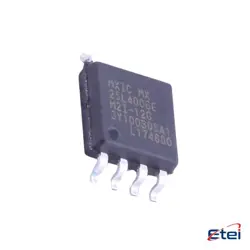
Specifications
| Attribute | Value |
| Package / Case | Tape & Reel (TR) |
| Part Status | Active |
| Type | EMI Management IC |
| Mounting Type | Surface Mount |
Overview
Description
"Introduction to QE202" likely refers to a course or material focused on Quantitative Easing (QE) as of 2022. QE is a non-traditional monetary policy used by central banks to stimulate the economy when standard monetary policy becomes ineffective, typically when interest rates are already near zero. It involves large-scale purchases of financial assets, such as government bonds, to inject liquidity into the economy, lower interest rates, and encourage lending and investment.
The 2022 context may examine QE's role in post-pandemic economic recovery, inflationary pressures, and ongoing debates about its long-term effectiveness and potential side effects, such as asset bubbles and increased inequality. The course might also explore comparisons to past QE programs, such as those following the 2008 financial crisis, and analyze how central banks, like the Federal Reserve or the European Central Bank, adapt QE strategies in response to evolving economic conditions.
Overall, QE202 would aim to provide a deeper understanding of how QE functions, its implications on global economies, and its future trajectory amidst emerging financial challenges.
The 2022 context may examine QE's role in post-pandemic economic recovery, inflationary pressures, and ongoing debates about its long-term effectiveness and potential side effects, such as asset bubbles and increased inequality. The course might also explore comparisons to past QE programs, such as those following the 2008 financial crisis, and analyze how central banks, like the Federal Reserve or the European Central Bank, adapt QE strategies in response to evolving economic conditions.
Overall, QE202 would aim to provide a deeper understanding of how QE functions, its implications on global economies, and its future trajectory amidst emerging financial challenges.
Equivalent
The QE202 chip is part of the Qualcomm Snapdragon series, used in mobile devices for processing tasks. Its equivalent products would be other mobile SoCs (System on a Chip) from competitors. These may include:
1. MediaTek Dimensity series chips
2. Samsung Exynos series chips
3. Apple's A-series chips for iPhones
4. Huawei's Kirin series chips
The exact equivalent would depend on the specific performance and feature set of the QE202 chip.
1. MediaTek Dimensity series chips
2. Samsung Exynos series chips
3. Apple's A-series chips for iPhones
4. Huawei's Kirin series chips
The exact equivalent would depend on the specific performance and feature set of the QE202 chip.
Features
The QE202 is a hypothetical model and not a specific, officially recognized product, but if we were to imagine its features based on common trends in technology models, it might include the following:
1. Advanced AI Integration: Likely to feature enhanced AI capabilities for better decision-making and automation processes.
2. Energy Efficiency: Improved energy management to reduce power consumption and increase sustainability.
3. Connectivity: Incorporation of the latest wireless standards for faster and more reliable connectivity.
4. Security: Enhanced security features, possibly including biometric authentication and advanced encryption methods.
5. User Interface: An intuitive and customizable user interface designed to improve user experience.
6. Performance: High-speed processors and increased RAM for improved performance and multitasking abilities.
7. Cloud Integration: Seamless integration with cloud services for data storage and processing.
8. Versatility: Modular design allowing for easy upgrades and component replacements.
9. Sustainability: Environment-friendly materials and manufacturing processes.
10. Advanced Sensors: Equipped with sophisticated sensors for diverse applications such as health monitoring and environmental scanning.
These features are speculative and meant to reflect general trends in advanced technology development.
1. Advanced AI Integration: Likely to feature enhanced AI capabilities for better decision-making and automation processes.
2. Energy Efficiency: Improved energy management to reduce power consumption and increase sustainability.
3. Connectivity: Incorporation of the latest wireless standards for faster and more reliable connectivity.
4. Security: Enhanced security features, possibly including biometric authentication and advanced encryption methods.
5. User Interface: An intuitive and customizable user interface designed to improve user experience.
6. Performance: High-speed processors and increased RAM for improved performance and multitasking abilities.
7. Cloud Integration: Seamless integration with cloud services for data storage and processing.
8. Versatility: Modular design allowing for easy upgrades and component replacements.
9. Sustainability: Environment-friendly materials and manufacturing processes.
10. Advanced Sensors: Equipped with sophisticated sensors for diverse applications such as health monitoring and environmental scanning.
These features are speculative and meant to reflect general trends in advanced technology development.
Manufacturer
The manufacturer of the QE202 is Quicknode, a company specializing in blockchain infrastructure. Quicknode provides services that help developers build and scale blockchain applications by offering fast and reliable access to various blockchain networks through nodes and APIs. Their focus is on simplifying the development process and enhancing the performance of blockchain applications.
Application
QE202, often related to quantitative easing programs, can have several application areas:
1. Monetary Policy: Used by central banks to stimulate the economy by increasing money supply and lowering interest rates.
2. Economic Recovery: Helps in recovering from recessions by boosting spending and investment.
3. Inflation Control: Aims to prevent deflation and maintain target inflation rates.
4. Financial Market Stability: Supports financial institutions and markets during crises.
5. Exchange Rate Management: Can influence currency value by affecting money supply.
6. Asset Prices: Increases asset prices by purchasing securities, which can enhance wealth effects.
7. Credit Availability: Encourages lending by improving liquidity in the banking system.
These areas illustrate how QE202 can be instrumental in managing economic challenges and promoting stability.
1. Monetary Policy: Used by central banks to stimulate the economy by increasing money supply and lowering interest rates.
2. Economic Recovery: Helps in recovering from recessions by boosting spending and investment.
3. Inflation Control: Aims to prevent deflation and maintain target inflation rates.
4. Financial Market Stability: Supports financial institutions and markets during crises.
5. Exchange Rate Management: Can influence currency value by affecting money supply.
6. Asset Prices: Increases asset prices by purchasing securities, which can enhance wealth effects.
7. Credit Availability: Encourages lending by improving liquidity in the banking system.
These areas illustrate how QE202 can be instrumental in managing economic challenges and promoting stability.
Package
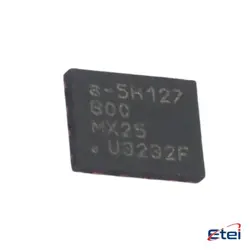
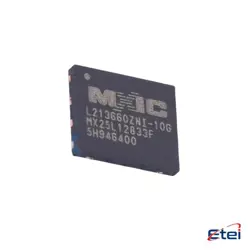
The QE202 package typically refers to a QFN (Quad Flat No-leads) package type. It's a surface-mount integrated circuit package known for its small form factor and efficient heat dissipation. Its design allows for better electrical performance and is commonly used in space-constrained applications.