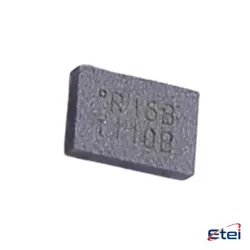
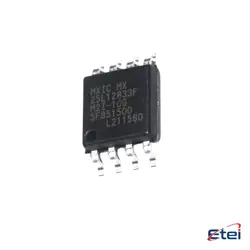
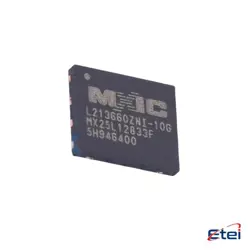
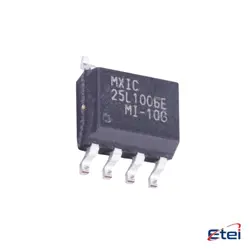
Images are for reference only
RS485
+BOM-
ManufacturerGR
-
Mfr. Part #RS485
-
In Stock6823
365 Days Quality Guarantee
7*24 hours service quarantee
90-day after-sales guarantee
Genuine Product Guarantee
Specifications
| Attribute | Value |
| Manufacturer | GR |
| Package / Case | SOP-8 |
Overview
Description
RS-485 is a standard for serial communication that allows multiple devices to communicate over a single pair of wires. It is widely used in industrial and commercial applications due to its robustness and ability to support long-distance communication (up to 4,000 feet or about 1,200 meters) at high data rates (up to 10 Mbps).
Key features of RS-485 include:
1. Differential Signaling: It uses a differential signal to reduce noise and improve data integrity, making it more reliable in electrically noisy environments.
2. Multi-Point Configuration: RS-485 supports up to 32 devices on a single bus, allowing for a network of interconnected devices (master/slave or peer-to-peer).
3. Half-Duplex and Full-Duplex Operation: It can operate in both modes, with half-duplex being more common in industrial applications.
Common use cases include industrial automation, building management systems, and data acquisition, where reliable long-distance communication is essential.
Key features of RS-485 include:
1. Differential Signaling: It uses a differential signal to reduce noise and improve data integrity, making it more reliable in electrically noisy environments.
2. Multi-Point Configuration: RS-485 supports up to 32 devices on a single bus, allowing for a network of interconnected devices (master/slave or peer-to-peer).
3. Half-Duplex and Full-Duplex Operation: It can operate in both modes, with half-duplex being more common in industrial applications.
Common use cases include industrial automation, building management systems, and data acquisition, where reliable long-distance communication is essential.
Equivalent
Equivalent products to RS485 chips include the MAX485 SN75176, and ADM2485. Other alternatives are the LTC2862, SP485, and ISL3177. Many manufacturers offer variants with different features, like higher data rates or integrated isolation. Always check specifications for compatibility with your application.
Features
RS485 is a standard for serial communication that offers several key features:
1. Multi-Point Communication: Supports multiple devices (up to 32) on a single bus, allowing for a network of devices to communicate.
2. Differential Signaling: Uses a differential voltage to transmit data, which enhances noise immunity and allows for reliable communication over long distances.
3. Long Distance Transmission: Effective for distances up to 4,000 feet (1,200 meters) compared to RS232, making it suitable for industrial applications.
4. High Data Rates: Capable of supporting data rates up to 10 Mbps, depending on the distance and cable quality.
5. Half-Duplex and Full-Duplex: Can operate in half-duplex mode (bidirectional communication over the same pair of wires) or full-duplex mode (separate pairs for send and receive).
6. Robustness in Harsh Environments: The differential nature of the signaling provides higher resistance to electrical interference.
7. Low Cost: Generally inexpensive hardware and wiring, making it a cost-effective solution for networked applications.
1. Multi-Point Communication: Supports multiple devices (up to 32) on a single bus, allowing for a network of devices to communicate.
2. Differential Signaling: Uses a differential voltage to transmit data, which enhances noise immunity and allows for reliable communication over long distances.
3. Long Distance Transmission: Effective for distances up to 4,000 feet (1,200 meters) compared to RS232, making it suitable for industrial applications.
4. High Data Rates: Capable of supporting data rates up to 10 Mbps, depending on the distance and cable quality.
5. Half-Duplex and Full-Duplex: Can operate in half-duplex mode (bidirectional communication over the same pair of wires) or full-duplex mode (separate pairs for send and receive).
6. Robustness in Harsh Environments: The differential nature of the signaling provides higher resistance to electrical interference.
7. Low Cost: Generally inexpensive hardware and wiring, making it a cost-effective solution for networked applications.
Pinout
RS-485 is a standard for serial communication that typically uses a 2-wire or 4-wire configuration. The most common pin count for RS-485 implementations is 2 or 3 pins for 2-wire systems, which include:
1. A (Non-inverting, or Data+): This pin carries the positive signal.
2. B (Inverting, or Data-): This pin carries the negative signal.
3. GND (optional): Ground reference for the communication.
In 4-wire configurations, two additional pins are used for separate transmit and receive lines, commonly designated as:
4. TX+ (Transmitter Positive): Positive signal for transmitting data.
5. TX- (Transmitter Negative): Negative signal for transmitting data.
6. RX+ (Receiver Positive): Positive signal for receiving data.
7. RX- (Receiver Negative): Negative signal for receiving data.
RS-485 supports multi-point communication, allowing multiple devices on a single bus, and is widely used in industrial applications due to its robustness over long distances and in noisy environments.
1. A (Non-inverting, or Data+): This pin carries the positive signal.
2. B (Inverting, or Data-): This pin carries the negative signal.
3. GND (optional): Ground reference for the communication.
In 4-wire configurations, two additional pins are used for separate transmit and receive lines, commonly designated as:
4. TX+ (Transmitter Positive): Positive signal for transmitting data.
5. TX- (Transmitter Negative): Negative signal for transmitting data.
6. RX+ (Receiver Positive): Positive signal for receiving data.
7. RX- (Receiver Negative): Negative signal for receiving data.
RS-485 supports multi-point communication, allowing multiple devices on a single bus, and is widely used in industrial applications due to its robustness over long distances and in noisy environments.
Manufacturer
RS485 is not manufactured by a single company; rather, it is a standard for serial communication developed by the Telecommunications Industry Association (TIA) under TIA/EIA-485. The RS485 standard defines the electrical characteristics of drivers and receivers for use in balanced digital multipoint systems.
A variety of electronics manufacturers produce RS485-compatible devices, including integrated circuits (ICs), transceivers, and interface modules. Notable companies in this field include Texas Instruments, Maxim Integrated (now part of Analog Devices), Analog Devices, and NXP Semiconductors, among others.
These companies are typically involved in the semiconductor and electronics industry, specializing in components for communication, automation, and control systems. They design and manufacture products that facilitate data transmission in applications such as industrial automation, building automation, and telecommunications.
A variety of electronics manufacturers produce RS485-compatible devices, including integrated circuits (ICs), transceivers, and interface modules. Notable companies in this field include Texas Instruments, Maxim Integrated (now part of Analog Devices), Analog Devices, and NXP Semiconductors, among others.
These companies are typically involved in the semiconductor and electronics industry, specializing in components for communication, automation, and control systems. They design and manufacture products that facilitate data transmission in applications such as industrial automation, building automation, and telecommunications.
Application
RS485 is widely used in industrial automation, building management systems, and process control due to its robustness over long distances and ability to support multiple devices on a single bus. Common applications include:
1. Modbus Communication: In PLCs and SCADA systems.
2. Remote Monitoring: For sensors and IoT devices.
3. CCTV Systems: Enabling long-distance camera connectivity.
4. HVAC Control: Integrating multiple HVAC units.
5. Automation Systems: Linking various controllers and drives.
Its differential signaling allows for reliable communication in noisy environments, making it ideal for these applications.
1. Modbus Communication: In PLCs and SCADA systems.
2. Remote Monitoring: For sensors and IoT devices.
3. CCTV Systems: Enabling long-distance camera connectivity.
4. HVAC Control: Integrating multiple HVAC units.
5. Automation Systems: Linking various controllers and drives.
Its differential signaling allows for reliable communication in noisy environments, making it ideal for these applications.
Package
RS485 is typically implemented using various package types, including 8-pin DIP, surface mount (SMD), and modular connectors like RJ45. These packages house the differential transceiver that enables multi-point communication over twisted-pair cables, supporting long-distance data transmission. The choice of package depends on application requirements, such as space constraints and environmental conditions.