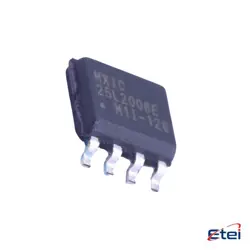
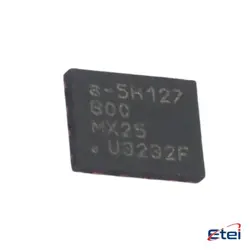
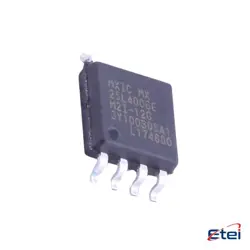
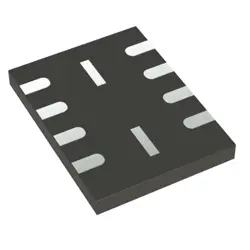
Images are for reference only
SSD2828QL9
+BOM-
ManufacturerSolomon Systech
-
Mfr. Part #SSD2828QL9
-
Datasheet SSD2828QL9 DataSheet
-
In Stock7555
365 Days Quality Guarantee
7*24 hours service quarantee
90-day after-sales guarantee
Genuine Product Guarantee
Specifications
| Attribute | Value |
| Manufacturer | Solomon Systech |
| Package | LQFP-128(14x14) |
| Data Rate | 4Gbps |
Overview
Description
### Key Features:
- Supports MIPI DSI v1.02.00 (1 or 2 data lanes).
- Converts to LVDS (1 or 2 channels) or Parallel RGB (up to 24-bit).
- Supports resolution up to 1920x1200 (WUXGA).
- Integrated PLL for flexible clock generation.
- I2C/SPI interface for configuration.
- Low power consumption with 1.8V/3.3V operation.
### Applications:
- Automotive displays
- Industrial HMIs
- Embedded systems with legacy panels
The SSD2828QL9 simplifies display interfacing, making it useful for integrating modern SoCs with older display technologies.
Features
- Interface Conversion: Converts MIPI DSI (1 or 2 lanes) to LVDS (single or dual-channel).
- Resolution Support: Supports up to 1920x1200 @ 60Hz (WUXGA).
- Power Supply: Operates at 1.8V core voltage and 3.3V I/O voltage.
- Low Power: Features low-power standby mode for energy efficiency.
- Configurability: Programmable via I²C or SPI for flexible display settings.
- Package: Available in a compact QFN-56 package.
- Applications: Ideal for automotive displays, industrial panels, and embedded systems.
It simplifies interfacing between MIPI-based processors and LVDS displays.
Pinout
- Pin Count: 56 pins (QFN package).
- Key Functions:
- Converts MIPI DSI (1 or 2 lanes) to LVDS (single or dual-channel).
- Supports resolutions up to WUXGA (1920x1200).
- Configurable via I2C or SPI.
- Integrated PLL for clock generation.
- Supports 5V or 3.3V I/O.
It is often used in embedded systems to interface MIPI-based processors with LVDS displays.
Manufacturer
Application
1. Consumer Electronics: Smartphones, tablets, and portable devices with high-resolution displays.
2. Automotive Displays: Infotainment systems and instrument clusters requiring robust signal conversion.
3. Industrial HMI: Touch panels and control interfaces needing reliable LVDS/parallel output.
4. Medical Devices: High-precision displays for diagnostic and monitoring equipment.
5. AR/VR: Low-latency display bridging for immersive experiences.
It supports high-speed data transmission, making it ideal for advanced display solutions.