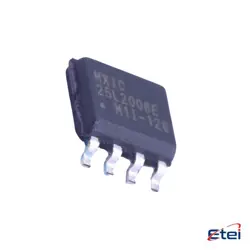
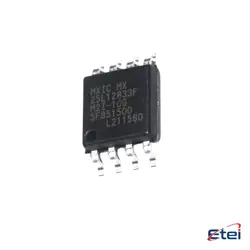
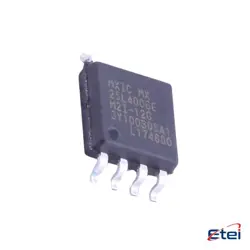
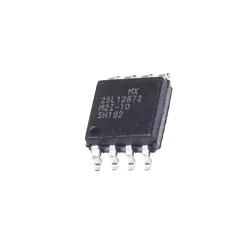
Images are for reference only
ST26C32ABDR
+BOMIC RECEIVER 0/4 16SO
-
ManufacturerSTMicroelectronics
-
Mfr. Part #ST26C32ABDR
-
Datasheet ST26C32ABDR DataSheet
-
Package SO-16
-
In Stock7512
365 Days Quality Guarantee
7*24 hours service quarantee
90-day after-sales guarantee
Genuine Product Guarantee
Specifications
| Attribute | Value |
| Package | Tape & Reel (TR),Cut Tape (CT) |
| ProductStatus | Active |
| Type | Receiver |
| Protocol | RS422, RS423 |
| NumberofDrivers/Receivers | 0/4 |
| ReceiverHysteresis | 60 mV |
| DataRate | 20Mbps |
| Voltage-Supply | 4.5V ~ 5.5V |
| OperatingTemperature | -40°C ~ 85°C |
| MountingType | Surface Mount |
| Package/Case | 16-SOIC (0.154, 3.90mm Width) |
Overview
Description
Key features of the ST26C32ABDR include:
- Four independent differential line receivers.
- High input impedance, allowing for multiple receivers on a data line.
- Wide common-mode voltage range, enhancing noise rejection capabilities.
- Low power consumption, making it suitable for battery-operated devices.
- Fast switching speeds for high-speed data transmission.
- Compatibility with a wide range of supply voltages.
The ST26C32ABDR is typically used in applications such as industrial automation, telecommunications, and any system requiring reliable data transmission over long distances. Its compact design in a SOIC package makes it suitable for space-constrained applications.
Equivalent
1. Texas Instruments AM26C32
2. ON Semiconductor MC26C32
3. Renesas ISL4489
4. Maxim Integrated MAX1487
5. Analog Devices ADM3488
These chips perform similar functions as differential line receivers and can be used as substitutes depending on the specific application requirements. Always verify pin compatibility and electrical specifications before replacement.
Features
1. High-Speed Performance: It supports data rates up to 32 Mbps, making it suitable for high-speed communication applications.
2. Wide Voltage Range: Operates over a wide supply voltage range, typically from 4.5V to 5.5V.
3. Low Power Consumption: Designed for low power consumption to enhance energy efficiency in systems.
4. Differential Inputs: Equipped with differential inputs, which improve noise immunity and signal integrity over long distances.
5. Tri-State Outputs: Features tri-state, TTL-compatible outputs for easy interfacing with digital systems.
6. Fail-Safe Operation: Includes a fail-safe feature that ensures a stable output state when inputs are open, shorted, or terminated.
7. Industry Standards Compliance: Complies with RS-422 and RS-423 standards for industrial applications.
8. Temperature Range: Operates over a wide temperature range, making it suitable for various environmental conditions.
These attributes make the ST26C32ABDR an effective solution for reliable data communication in industrial and commercial systems.
Pinout
Key functions and features include:
- Differential Inputs: Designed to receive balanced data from transmission lines, which helps in minimizing noise.
- High Noise Immunity: It offers noise margins approximately 10 times better than TTL.
- Wide Common-Mode Range: This allows for a broad range of input signals, accommodating various signal levels.
- Tri-state Outputs: Facilitates direct connection to the data bus by providing three output states—high, low, and high impedance.
- Low Power Consumption: Suitable for applications where power efficiency is critical.
The 16 pins generally include supply pins, differential input pairs, output pins, and enable pins for controlling the output state. For specific pin assignments and detailed functions, consulting the manufacturer's datasheet is recommended.
Manufacturer
Application
1. Industrial Automation: Used for robust signal transmission in noisy environments.
2. Telecommunications: Facilitates data communication between network devices.
3. Data Acquisition Systems: Ensures accurate data collection from remote sensors.
4. RS-422 and RS-485 Interfaces: Supports these serial communication standards for multi-drop network systems.
5. Motor Control Systems: Enhances communication reliability in feedback loops.
6. Medical Equipment: Used in devices requiring precise data transfer.
These applications benefit from the device's high noise immunity and ability to work over extended cable lengths.