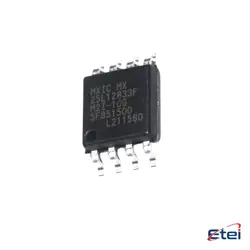
Images are for reference only
STM32F103C8T7
+BOMIC MCU 32BIT 64KB FLASH 48LQFP
-
ManufacturerSTMicroelectronics
-
Mfr. Part #STM32F103C8T7
-
Datasheet STM32F103C8T7 DataSheet
-
Package LQFP 48
-
In Stock6482
365 Days Quality Guarantee
7*24 hours service quarantee
90-day after-sales guarantee
Genuine Product Guarantee
Specifications
| Attribute | Value |
| Package | Tray |
| Series | STM32F1 |
| ProductStatus | Active |
| CoreProcessor | ARM® Cortex®-M3 |
| CoreSize | 32-Bit Single-Core |
| Speed | 72MHz |
| Connectivity | CANbus, I²C, IrDA, LINbus, SPI, UART/USART, USB |
| Peripherals | DMA, Motor Control PWM, PDR, POR, PVD, PWM, Temp Sensor, WDT |
| NumberofI/O | 37 |
| ProgramMemorySize | 64KB (64K x 8) |
| ProgramMemoryType | FLASH |
| RAMSize | 20K x 8 |
| Voltage-Supply(Vcc/Vdd) | 2V ~ 3.6V |
| DataConverters | A/D 10x12b |
| OscillatorType | Internal |
| OperatingTemperature | -40°C ~ 105°C (TA) |
| MountingType | Surface Mount |
| Package/Case | 48-LQFP |
Overview
Description
1. Core and Performance: It runs on a 32-bit ARM Cortex-M3 processor, capable of up to 72 MHz, offering high efficiency and low power consumption.
2. Memory: It provides 64 KB of Flash memory and 20 KB of SRAM, suitable for small to medium-sized applications.
3. Peripherals: The microcontroller includes a rich set of I/O peripherals such as I2C, SPI, USART, USB 2.0, and CAN, along with 7 timers and 1 advanced-control timer.
4. GPIO: It offers up to 37 general-purpose I/O pins, which can be used flexibly in applications.
5. Analog Features: It features 2 ADCs (Analog to Digital Converters) with 12-bit resolution, supporting up to 16 channels.
6. Development and Support: This MCU is supported by a wide range of development tools and libraries, including STM32CubeIDE and ST-Link for programming and debugging.
The STM32F103C8T7 is popular in hobbyist projects, prototyping, and commercial applications due to its versatility and community support.
Equivalent
1. NXP's LPC1768
2. Microchip's ATSAM3X8E
3. Texas Instruments' TMS320F28027
4. Infineon's XMC1100 series
These alternatives offer similar functionalities such as ARM Cortex-M3 cores, flash memory, and peripheral interfaces. However, exact specifications and pin compatibility should be verified for precise application requirements.
Features
1. Core and Performance:
- 32-bit ARM Cortex-M3 CPU.
- Up to 72 MHz operating frequency.
2. Memory:
- 64 KB Flash memory.
- 20 KB SRAM.
3. Peripherals:
- Up to 37 GPIOs.
- 2x 12-bit ADCs.
- Up to 3x general-purpose 16-bit timers, plus 1x PWM timer.
- 2x I2C interfaces.
- 3x USART interfaces.
- 2x SPI interfaces.
- USB 2.0 full-speed interface.
4. Connectivity and Communication:
- CAN bus interface.
- SWD for debugging.
5. Power:
- Operating voltage: 2.0 to 3.6 V.
- Low power modes available for energy efficiency.
6. Package:
- LQFP48 package.
These features make it suitable for various applications, including motor control, medical devices, and industrial automation.
Pinout
Key functions and features of the STM32F103C8T7 include:
- Core: ARM Cortex-M3, operating at up to 72 MHz.
- Flash Memory: 64 KB for program storage.
- SRAM: 20 KB for data storage.
- GPIOs: Up to 37 general-purpose input/output pins.
- Communication Interfaces:
- 2x I2C
- 2x SPI
- 3x USART
- Timers:
- 3x 16-bit general-purpose timers
- 1x 16-bit advanced control timer
- Analog:
- 10x 12-bit ADC channels
- Other Features:
- Nested Vectored Interrupt Controller (NVIC)
- DMA controller
- RTC, watchdog timers, SysTick
- Supports various low-power modes for energy efficiency.
This microcontroller is commonly used in embedded systems applications, offering a balance of performance and peripheral integration.
Manufacturer
Application
1. Industrial Automation: Control systems, motor drives, and process automation.
2. Consumer Electronics: Home automation devices, smart appliances, and wearable technology.
3. Automotive: Dashboard instruments, sensors, and infotainment systems.
4. Medical Devices: Portable medical instruments and diagnostics.
5. IoT Devices: Smart sensors and wireless communication modules.
6. Robotics: Control units for hobbyist and industrial robots.
7. Communication Systems: Protocol converters and network devices.
Its ARM Cortex-M3 core, peripheral capabilities, and development ecosystem make it suitable for diverse applications.