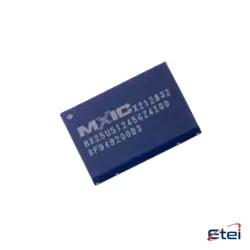
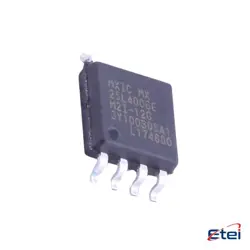
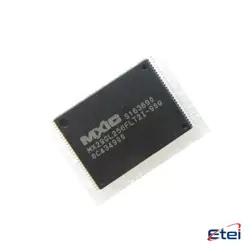
Images are for reference only
STM32F103RDT6TR
+BOMIC MCU 32BIT 384KB FLASH 64LQFP
-
ManufacturerSTMicroelectronics
-
Mfr. Part #STM32F103RDT6TR
-
Datasheet STM32F103RDT6TR DataSheet
-
In Stock7869
365 Days Quality Guarantee
7*24 hours service quarantee
90-day after-sales guarantee
Genuine Product Guarantee
Specifications
| Attribute | Value |
| Series | STM32F1 |
| Part Status | Active |
| Digi Key Programmable | Not Verified |
| Core Processor | ARM® Cortex®-M3 |
| Core Size | 32-Bit Single-Core |
| Speed | 72MHz |
| Connectivity | CANbus, I2C, IrDA, LINbus, SPI, UART/USART, USB |
| Peripherals | DMA, Motor Control PWM, PDR, POR, PVD, PWM, Temp Sensor, WDT |
| Number of I/O | 51 |
| Program Memory Size | 384KB (384K x 8) |
| Program Memory Type | FLASH |
| RAM Size | 64K x 8 |
| Voltage - Supply (Vcc/Vdd) | 2V ~ 3.6V |
| Data Converters | A/D 16x12b; D/A 2x12b |
| Oscillator Type | Internal |
| Operating Temperature | -40°C ~ 85°C (TA) |
| Mounting Type | Surface Mount |
| Supplier Device Package | 64-LQFP (10x10) |
| Package / Case | 64-LQFP |
| Base Product Number | STM32F103 |
Overview
Description
In terms of peripherals, the STM32F103RDT6TR includes advanced timers, multiple I2C, SPI, and USART interfaces, and a 12-bit ADC, making it versatile for different interfacing needs. It supports full-speed USB 2.0, CAN, and multiple GPIOs, enhancing its connectivity options. The device operates on a 2.0 to 3.6 V supply voltage and includes various power-saving modes, crucial for battery-powered applications.
The "TR" suffix signifies a tape and reel packaging, suitable for automated manufacturing. Its robust feature set, combined with a powerful processor, makes the STM32F103RDT6TR suitable for industrial control, consumer electronics, and other embedded systems.
Equivalent
1. NXP LPC1768: Cortex-M3, similar performance.
2. TI TM4C123GH6PM: Cortex-M4, backward compatible, additional features.
3. Atmel SAM3X8E: Cortex-M3, similar feature set.
Ensure compatibility regarding peripherals and performance for specific applications. Always verify pinout and peripheral compatibility when considering alternatives.
Features
1. Core: 32-bit ARM Cortex-M3 CPU, running at up to 72 MHz.
2. Flash Memory: 384 KB for firmware storage.
3. SRAM: 64 KB, divided into two blocks (48 KB and 16 KB).
4. GPIO: 51 general-purpose input/output pins.
5. Communication Interfaces:
- Up to 3 USARTs
- 2 SPIs
- 2 I2Cs
- CAN 2.0B
- USB 2.0 full-speed interface
6. Timers: 3 general-purpose 16-bit timers, 1 advanced control PWM timer, and 2 watchdog timers.
7. Analog: 2 ADCs, 12-bit resolution, up to 16 channels.
8. Power: Low power modes including Sleep, Stop, and Standby.
9. Operating Voltage: 2.0 to 3.6 V.
10. Package: LQFP-64 with a temperature range of -40 to +85°C.
Its flexibility and performance make it suitable for a wide range of embedded applications.
Pinout
Key features and functions of the STM32F103RDT6TR include:
- Core: ARM Cortex-M3 32-bit RISC core.
- Memory: 384 KB of Flash memory and 48 KB of SRAM.
- Clock Speed: Up to 72 MHz.
- Interfaces: It offers multiple communication interfaces, including:
- Up to 3 USARTs
- Up to 2 SPI interfaces
- Up to 2 I2C interfaces
- USB 2.0 full-speed interface
- Timers: Includes 3 general-purpose 16-bit timers, 1 advanced control PWM timer, and 2 basic timers.
- GPIOs: A variety of general-purpose I/O pins for interfacing with external devices.
- ADC/DAC: 2 ADCs (12-bit) which can be used for analog-to-digital conversion.
- Development Support: JTAG/SWD for programming and debugging.
This microcontroller is suitable for applications requiring enhanced performance, real-time capabilities, and connectivity, such as industrial control, consumer electronics, and medical devices.
Manufacturer
Application
1. Consumer Electronics: Used in devices like digital cameras and audio equipment.
2. Industrial Automation: Employed in control systems and monitoring equipment.
3. Medical Devices: Applied in portable medical instruments and monitoring systems.
4. Automotive: Used in dashboard displays and control systems.
5. IoT Devices: Serves as the main controller in IoT applications for smart home and industrial IoT solutions.
6. Robotics: Functions as a control unit in robotic systems and drones.
7. Communication Systems: Integrates into devices for data acquisition and transmission.