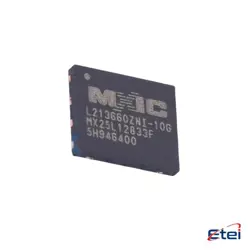
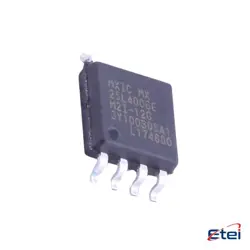
Images are for reference only
TL16C550CIPTR
+BOMIC ASYNC COMM ELEMENT 48-LQFP
-
ManufacturerTexas Instruments
-
Mfr. Part #TL16C550CIPTR
-
Datasheet TL16C550CIPTR DataSheet
-
Package LQFP (PT)-48
-
In Stock6630
365 Days Quality Guarantee
7*24 hours service quarantee
90-day after-sales guarantee
Genuine Product Guarantee
Specifications
| Attribute | Value |
| Package | Tape & Reel (TR),Cut Tape (CT),Bulk |
| ProductStatus | Active |
| NumberofChannels | 1, UART |
| FIFO's | 16 Byte |
| DataRate(Max) | 1Mbps |
| Voltage-Supply | 3V ~ 5.25V |
| WithAutoFlowControl | Yes |
| WithFalseStartBitDetection | Yes |
| WithModemControl | Yes |
| MountingType | Surface Mount |
| Package/Case | 48-LQFP |
Overview
Description
Key features of the TL16C550CIPTR include its ability to support asynchronous communication, a programmable baud rate generator, FIFO (First-In-First-Out) buffers for the transmitter and receiver, and compatibility with the standard 16C550 UART. It operates with a wide range of supply voltages and can be utilized in various system designs due to its flexible clock inputs and interrupt capabilities.
The TL16C550CIPTR enhances data throughput and reliability, reducing CPU overhead by handling serial communications efficiently. Its integration capabilities make it a popular choice for embedded systems and other applications requiring robust serial communication functionality.
Equivalent
1. Maxim MAX3100
2. NXP SC16C550
3. Exar XR16C550
4. STMicroelectronics ST16C550
5. Intersil HIN16C550
These alternatives offer similar functionality and are used in serial communication applications. Always check the datasheets to ensure compatibility with your specific requirements.
Features
1. Single-Channel UART: Provides serial-to-parallel and parallel-to-serial data conversion.
2. FIFO Buffers: Includes a 16-byte transmit and receive FIFO, reducing CPU overhead and enabling high-speed data transmission.
3. Baud Rate Support: Supports multiple programmable baud rates for flexibility in data communication.
4. Compatibility: Compatible with previous industry-standard UARTs like the 16550.
5. Automatic Flow Control: Features hardware and software-controlled flow control to prevent data loss.
6. Interrupt System: Offers a prioritized interrupt system to efficiently manage data flow.
7. Flexible Clocking: Supports different clock frequencies for various operational modes.
8. Low Power Consumption: Ideal for battery-operated devices.
9. Operating Temperature Range: Typically supports industrial temperature ranges for robust applications.
10. Packaging: Available in different package types for versatile design integration.
These features make it suitable for a wide range of applications, including modems, serial communication ports, and embedded system interfaces.
Pinout
The main function of the TL16C550CIPTR is to provide asynchronous serial communication capabilities by converting parallel data from a microcontroller or processor into serial form for transmission, and vice versa for received data. This IC is equipped with features like a programmable baud rate generator, FIFOs (First In, First Out buffers) for both transmitter and receiver, and fully configurable serial communication parameters, such as data bits, stop bits, and parity.
These capabilities make it suitable for applications requiring serial data communication, such as in modems, printers, and computer peripherals. The TL16C550CIPTR simplifies the implementation of serial data transmission by offloading the complexities of managing asynchronous data streams from the main processor, thus enabling efficient data communication.
Manufacturer
Application
1. Embedded Systems: Facilitates serial communication between microcontrollers and peripheral devices.
2. Industrial Automation: Used in machinery and equipment for data exchange and control.
3. Networking Equipment: Helps in managing data transmission in routers and switches.
4. Consumer Electronics: Employed in devices like set-top boxes and gaming consoles for interfacing and communication.
5. Telecommunications: Assists in data exchange in modems and other communication devices.
6. Computing: Used in legacy systems for RS-232 communication.
These areas leverage the chip's ability to efficiently handle serial data transmission and reception.