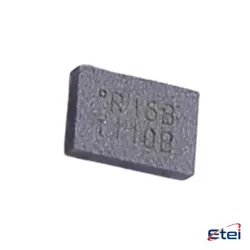
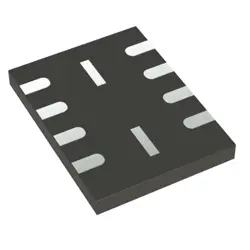
Images are for reference only
TLIN10285DRBRQ1
+BOMIC TRANSCEIVER 1/1 8VSON
-
ManufacturerTexas Instruments
-
Mfr. Part #TLIN10285DRBRQ1
-
Datasheet TLIN10285DRBRQ1 DataSheet
-
Package VSON-8
-
In Stock1528
365 Days Quality Guarantee
7*24 hours service quarantee
90-day after-sales guarantee
Genuine Product Guarantee
Specifications
| Attribute | Value |
| Package | Tape & Reel (TR),Cut Tape (CT) |
| Series | Automotive, AEC-Q100 |
| ProductStatus | Active |
| Type | Transceiver |
| Protocol | LIN |
| NumberofDrivers/Receivers | 1/1 |
| ReceiverHysteresis | 500 mV |
| DataRate | 100kbps |
| Voltage-Supply | 5.5V ~ 28V |
| OperatingTemperature | -40°C ~ 125°C |
| MountingType | Surface Mount, Wettable Flank |
| Package/Case | 8-VDFN Exposed Pad |
Overview
Description
1. Course Overview: A brief summary of the topics and themes that will be explored throughout the course. This might include key areas of study, such as theoretical concepts, practical applications, or industry practices relevant to the subject matter.
2. Objectives and Outcomes: Clearly stated goals for what students are expected to learn or achieve by the end of the course. This section outlines the skills or knowledge that will be developed.
3. Structure and Format: Information about the course's format, such as lectures, seminars, labs, or online components, as well as the schedule and any key dates for assignments or exams.
4. Assessment Methods: An outline of how students will be evaluated, including types of assessments like exams, projects, presentations, or essays.
For a precise description, you should refer to the specific syllabus or course documentation provided by the institution offering TLIN10285DRBRQ1.
Equivalent
1. NXP TJA1028 series
2. Microchip ATA6632 series
3. Infineon TLE7259-2GE
4. STMicroelectronics L9616
Each of these products offers similar LIN transceiver capabilities suitable for automotive networks. Ensure to verify specific features and compatibility with your application requirements.
Features
1. LIN Compliance: It adheres to LIN 2.0, 2.1, 2.2, 2.2A, and SAE J2602 standards, ensuring compatibility with a wide range of LIN bus systems.
2. ESD Protection: The device offers robust electrostatic discharge protection of up to ±8 kV on the LIN bus pin, enhancing durability.
3. Low Power Consumption: It features a low power sleep mode with a current consumption of less than 10 µA, which is critical for battery-powered automotive systems.
4. Wide Operating Voltage: The transceiver supports an operating voltage range from 5.5 V to 27 V, suitable for various automotive voltage environments.
5. Thermal Shutdown: For safety, it includes thermal shutdown protection, preventing damage from overheating.
6. Wake-up Functionality: The device supports wake-up from bus and local wake-up, facilitating efficient system restarts.
These features make the TLIN10285DRBRQ1 ideal for automotive applications requiring reliable, low-power LIN communication.
Pinout
The key functions of the pins are as follows:
1. LIN: LIN bus line, connects to the LIN network.
2. TXD: Transmit Data Input, receives data from the microcontroller.
3. RXD: Receive Data Output, transmits data to the microcontroller.
4. GND: Ground reference.
5. VSUP: Supply voltage input, typically connected to the battery voltage.
6. EN: Enable pin, used to enable or disable the transceiver.
7. N/C: No connection, not used.
8. WAKE: Wake-up input, used to wake up the device from sleep mode.
These features help facilitate reliable and efficient communication in LIN network systems.
Manufacturer
Application
1. Consumer Electronics: Ensures stable voltage supply for devices like smartphones and laptops.
2. Automotive Systems: Provides power management for various electronic components in vehicles.
3. Industrial Equipment: Used in control systems and machinery requiring consistent voltage levels.
4. Communication Devices: Ensures reliable power for routers and modems.
5. Medical Instruments: Powers sensitive equipment with precise voltage needs to maintain accuracy and reliability.
These regulators are integral in systems requiring efficiency, low noise, and stable performance.