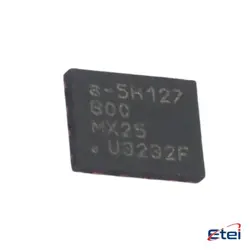
Images are for reference only
TM1638
+BOM-
ManufacturerTM(Shenzhen Titan Micro Elec)
-
Mfr. Part #TM1638
-
Datasheet TM1638 DataSheet
-
In Stock17254
365 Days Quality Guarantee
7*24 hours service quarantee
90-day after-sales guarantee
Genuine Product Guarantee
Specifications
| Attribute | Value |
| Manufacturer | TM(Shenzhen Titan Micro Elec) |
| Package / Case | SOIC-28-300mil |
Overview
Description
### Key Features:
- Drives LEDs: Supports common-cathode displays (7-segment, RGB, etc.).
- Key Scanning: Built-in 8×3 matrix keypad interface with interrupts.
- Brightness Control: Adjustable via software.
- Simple Interface: Uses STB, CLK, DIO pins for data transfer.
### Typical Applications:
- Digital clocks, counters, and control panels.
- Embedded systems needing display + input in minimal pins.
### Advantages:
- Low power consumption.
- Reduces external components (no extra drivers needed).
### Limitations:
- Limited to 8 digits & 24 keys.
- Requires bit-banging if no hardware SPI is available.
Ideal for projects needing display + buttons with minimal wiring. Popular in Arduino & DIY electronics.
Equivalent
- TM1637 (simpler, no key scanning)
- MAX7219 (LED driver, requires external MCU for keys)
- HT16K33 (I²C, supports LEDs + keys)
- CH455 (similar LED/key scan functionality)
These chips vary in features (I²C/SPI, key support, brightness control). Choose based on interface and functionality needs.
Features
- 8-segment LED driver (up to 10 segments × 8 digits).
- 8×8 matrix key-scanning (supports up to 8 buttons).
- SPI-like serial interface (reduces MCU pin usage).
- Brightness control (8 adjustable levels).
- Built-in RC oscillator (no external crystal needed).
- 3.3V–5V power supply (wide voltage compatibility).
- Multiplexed display & key-scanning (efficient resource use).
Ideal for LED displays with button inputs, such as DIY control panels or embedded UIs.
Manufacturer
Application
1. Digital Displays – Drives 7-segment LEDs for clocks, counters, and scoreboards.
2. Control Panels – Combines LED indicators and button inputs in appliances, industrial controls, and DIY projects.
3. Embedded Systems – Interfaces with microcontrollers (e.g., Arduino, STM32) for user input/output.
4. Consumer Electronics – Used in devices like thermostats, timers, and small instrumentation.
5. Gaming & DIY Kits – Powers simple arcade games, score displays, and interactive projects.
Its integrated LED driving and key-scanning functions make it cost-effective for compact designs.