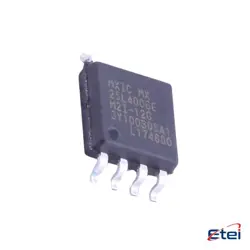
Images are for reference only
XTR106UA
+BOMIC CURRENT TRANSMITTER 14SOIC
-
ManufacturerTexas Instruments
-
Mfr. Part #XTR106UA
-
In Stock1918
365 Days Quality Guarantee
7*24 hours service quarantee
90-day after-sales guarantee
Genuine Product Guarantee
Specifications
| Attribute | Value |
| Part Status | Obsolete |
| Base Product Number | XTR106 |
| Digi Key Programmable | Not Verified |
| Type | Current Transmitter |
| Input Type | Differential |
| Output Type | Voltage |
| Supply Current | 20 mA |
| Operating Temperature | -55°C ~ 125°C |
| Mounting Type | Surface Mount |
| Package / Case | 14-SOIC (0.154", 3.90mm Width) |
| Supplier Device Package | 14-SOIC |
| Packaging | Tube |
Overview
Description
The XTR106UA is an integrated, precision signal conditioning circuit designed for bridge-type sensor measurements, commonly used in applications such as pressure and temperature sensing. It combines a precision instrumentation amplifier with a voltage reference and a current output stage to convert the low-level sensor signals to a standard 4-20 mA current loop output, suitable for long-distance transmission in industrial environments.
Key features of the XTR106UA include low drift and low noise characteristics, which ensure accurate and stable performance over varying environmental conditions. It offers a wide power supply range, making it versatile for various applications. The device provides both voltage and current excitation to the bridge sensor, simplifying system design and reducing the need for external components.
The XTR106UA is commonly used in process control and industrial automation systems, where reliability and precision are crucial. Its compact size and integrated functions help in reducing the overall system size and complexity, making it an efficient choice for sensor interfacing in demanding industrial applications.
Key features of the XTR106UA include low drift and low noise characteristics, which ensure accurate and stable performance over varying environmental conditions. It offers a wide power supply range, making it versatile for various applications. The device provides both voltage and current excitation to the bridge sensor, simplifying system design and reducing the need for external components.
The XTR106UA is commonly used in process control and industrial automation systems, where reliability and precision are crucial. Its compact size and integrated functions help in reducing the overall system size and complexity, making it an efficient choice for sensor interfacing in demanding industrial applications.
Equivalent
The XTR106UA is a precision analog-to-digital interface chip used primarily in sensor signal conditioning. Equivalent products include:
1. TI XTR105: Similar integrated transmitter but with different features.
2. ADI ADuC7060/7061: Microcontroller with integrated AFE.
3. Maxim MAX1452: Precision sensor signal conditioner.
4. ADI AD594/AD595: Thermocouple amplifiers with similar functionalities for temperature measurements.
Always verify pin compatibility and specific application requirements when considering equivalents.
1. TI XTR105: Similar integrated transmitter but with different features.
2. ADI ADuC7060/7061: Microcontroller with integrated AFE.
3. Maxim MAX1452: Precision sensor signal conditioner.
4. ADI AD594/AD595: Thermocouple amplifiers with similar functionalities for temperature measurements.
Always verify pin compatibility and specific application requirements when considering equivalents.
Features
The XTR106UA is an integrated circuit specifically designed for sensor signal conditioning, often used with bridge-type sensors. Key features include:
1. Precision Instrumentation Amplifier: Offers precise amplification of low-level signals from sensor bridges.
2. Current Output: Converts sensor signals to a standard 4-20 mA current loop, ideal for long-distance transmission.
3. Voltage Reference: Provides an on-chip, precision voltage reference, enhancing measurement accuracy and stability.
4. Low Power Consumption: Designed for low-power applications, suitable for battery-operated devices.
5. High Linearity and Accuracy: Ensures accurate signal representation with minimal distortion over a wide range of temperatures.
6. Temperature Compensation: Integrated components allow for compensation of temperature-induced errors, improving performance in varying environmental conditions.
7. Small Form Factor: Available in compact packages, making it suitable for space-constrained applications.
These features make the XTR106UA well-suited for industrial, automotive, and process control applications, requiring reliable and accurate sensor data transmission.
1. Precision Instrumentation Amplifier: Offers precise amplification of low-level signals from sensor bridges.
2. Current Output: Converts sensor signals to a standard 4-20 mA current loop, ideal for long-distance transmission.
3. Voltage Reference: Provides an on-chip, precision voltage reference, enhancing measurement accuracy and stability.
4. Low Power Consumption: Designed for low-power applications, suitable for battery-operated devices.
5. High Linearity and Accuracy: Ensures accurate signal representation with minimal distortion over a wide range of temperatures.
6. Temperature Compensation: Integrated components allow for compensation of temperature-induced errors, improving performance in varying environmental conditions.
7. Small Form Factor: Available in compact packages, making it suitable for space-constrained applications.
These features make the XTR106UA well-suited for industrial, automotive, and process control applications, requiring reliable and accurate sensor data transmission.
Pinout
The XTR106UA is a precision, low-power 4-20mA current transmitter integrated circuit. It is commonly used in sensor signal conditioning applications. The device is housed in an 8-pin SOIC (Small Outline Integrated Circuit) package. Here’s a brief overview of the pin functions:
1. Pin 1 (V+): Positive supply voltage input.
2. Pin 2 (Iret): Current return pin.
3. Pin 3 (VIN-): Inverting input of the operational amplifier.
4. Pin 4 (VIN+): Non-inverting input of the operational amplifier.
5. Pin 5 (R1): Connects to the gain-setting resistor.
6. Pin 6 (R2): Connects to the gain-setting resistor.
7. Pin 7 (VREG): Regulated voltage output, typically used to power external components.
8. Pin 8 (IOUT): 4-20mA current output.
The XTR106UA is designed to convert a differential input voltage to a 4-20mA current output, making it suitable for industrial process control and smart sensors.
1. Pin 1 (V+): Positive supply voltage input.
2. Pin 2 (Iret): Current return pin.
3. Pin 3 (VIN-): Inverting input of the operational amplifier.
4. Pin 4 (VIN+): Non-inverting input of the operational amplifier.
5. Pin 5 (R1): Connects to the gain-setting resistor.
6. Pin 6 (R2): Connects to the gain-setting resistor.
7. Pin 7 (VREG): Regulated voltage output, typically used to power external components.
8. Pin 8 (IOUT): 4-20mA current output.
The XTR106UA is designed to convert a differential input voltage to a 4-20mA current output, making it suitable for industrial process control and smart sensors.
Manufacturer
The XTR106UA is manufactured by Texas Instruments (TI). Texas Instruments is a global technology company that designs and manufactures semiconductors and integrated circuits for a wide range of applications. The company focuses on developing analog chips and embedded processors, which are used in a variety of electronic devices and systems, including industrial equipment, automotive electronics, personal electronics, and communications equipment. TI is a well-established leader in the semiconductor industry, known for its innovation and broad portfolio of products.
Application
The XTR106UA is a precision instrumentation amplifier commonly used in various applications requiring accurate data acquisition and signal conditioning. Its primary application areas include:
1. Industrial Process Control: Used for amplifying and transmitting low-level sensor signals over long distances.
2. Temperature Sensing: Suitable for thermocouple and RTD signal conditioning.
3. Pressure Measurement: Utilized in pressure transducers for precise readings.
4. Flow Measurement: Employed in flow meters to ensure accurate signal processing.
5. Weighing Systems: Integrated into load cells for high-precision weight measurements.
6. Biomedical Instrumentation: Used in medical devices for reliable physiological signal amplification.
The XTR106UA's ability to provide high common-mode rejection and low drift makes it ideal for these precision-sensitive applications.
1. Industrial Process Control: Used for amplifying and transmitting low-level sensor signals over long distances.
2. Temperature Sensing: Suitable for thermocouple and RTD signal conditioning.
3. Pressure Measurement: Utilized in pressure transducers for precise readings.
4. Flow Measurement: Employed in flow meters to ensure accurate signal processing.
5. Weighing Systems: Integrated into load cells for high-precision weight measurements.
6. Biomedical Instrumentation: Used in medical devices for reliable physiological signal amplification.
The XTR106UA's ability to provide high common-mode rejection and low drift makes it ideal for these precision-sensitive applications.
Package
The XTR106UA is typically available in an SOIC-16 (Small Outline Integrated Circuit) package.