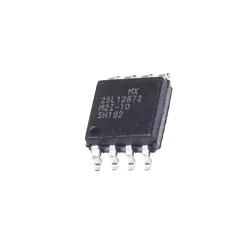
Images are for reference only
LM311N
+BOMIC COMPARATOR SGL HI VOLT 8DIP
-
Manufactureronsemi
-
Mfr. Part #LM311N
-
In Stock5969
365 Days Quality Guarantee
7*24 hours service quarantee
90-day after-sales guarantee
Genuine Product Guarantee
Specifications
| Attribute | Value |
| Part Status | Obsolete |
| Base Product Number | LM311 |
| Packaging | Tube |
Overview
Description
The LM311N operates with a wide supply voltage range, typically from 5V to 30V, accommodating numerous applications. It offers fast response times, typically in the nanosecond range, enhancing its suitability for high-speed signal processing tasks. The IC is commonly used in applications like zero-crossing detectors, voltage level shifters, and square wave generators.
The compact design and reliability of the LM311N make it a popular choice in both industrial and consumer electronics. Additionally, the IC’s low power consumption is beneficial in battery-powered devices. Its versatility and robustness ensure broad usage in various electronic projects and systems.
Equivalent
1. LM339 - Quad comparator
2. LM393- Dual comparator
3. TL331 - Single comparator
4. UA741 - Op-amp used as a comparator
5. LMV331 - Low-voltage comparator
These components can perform similar functions in circuits, but variations in specifications such as supply voltage and output current capability should be considered.
Features
1. Wide Supply Voltage Range: It operates from 5V to 30V, making it versatile for various applications.
2. High-Speed Operation: The device has a fast response time, typically around 200 nanoseconds, which makes it suitable for high-speed applications.
3. Low Input Offset Voltage: It typically has a low input offset voltage, enhancing accuracy.
4. Open-Collector Output: This allows for wired-AND connections and flexibility in output configuration.
5. Adjustable Voltage Reference: It can be used with an external reference voltage for customizable threshold settings.
6. TTL and CMOS Compatible: The output is compatible with both TTL and CMOS logic levels.
7. Wide Input Common-Mode Voltage Range: This feature improves performance in various operating conditions.
8. Compact Package: Available in a standard PDIP package for easy integration into circuits.
These features make the LM311N suitable for applications like zero-crossing detectors, peak voltage detectors, and other precision voltage comparison tasks.
Pinout
1. VCC+: Positive power supply voltage.
2. Non-Inverting Input (+): The input where the voltage is applied to be compared.
3. Inverting Input (-): The input where the reference voltage is applied.
4. GND: Ground connection.
5. Balance: Used to adjust the offset voltage, if needed.
6. Balance/Strobe: Can be used to disable the output stage or adjust offset.
7. Output: The output pin that indicates the result of the comparison.
8. VCC-: Negative power supply voltage or ground if using a single supply.
The LM311N is known for its fast response time and ability to operate with a wide range of supply voltages, making it suitable for various applications that require voltage comparison.
Manufacturer
Application
Package
Frequently Asked Questions
Q: What is the typical application of the LM311N voltage comparator?
A: It is used for high-speed level detection, zero-crossing detectors, and analog-to-digital conversion circuits requiring precise threshold triggering.
Q: Can the LM311N drive TTL or CMOS logic directly?
A: Yes. Its open-collector output allows external pull-up resistors to interface with TTL, CMOS, or other logic families.
Q: What is the supply voltage range for the LM311N?
A: It operates from a single 5V supply up to ±15V dual supplies, offering flexibility in mixed-signal designs.
Q: Does the LM311N have a strobe function?
A: Yes. It includes a strobe pin to enable/disable the output, useful for multiplexing or sample-and-hold applications.
Q: What output current can the LM311N sink?
A: The open-collector output can sink up to 50 mA, suitable for driving relays, LEDs, or low-power loads.
Q: Is the LM311N compatible with the LM311P from other manufacturers?
A: Yes. This on-