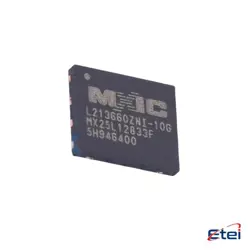
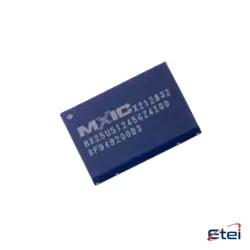
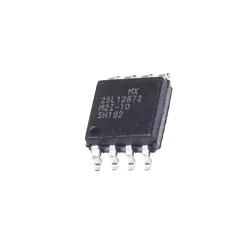
Images are for reference only
OPA991QDBVRQ1
+BOM-
ManufacturerTexas Instruments
-
Mfr. Part #OPA991QDBVRQ1
-
Datasheet OPA991QDBVRQ1 DataSheet
-
In Stock4870
365 Days Quality Guarantee
7*24 hours service quarantee
90-day after-sales guarantee
Genuine Product Guarantee
Specifications
| Attribute | Value |
| Package / Case | Tape & Reel (TR) |
| Series | Automotive, AEC-Q100 |
| Part Status | Active |
| Amplifier Type | General Purpose |
| Number of Circuits | 1 |
| Output Type | Rail-to-Rail |
| Slew Rate | 21V/µs |
| Gain Bandwidth Product | 4.5 MHz |
| Current - Input Bias | 10 pA |
| Voltage - Input Offset | 125 µV |
| Supply Current | 560µA |
| Current - Output / Channel | 75 mA |
| Voltage - Supply Span(Min) | 2.7 V |
| Voltage - Supply Span(Max) | 40 V |
| Operating Temperature | -40°C ~ 125°C (TA) |
| Mounting Type | Surface Mount |
Overview
Description
The OPA991QDBVRQ1 offers a high open-loop gain and wide bandwidth, which enhances accuracy and stability in various circuit configurations. It is designed to function over a wide temperature range, typically from -40°C to 125°C, ensuring consistent performance under extreme conditions. The device is packaged in a small, surface-mount SOT-23-5 package, making it suitable for compact circuit designs.
Overall, the OPA991QDBVRQ1 is well-suited for integration into automotive systems, industrial equipment, and other applications requiring precision and reliability.
Equivalent
1. OPA192 - Texas Instruments
2. OPA827 - Texas Instruments
3. AD8610 - Analog Devices
4. LT1001 - Analog Devices (Linear Technology)
5. LM4562 - Texas Instruments
These alternatives can vary slightly in specifications, so it's important to check the datasheet for exact matching requirements.
Features
1. Precision Performance: It offers low offset voltage, low drift, and low noise, providing high accuracy in signal conditioning applications.
2. Wide Supply Range: Operates over a wide supply voltage range from 4.5V to 36V, making it versatile for various applications.
3. Low Quiescent Current: The amplifier is designed to consume minimal power, making it suitable for battery-powered and energy-efficient systems.
4. Automotive-Qualified: It is AEC-Q100 qualified, ensuring reliability and performance under harsh automotive conditions.
5. Temperature Range: Operates over a wide temperature range from -40°C to 125°C, suitable for automotive environments.
6. High Common-Mode Rejection Ratio (CMRR) and Power Supply Rejection Ratio (PSRR): Enhances performance by minimizing the impact of noise and supply variations.
7. Small Package: Available in a compact SOT-23 package, which is ideal for space-constrained applications.
These features make the OPA991QDBVRQ1 suitable for high-precision applications such as sensor signal conditioning, current sensing, and other automotive electronics.
Pinout
1. Pin 1 (OUT): Output - This pin is where the amplified signal is delivered.
2. Pin 2 (V- or GND): Negative power supply or ground - This pin connects to the negative supply voltage or ground.
3. Pin 3 (IN+): Non-inverting input - This is the positive input terminal for the amplifier.
4. Pin 4 (IN-): Inverting input - This is the negative input terminal for the amplifier.
5. Pin 5 (V+): Positive power supply - This pin connects to the positive supply voltage.
The OPA991QDBVRQ1 is designed for precision applications, offering low noise, low offset voltage, and high bandwidth. It is automotive-qualified, making it suitable for use in demanding environments.
Manufacturer
Application
1. Automotive Systems: Suitable for use in sensors and control systems due to its high precision and reliability.
2. Instrumentation: Used in precision measurement systems that require stable and accurate signal amplification.
3. Medical Equipment: Supports applications needing low noise and high precision.
4. Data Acquisition: Effective in systems requiring accurate signal conditioning.
5. Industrial Control: Useful in process control systems requiring precise analog signal processing.
These applications benefit from the amplifier's low offset voltage, low drift, and high common-mode rejection ratio (CMRR).