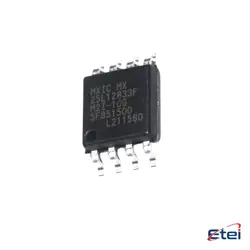
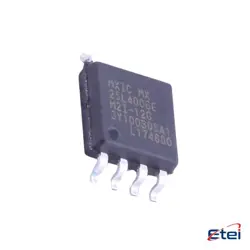
Images are for reference only
TLC2274ACDR
+BOM-
ManufacturerTexas Instruments
-
Mfr. Part #TLC2274ACDR
-
Datasheet TLC2274ACDR DataSheet
-
In Stock5561
365 Days Quality Guarantee
7*24 hours service quarantee
90-day after-sales guarantee
Genuine Product Guarantee
Specifications
| Attribute | Value |
| Package | Tape & Reel (TR),Cut Tape (CT) |
| ProductStatus | Active |
| AmplifierType | General Purpose |
| NumberofCircuits | 4 |
| OutputType | Rail-to-Rail |
| SlewRate | 3.6V/µs |
| GainBandwidthProduct | 2.25 MHz |
| Current-InputBias | 1 pA |
| Voltage-InputOffset | 300 µV |
| Current-Supply | 4.8mA (x4 Channels) |
| Current-Output/Channel | 50 mA |
| Voltage-SupplySpan(Min) | 4.4 V |
| Voltage-SupplySpan(Max) | 16 V |
| OperatingTemperature | 0°C ~ 70°C (TA) |
| MountingType | Surface Mount |
| Package/Case | 14-SOIC (0.154, 3.90mm Width) |
Overview
Description
With a typical input offset voltage of 950 µV and a low input bias current, the TLC2274ACDR is suitable for precision applications. It is designed to provide a balance between speed and power, with a typical slew rate of 3.6 V/µs and a gain bandwidth product of 2.2 MHz.
The device is available in a surface-mount package, which supports compact designs. It is commonly used in signal conditioning, filtering, and sensor amplification. Additionally, the TLC2274ACDR is known for its stability and reliability across a range of temperatures, making it a dependable choice for both consumer and industrial electronics.
Equivalent
1. TLV2374 - Texas Instruments
2. LM324 - Texas Instruments/ON Semiconductor
3. MCP6004 - Microchip Technology
4. OPA404 - Texas Instruments
5. AD8544 - Analog Devices
These alternatives may vary slightly in specifications, so it's essential to compare features like supply voltage, bandwidth, and power consumption to ensure suitability for your application.
Features
1. Low Noise: It offers low input noise voltage, which is beneficial for precision applications.
2. Rail-to-Rail Output: The op-amp provides rail-to-rail output swing, improving dynamic range and making it suitable for low-power applications.
3. Wide Supply Range: It operates over a wide supply voltage range, from 4.5V to 16V, which makes it versatile for various applications.
4. Low Offset Voltage: The device has low offset voltage, enhancing its precision in critical applications.
5. Slew Rate: It features a moderate slew rate, balancing speed and power consumption effectively.
6. Unity-Gain Bandwidth: The TLC2274ACDR provides a sufficient bandwidth for many general-purpose applications.
7. Low Power Consumption: Designed for power efficiency, it is ideal for battery-powered devices.
8. Temperature Range: It operates over a wide temperature range, suitable for industrial and commercial environments.
These features make the TLC2274ACDR op-amp a reliable choice for applications requiring precision and low power consumption.
Pinout
1. Pin 1 (OUT A) - Output of Op-Amp A
2. Pin 2 (IN− A) - Inverting input of Op-Amp A
3. Pin 3 (IN+ A) - Non-inverting input of Op-Amp A
4. Pin 4 (VDD) - Positive power supply
5. Pin 5 (IN+ B) - Non-inverting input of Op-Amp B
6. Pin 6 (IN− B) - Inverting input of Op-Amp B
7. Pin 7 (OUT B) - Output of Op-Amp B
8. Pin 8 (OUT C) - Output of Op-Amp C
9. Pin 9 (IN− C) - Inverting input of Op-Amp C
10. Pin 10 (IN+ C) - Non-inverting input of Op-Amp C
11. Pin 11 (VSS) - Negative power supply or ground
12. Pin 12 (IN+ D) - Non-inverting input of Op-Amp D
13. Pin 13 (IN− D) - Inverting input of Op-Amp D
14. Pin 14 (OUT D) - Output of Op-Amp D
This configuration allows for multiple uses within signal processing tasks such as filtering, buffering, and other analog signal conditioning applications.
Manufacturer
Application
1. Sensor Signal Conditioning: Amplifying and filtering signals from sensors in industrial and automotive environments.
2. Data Acquisition Systems: Enhancing the accuracy of data conversion in systems requiring precise measurements.
3. Instrumentation: Providing stable and precise amplification in medical and laboratory instruments.
4. Active Filters: Implementing high-performance filters in audio and communication systems.
5. Portable Devices: Used in battery-powered devices due to its low power consumption and high output drive capability.
These features make it suitable for both analog processing and precision control systems.